Filter
812
Text search:
programmatic
Featured
Recommendations
63
New Publications
214
Language
Document type
No document type
486
Studies & Reports
120
Guidelines
95
Strategic & Response Plan
40
Manuals
34
Fact sheets
13
Training Material
11
Situation Updates
6
Online Courses
4
Resource Platforms
2
Infographics
1
Countries / Regions
Global
31
Kenya
23
India
21
Nepal
21
Malawi
17
Nigeria
16
Uganda
16
Ethiopia
15
South Africa
15
Ukraine
15
Rwanda
14
Latin America and the Carribbean
14
Sierra Leone
13
Liberia
12
Zambia
12
Bangladesh
12
Myanmar / Burma
12
Western and Central Europe
11
Eastern Europe
11
Africa
10
Ghana
9
Namibia
9
South–East Asia Region
9
Senegal
8
Syria
8
Zimbabwe
7
Cambodia
7
Lesotho
7
Asia
7
Pakistan
6
Guinea
5
South Sudan
5
Afghanistan
5
Russia
5
Congo, Democratic Republic of
4
Philippines
4
Tanzania
4
Indonesia
4
Botswana
4
Burkina Faso
3
Cameroon
3
Somalia
3
Colombia
3
Georgia
3
Mali
2
Haiti
2
Jordan
2
Lebanon
2
Chad
2
Mozambique
2
Benin
2
Peru
2
Eswatini/ Swaziland
2
Venezuela
2
Palestine
2
Tajikistan
2
Côte d’Ivoire / Ivory Coast
1
Niger
1
Thailand
1
Gambia
1
Mauritania
1
Sudan
1
Argentina
1
Brazil
1
Libya
1
Angola
1
Yemen
1
East and Southern Africa
1
West and Central Africa
1
Middle East and North Africa
1
Albania
1
Armenia
1
Southern Africa
1
Timor Leste/ East Timor
1
Estonia
1
Moldova
1
Authors & Publishers
Publication Years
Category
Countries
287
Clinical Guidelines
65
Women & Child Health
64
Key Resources
47
Public Health
41
Capacity Building
9
Pharmacy & Technologies
7
Toolboxes
HIV
125
TB
116
COVID-19
44
Caregiver
27
NTDs
27
Conflict
21
Mental Health
20
Disability
19
Polio
16
Planetary Health
15
Refugee
12
AMR
10
Rapid Response
9
Global Health Education
9
Ebola & Marburg
8
Natural Hazards
8
Pharmacy
8
Malaria
8
Health Financing Toolbox
7
NCDs
6
Zika
5
Cholera
4
2.0 Rapid Response
4
Social Ethics
1
Funded by CBM: www.cbm.org

www.jogh.org • doi: 10.7189/jogh.02.020405 ~ December 2012 • Vol. 2 No. 2 • 020405
- Interim guide: May 2020 update.
On the 25th of March, the GPEI circulated the first update of the interim guide to help ensure continuity of the programme’s operations in the context of the COVID-19 pandemic, as well as its support to the pandemic response while also ensuring the safety of its
...

High levels of storage iron may increase malaria susceptibility. This risk has not been investigated in semi-immune adolescents. We investigated whether baseline iron status of nonpregnant adolescent girls living in a high malaria transmission area in Burkina Faso affected malaria risk during the fo
...
Health in All Policies: A Guide for State and Local Governments was created by the Public Health Institute, the California Department of Public Health, and the American Public Health Association in response to growing interest in using collaborative approaches to improve population health by embedd
...
As part of the UN’s data strategy—which seeks to nurture data as a strategic asset for insight, impact and integrity—UNAIDS plays an indispensable role in generating data for effective action against the AIDS pandemic. It leads the
world’s most extensive data collection on HIV epidemiology,
...

The standards define 10 key competencies for health and care workers to support self-care in their clinical practice as well as the specific, measurable behaviours that demonstrate those competencies, focusing on people-centredness; decision-making; effective communication; collaboration; evidence-i
...
Addressing comorbidities and risk factors for tuberculosis (TB) is a crucial component of the World Health Organization (WHO)’s End TB Strategy. This WHO operational handbook on tuberculosis. Module 6: tuberculosis and comorbidities aims to support countries in scaling up people-centred care,
...
- Pacific Possible Background Paper No.6
A practical tool to help health workers in the clinical and operational management of multidrug-resistant tuberculosis with special focus on the introduction, implementation and management of the nine-month treatment regimen.
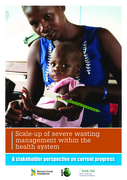
A wide range of potential enablers and barriers were identified for influencing progress for the scale-up of severe wasting services within national health systems. Findings were categorised according to the six pillars of WHO’s health system strengthening framework.