
Filter
2212
Text search:
International
Primary
Care
-
Respiratory
Group
Featured
Recommendations
268
New Publications
593
Language
Document type
No document type
1127
Studies & Reports
433
Guidelines
352
Manuals
129
Strategic & Response Plan
91
Training Material
30
Situation Updates
25
Fact sheets
19
Resource Platforms
4
Infographics
1
Online Courses
1
Countries / Regions
Global
126
India
116
Kenya
87
Western and Central Europe
60
South Africa
49
Nepal
47
Ethiopia
45
Nigeria
44
Bangladesh
44
Uganda
41
Liberia
39
Ghana
39
Sierra Leone
38
Africa
37
Latin America and the Carribbean
35
Rwanda
34
Philippines
33
Tanzania
33
Malawi
33
Namibia
33
Zambia
32
Myanmar / Burma
31
Syria
22
South–East Asia Region
21
Eastern Europe
20
Ukraine
19
Zimbabwe
16
Lesotho
16
Mozambique
12
Cambodia
11
Indonesia
11
Eastern Europe and Central Asia
11
Germany
10
East and Southern Africa
10
Guinea
9
Congo, Democratic Republic of
9
Haiti
9
Eswatini/ Swaziland
9
West and Central Africa
9
Senegal
8
South Sudan
8
Brazil
8
Colombia
8
Botswana
8
Western Pacific Region
8
Asia
8
USA
7
Jordan
7
Pakistan
6
Thailand
6
Burkina Faso
5
Iraq
5
Afghanistan
5
Sudan
5
Yemen
5
Middle East and North Africa
5
Albania
5
Mali
4
Turkey
4
Papua New Guinea
4
Argentina
4
Peru
4
Chile
4
Venezuela
4
Timor Leste/ East Timor
4
Tajikistan
4
Russia
4
Moldova
4
Cameroon
3
Somalia
3
Lebanon
3
Southern Africa
3
Kyrgyzstan
3
North America
3
Saudi Arabia
2
China
2
Benin
2
North Macedonia
2
Burundi
2
Bolivia
2
Libya
2
Madagascar
2
Mexico
2
Paraguay
2
Palestine
2
Bulgaria
2
Iran
2
Kazakhstan
2
Georgia
2
Vietnam
2
United Kingdom
2
Spain
2
Morocco
1
Egypt
1
Gambia
1
Malaysia
1
Singapore
1
Central African Republic
1
Hungary
1
Ecuador
1
El Salvador
1
Greece
1
Sri Lanka
1
Other region
1
Bhutan
1
Poland
1
Djibouti
1
Laos
1
Canada
1
Qatar
1
Romania
1
Slovakia
1
Turkmenistan
1
Japan
1
Denmark
1
France
1
Maldives
1
Mauritius
1
Tunisia
1
Portugal
1
Azerbaijan
1
Latvia
1
Authors & Publishers
Publication Years
Category
Countries
958
Clinical Guidelines
216
Public Health
159
Women & Child Health
123
Key Resources
115
Capacity Building
34
Pharmacy & Technologies
25
Toolboxes
COVID-19
244
TB
184
AMR
97
Mental Health
86
Planetary Health
84
NCDs
84
Caregiver
74
Rapid Response
65
HIV
64
Conflict
58
Ebola & Marburg
43
Global Health Education
40
2.0 Rapid Response
39
Pharmacy
37
Refugee
31
NTDs
29
Disability
28
Natural Hazards
21
Specific Hazards
17
Health Financing Toolbox
14
Polio
12
Cholera
9
Malaria
8
Zika
6
Thefirst report on Latin America and the Carribean presents key indicators on health and health systems in 33 Latin America and the Caribbean countries. . Analysis is based on the latest comparable data across almost 100 indicators including equity, health status, determinants of health, health
...
The Healthy Living Toolkit is developed to educate refugees, immigrants, resettlement agencies, clinics, community based organizations, and other service providers on refugee health issues. The toolkit presents material in a culturally appropriate manner and is intended to help health
...
The new WHO recommendations for the treatment of isoniazid-resistant, rifampicin-susceptible TB are based upon a review of evidence from patients treated with such regimens by a Guideline Development Group in conformity with WHO requirements for evi
...

Nested case-control study of health workers exposed to confirmed COVID-19 patients.
Similar objectives to the cohort study but case-control studies may be cheaper and provide robust evidence to characterize and assess the risk factors for SARS-CoV-2 infection in health workers exposed to COVID-19 p
...
WHO issued an updated appeal (May 2022) detailing its resource needs for Ukraine and refugee-receiving and hosting countries for March-August for Ukraine and March-December 2022 for other countries.
The needs are an estimated US$ 147.5 million: US$ 80 million for health response in Ukraine and ano
...

Benchmarking is a strategic process often used by businesses and institutes to standardize performance in relation to the best practices of their sector. The World Health Organization (WHO) and partners have developed a tool with a list of benchmarks and corresponding suggested actions that can be a
...
Multidrug-resistant tuberculosis (MDR-TB) and extensively drug-resistant
tuberculosis (XDR-TB) increasingly occur in resource-constrained settings.
In the context of a national response to MDR- and XDR-TB, health workers in
TB clinics (in district hospitals and some accredited health centres) wil
...
Priority medical devices list for the COVID-19 response and associated technical specifications
recommended
23 February 2021
This document describes the medical devices required for the clinical management of COVID-19, selected and prioritized according to the latest available evidence and interim guidelines. This includes: oxygen therapy, pulse oximeters, patient monitors, thermometers, infusion and suc
...
his Framework begins with a desired future scenario and considers actions and interventions necessary to get there. It advocates for holistic view to address tuberculosis. The Framework revisits challenges and actions in four layers: TB specific; challenges in health systems that influence TB
...

One of the main aims of the WHO Global Initiative for Childhood Cancer and the CureAll Americas framework is to strengthen centers of excellence and promote the training of the health workforce, especially pediatric oncology nurses, specialized in nursing
...

Full Report.
In response to a call by the United Nations Secretary-General and the Governments of Guinea, Liberia and Sierra Leone, an international team conducted an Ebola Recovery Assessment. The aim was to contribute towards laying the foundatio
...

Guidelines for training personnel in developing countries for prosthetics and orthotics services
recommended
1.Orthopedics - education 2.Prostheses and implants - utilization 3. Orthotic devices - utilization 4.Developing countries 5.Guidelines 6.Teaching materials I.World Health Organization II.International Society for Prosthetics and Orthotics
Internally displaced persons (IDPs), refugees, migrants and returnees constitute a sizeable population in the WHO Eastern Mediterranean Region. There were 12 million refugees (half are Palestinians) and 13 million IDPs in the Region as of 2018. These populations are often vul
...
Guidelines for Good Clinical Laboratory Practices (GCLP) outlines the principles and procedures to be followed by medical laboratories involved in clinical research and/or patient care so as to provide quality data which can be used for health resea
...
Emergence of antimicrobial resistance is a result of the use, overuse and misuse of antibiotics both in humans and animals. In Ethiopia, there are indications on the misuse of antibiotics by health care providers’, unskilled practitioners, and dru
...
This National Food and Nutrition Policy developed in 2013 builds on several achievements that have improved the status of nutrition and household food security in Rwanda during the past six years. The outlines ambitious but necessary strategies needed to solve serious and
persistent problems includ
...
Health needs of displaced Syrians in refugee hosting countries have become increasingly complex in light of the protracted Syrian conflict. The primary aim of this study was to identify the primary
...
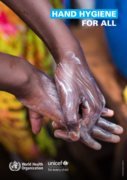
Three billion people – 40 per cent of the world’s population – do not have a place in their homes to wash their hands with water and soap. Three quarters of those who lack access to water and soap live in the world’s poorest countries and are amongst the most vulnerable: children and familie
...
The Infection Prevention and Control (IPC) Assessment Framework (IPCAF) is a tool to support the implementation of the World Health Organization (WHO) Guidelines on core components of IPC programmes at the acute health care facility level. The user
...
