
Filter
2836
Filtered Results: 2836
Text search:
sub-sahara
africa
Featured
Recommendations
178
New Publications
530
Language
Document type
No document type
1437
Studies & Reports
840
Guidelines
235
Manuals
93
Strategic & Response Plan
84
Fact sheets
55
Training Material
34
Infographics
24
Resource Platforms
12
Situation Updates
10
Brochures
8
Online Courses
2
Videos
2
Countries / Regions
Global
193
Africa
125
Kenya
121
Ethiopia
106
Tanzania
81
Zambia
79
Nigeria
78
South Africa
78
Malawi
76
Uganda
63
Namibia
51
Rwanda
49
Liberia
49
Ghana
47
Sierra Leone
39
Senegal
37
Zimbabwe
37
Mozambique
35
East and Southern Africa
34
Lesotho
32
West and Central Africa
28
Congo, Democratic Republic of
27
India
26
Burkina Faso
25
Benin
19
Cameroon
19
Asia
17
Guinea
16
South Sudan
16
Nepal
15
Bangladesh
14
Botswana
14
Middle East and North Africa
13
Eswatini/ Swaziland
12
Ukraine
11
Syria
11
Latin America and the Carribbean
11
Western and Central Europe
11
Mali
11
South–East Asia Region
10
Haiti
9
Central African Republic
9
Germany
8
China
7
Myanmar / Burma
7
Southern Africa
6
Sudan
6
Yemen
6
Indonesia
6
Somalia
6
Cambodia
5
Eastern Europe
5
Russia
5
Pakistan
5
Philippines
4
Côte d’Ivoire / Ivory Coast
4
Sri Lanka
4
Chad
4
Madagascar
4
Colombia
3
Thailand
3
Afghanistan
3
Jordan
3
Angola
3
Libya
3
Switzerland
2
Congo-Brazzaville
2
Niger
2
Burundi
2
Italy
2
Jamaica
2
Mauritius
2
Egypt
2
Tajikistan
1
Gambia
1
Peru
1
USA
1
Dominican Republic
1
Guinea-Bissau
1
Venezuela
1
Gabon
1
Tunisia
1
Lebanon
1
Papua New Guinea
1
Moldova
1
Palestine
1
Honduras
1
Iraq
1
Authors & Publishers
Publication Years
Category
Countries
1049
Clinical Guidelines
212
Public Health
166
Women & Child Health
140
Key Resources
101
Capacity Building
46
Pharmacy & Technologies
25
Annual Report MEDBOX
1
Toolboxes
HIV
490
Planetary Health
162
TB
144
COVID-19
126
NTDs
123
Mental Health
114
Health Financing Toolbox
91
NCDs
83
Malaria
81
Global Health Education
74
Caregiver
65
Disability
60
Refugee
50
AMR
49
Ebola & Marburg
30
Rapid Response
28
Conflict
27
Pharmacy
26
2.0 Rapid Response
14
Natural Hazards
12
Social Ethics
12
Cholera
11
Polio
11
Specific Hazards
3
Zika
3
South Sudan
1
Typhoon
1
Le Infezioni in Medicina, n. 1, 3-10, 2019
Cardiovascular diseases (CVDs) have collectively remained the leading causes of death worldwide and substantially contribute to loss of health and excess health system costs. The Global Burden of Diseases, Injuries, and Risk Factors (GBD) Study has tracked trends in death and disability since 1990 a...
Community health workers (CHWs) play a vital role in health service delivery, especially in countries with less resilient health systems. During any outbreak CHWs are relied on to help control the spread. However, they are often the last in line to receive necessary health products and protective eq...

Journal of Biosocial Science / Volume 34 / Issue 04 / October 2002, pp 525 - 539
DOI: DOI:10.1017/S0021932002005254, Published online: 24 September 2002
This paper examines determinants of one aspect of sexual behaviour – coital frequency – among 2188 married women in the Central African Re...
Key populations brief.

UNAIDS is calling on governments to ensure that the right to health is realized by all by prioritizing public investments in health. At least half of the world’s population cannot access essential health services. Every two minutes a woman dies while giving birth. Among the people being left behin...
2023 was another year of significant progress in the fight against HIV, tuberculosis (TB) and malaria. In countries where the Global
Fund invests, there has been a full recovery from the disruptive impact of the COVID-19 pandemic. The results we have achieved in the last year build on our extraord...
DEMOGRAPHIC RESEARCH, VOLUME 36, ARTICLE 37, PAGES 1081-1108; PUBLISHED 5 APRIL 2017; http://www.demographic-research.org/Volumes/Vol36/37/; DOI: 10.4054/DemRes.2017.36.37
PLOS ONE | https://doi.org/10.1371/journal.pone.0210937
February 5, 2019
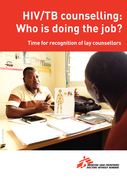
Time for recognition of lay counsellors
Accessed November 2017
Sleeping sickness is controlled by case detection and treatment but this often only reaches less than 75% of the population. Vector control is capable of completely interrupting HAT transmission but is not used because of expense. We conducted a full scale field trial of a refined vector control tec...
PLOS ONE | https://doi.org/10.1371/journal.pone.0193145 February 22, 2018 1 / 13
This revision covers the main non-communicable diseases in Mozambique as well as the National Strategic Plan's aim to create a positive environment to minimize or eliminate the exposure to risk factors and guarantee access to care.
