Filter
981
Filtered Results: 981
Text search:
Ministry
of
Health
&
Population,
UK
Aid
Featured
Recommendations
82
New Publications
269
Language
Document type
No document type
596
Studies & Reports
185
Guidelines
89
Manuals
44
Strategic & Response Plan
27
Training Material
14
Situation Updates
10
Fact sheets
10
Resource Platforms
3
Infographics
3
Countries / Regions
Sierra Leone
46
Global
38
Kenya
32
India
32
Nepal
26
Nigeria
23
Uganda
23
Ethiopia
21
Zambia
21
Bangladesh
19
Western and Central Europe
17
Syria
16
Malawi
16
Ukraine
15
Africa
15
South Africa
14
Liberia
14
Myanmar / Burma
14
Ghana
13
South Sudan
13
Mozambique
12
Tanzania
9
Rwanda
8
Guinea
8
Eastern Europe
8
Namibia
8
Zimbabwe
7
Asia
7
Congo, Democratic Republic of
7
South–East Asia Region
7
Yemen
6
Haiti
5
East and Southern Africa
5
Moldova
5
Lesotho
4
Afghanistan
4
Cambodia
4
China
3
Senegal
3
Jordan
3
West and Central Africa
3
Lebanon
3
Sri Lanka
3
Sudan
3
Botswana
3
Somalia
3
Pakistan
3
Tajikistan
2
Chile
2
Cameroon
2
Albania
2
Laos
2
Kyrgyzstan
2
Burkina Faso
2
Philippines
2
Latin America and the Carribbean
2
Middle East and North Africa
2
Vietnam
2
Central African Republic
2
Mali
2
Indonesia
2
Iraq
2
North Macedonia
1
Thailand
1
Serbia
1
Benin
1
Kazakhstan
1
Canada
1
Niger
1
Peru
1
Qatar
1
Venezuela
1
Croatia
1
Germany
1
Eastern Europe and Central Asia
1
Mauritius
1
Côte d’Ivoire / Ivory Coast
1
Papua New Guinea
1
Brazil
1
Russia
1
Egypt
1
Greece
1
Palestine
1
Chad
1
Libya
1
Eswatini/ Swaziland
1
Authors & Publishers
Publication Years
Category
Countries
367
Key Resources
77
Clinical Guidelines
66
Women & Child Health
45
Public Health
36
Capacity Building
7
Pharmacy & Technologies
6
Annual Report MEDBOX
1
Toolboxes
HIV
83
COVID-19
74
Disability
66
Mental Health
64
Conflict
46
TB
40
Ebola & Marburg
35
AMR
27
Planetary Health
26
NTDs
26
Health Financing Toolbox
26
Refugee
21
Global Health Education
19
Pharmacy
17
Rapid Response
14
Caregiver
14
Natural Hazards
10
2.0 Rapid Response
10
Specific Hazards
8
NCDs
6
Malaria
4
Polio
3
Cholera
2
Social Ethics
1
Zika
1

English Analysis on World about Climate Change and Environment, Health and Epidemic; published on 03 Nov 2021 by World Bank
Background paper 11
The Independent Panel for Pandemic Preparedness and Response
May 2021
This inter-agency guidance document aims to supplement the COVAX demand creation package for COVID-19 vaccines with key considerations for humanitarian contexts and marginalized populations with specific access and communication needs.
21 Sept.2021
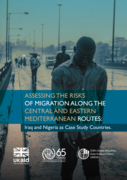
The report is based on in-depth qualitative research in countries along the Eastern and Central Mediterranean routes. It focuses on Iraqi and Nigerian migrants as case studies, as Nigeria is the number one country of origin for migrants travelling along the Central Mediterranean route. Iraqis repres...

This document provides training and guidance on legal capacity and how supported decision making, recovery plans and advance plans help to avoid involuntary detention and treatment and ensure people are able to exercise their right to legal capacity.
The systematic surveillance of antibiotic use and antibiotic re-sistance prevalence in humans and animals is imperative for managingbacterial infectious disease (JPIAMR, 2019;WHO, 2015). Many low-income countries currently face substantial challenges in building national surveillance systems due to ...
Briefing note | 16 March 2020
Do no harm, equality, transparency, humanity: values should guide the criminal justice sector’s response to coronavirus
At the time of publishing there were more than 164,000* confirmed cases of COVID- 19, the novel form of Coronavirus, affecting 110 countries wit...
Accessed November 2017.
Available in: English, French, Chinese, Spanish, Russian, Arabic, Thai, Korean, Tajik, Vietnamese, Uzbek
http://www.who.int/disabilities/cbr/guidelines/en/
A guide to promote health systems strengthening to achieve universal health coverage.
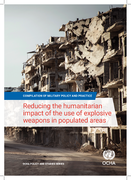
Reducing the humanitarian impact of the use of explosive weapons in populated areas is a key priority for the United
Nations, the International Committee of the Red Cross (ICRC), civil society and an increasing number of Member States.
The United Nations Secretary-General has expressly called on...

This study aims to analyze national and international stakeholders and their initiatives in Early Warning Systems in Myanmar, to identify priority gaps that need to be addressed by all stakeholders. It is presented as a first step towards supporting GoUM in information-gathering under the Myanmar Ac...
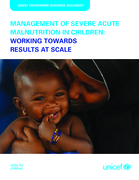
This Guidance Document provides practical assistance to Country Offices scaling up programmes to manage SAM in young children. It outlines a step-by-step process through which countries can analyse their current situation, identify barriers and bottlenecks through the MoRES approach, and plan action...
Nat Med (2021). https://doi.org/10.1038/s41591-021-01381-y