
Filter
1107
Text search:
Climate
&
Development
Knowledge
Network
Featured
95
295
Language
Document type
476
301
114
101
79
18
7
5
3
1
1
Countries
90
42
25
25
23
22
22
20
18
17
16
15
14
14
13
12
12
12
11
10
10
9
9
9
8
8
8
7
7
7
7
6
6
5
5
5
5
5
5
5
5
4
4
4
4
4
4
4
4
4
4
3
3
3
3
3
3
3
3
3
2
2
2
2
2
2
2
2
2
2
2
1
1
1
1
1
1
1
1
1
1
1
1
1
1
1
1
1
1
1
1
1
1
1
1
1
1
1
1
1
1
1
1
1
1
1
1
1
1
1
1
Authors & Publishers
Publication Years
Category
372
149
65
40
28
19
6
Toolboxes
182
61
60
59
59
49
46
43
29
26
25
22
19
18
18
16
15
13
12
11
7
5
4
3
1
1
1

An interdisciplinary study within the framework of the dialogue project on the contribution of the Catholic Church to a socio-ecological transformation.
The study examines the obstacles to the implementation of the socio-ecological transformation and develops recommendations for action.

The health sector In Ukraine is beginning to change in recent years. The sector, based on a system of health care (Semashko) originating from the Soviet Union, had been stagnant for many years. Remarkably little had changed since Independence and the health care system is as of today still character
...
The World Health Organization Regional Office for Africa (WHO AFRO), in accordance with recommendations from various WHO committees, has developed three flagship programmes to support Member States in the African region to prepare for, detect and respond to public health emergencies. They are the re
...

The Food and Agriculture Organization of the United Nations (FAO) launched a new Framework for Environmental and Social Management (FESM) to ensure that both people and the environment are protected from any potential impacts of FAO programmes and projects.
“This Framework ensures that our proj
...

2nd edition. The Event-based Surveillance Framework is intended to be used by authorities and agencies responsible for surveillance and response. This framework serves as an outline to guide stakeholders interested in implementing event-based surveillance (EBS) using a multisectoral, One Health appr
...
В дорожной карте по борьбе с забытыми тропическими болезнями на 2021–2030 гг. («дорожная карта») определены глобальные цели и основные этапы в отношении борьбы с 20 болÐ
...

Rebuilding Liberia’s health system is crucial for improving the country’s overall health outcomes. This annual report highlights key achievements, challenges,and lessons learned in implementing programmes of technical cooperation with the Government of Liberia from January to December 2022. T
...

This report summarizes the World Health Organization’s (WHO) global work on water, sanitation and hygiene (WASH) during 2022. It describes how the Organization continued to deliver its essential WASH programming as elaborated in its 2018–2025 strategy.

The document "Chronic Respiratory Diseases: A Handbook for Pharmacists" outlines the significant role pharmacists play in managing asthma and COPD, emphasizing patient education, disease prevention, medication management, and promoting healthy lifestyles. It highlights the importance of pharmacists
...

To meet our Strategy objectives and get within reach
of the 2030 SDG 3 target related to the three diseases,
the Global Fund needs to raise US$18 billion for the
Eighth Replenishment. That sum is essential to drive the
required pace of progress in the fight against HIV, TB
and malaria, and to m
...

The National Strategic Plan for Malaria Elimination in India (2023-2027) focuses on achieving malaria elimination by 2030, in alignment with the Global Technical Strategy. The document outlines the strategies, targets, and goals for malaria elimination, aiming for zero indigenous malaria cases by 20
...

The National Strategic Plan for Malaria Elimination 2021–2025 outlines Bangladesh’s roadmap to achieve zero indigenous malaria cases by 2030, with an interim goal to reduce transmission to near-zero levels by 2025. The strategy builds upon earlier successes in malaria control and shifts focus to
...


Emergency Medical Teams 2030 strategy
recommended
The Emergency Medical Teams (EMT) initiative plays a vital role in building this stronger and
more resilient global health emergency architecture, both by driving its formation and by
contributing to a rapidly deployable global health emergency corps. The Initiative and EMTs
bring something uniqu
...
Disaster Recovery Toolkit
2nd edition
WASH FIT is a risk-based, continuous improvement framework with a set of tools for undertaking water, sanitation and hygiene (WASH) improvements as part of wider quality improvements in health care facilities. It is aimed at small primary, and in some instances secondary, health care fa
...
Annals of Global Health, 87(1), p.30. DOI: http://doi.org/10.5334/aogh.2647
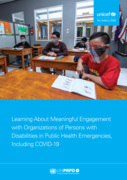
This report presents the findings from a ‘deep dive’ undertaken by UNICEF East Asia and the Pacific Regional Office to consider the experiences in Cambodia, Indonesia, the Lao People’s Democratic Republic, Malaysia, Myanmar, the Philippines and the Pacific. The target audience for this report
...
