
Filter
7395
Text search:
transmission
Featured
781
1962
Language
5936
1208
250
151
118
109
65
51
15
13
9
9
9
8
8
8
8
8
8
8
7
7
6
6
6
5
5
5
5
5
4
4
4
4
4
4
3
3
3
3
3
3
3
3
3
3
2
2
2
2
2
2
2
2
2
2
1
1
1
1
1
1
1
1
1
1
1
1
1
1
1
1
1
1
Document type
3468
1271
1170
391
360
316
145
80
52
44
38
31
19
2
2
Countries
291
265
219
197
185
168
165
149
139
129
126
124
121
119
117
110
105
105
104
96
91
86
80
75
70
66
61
61
60
58
57
57
55
54
53
51
50
50
48
47
44
43
41
40
39
38
37
35
32
32
32
31
29
28
25
25
24
23
22
20
18
18
16
16
14
14
12
12
11
11
11
10
10
10
10
10
9
9
8
8
8
8
7
7
7
6
6
6
6
6
6
6
6
5
5
5
5
5
5
4
4
4
4
4
4
4
3
3
3
3
3
3
3
3
3
3
2
2
2
2
2
2
2
2
2
2
2
2
2
2
1
1
1
1
1
1
1
1
1
1
1
1
1
1
1
1
1
1
1
1
1
1
Authors & Publishers
1042
277
195
183
140
132
126
122
108
99
97
77
68
64
54
49
47
45
40
40
39
37
36
34
34
33
33
32
32
30
29
26
25
24
24
23
23
23
22
21
21
21
20
20
19
19
19
19
19
19
18
18
18
18
18
17
17
17
16
16
16
16
16
15
15
15
15
15
15
14
14
14
14
14
14
13
13
13
13
13
13
13
13
13
12
12
12
12
11
11
11
11
11
11
10
10
10
10
10
10
9
9
9
9
9
9
9
9
9
9
9
9
8
8
8
8
8
8
8
8
8
8
8
8
8
8
8
8
7
7
7
7
7
7
7
7
7
7
7
7
7
7
7
7
7
7
7
7
7
7
7
7
6
6
6
6
6
6
6
6
6
6
6
6
6
6
6
6
6
6
6
6
6
6
6
6
6
6
6
6
6
6
6
5
5
5
5
5
5
5
5
5
5
5
5
5
5
5
5
5
5
5
5
5
5
5
5
5
5
5
5
5
5
5
5
5
5
5
5
5
5
5
5
5
5
5
5
4
4
4
4
4
4
4
4
4
4
4
4
4
4
4
4
4
4
4
4
4
4
4
4
4
4
4
4
4
4
4
4
4
4
4
4
4
4
4
4
4
4
4
4
4
4
4
4
4
4
4
4
4
4
4
4
4
4
4
4
4
4
4
4
4
4
4
4
4
4
4
4
4
4
4
4
4
4
4
4
4
4
4
3
3
3
3
3
3
3
3
3
3
3
3
3
3
3
3
3
3
3
3
3
3
3
3
3
3
3
3
3
3
3
3
3
3
3
3
3
3
3
3
3
3
3
3
3
3
3
3
3
3
3
3
3
3
3
3
3
3
3
3
3
3
3
3
3
3
3
3
3
3
3
3
3
3
3
3
3
3
3
3
3
3
3
3
3
3
3
3
3
3
3
3
3
3
3
3
3
3
3
3
3
3
3
3
3
3
3
3
3
3
3
3
3
3
3
3
3
3
3
3
3
3
3
3
3
3
3
3
3
3
3
3
3
3
3
3
3
3
3
3
3
2
2
2
2
2
2
2
2
2
2
2
2
2
2
2
2
2
2
2
2
2
2
2
2
2
2
2
2
2
2
2
2
2
2
2
2
2
2
2
2
2
2
2
2
2
2
2
2
2
2
2
2
2
2
2
2
2
2
2
2
2
2
2
2
2
2
2
2
2
2
2
2
2
2
2
2
2
2
2
2
2
2
2
2
2
2
2
2
2
2
2
2
2
2
2
2
2
2
2
2
2
2
2
2
2
2
2
2
2
2
2
2
2
2
2
2
2
2
2
2
2
2
2
2
2
2
2
2
2
2
2
2
2
2
2
2
2
2
2
2
2
2
2
2
2
2
2
2
2
2
2
2
2
2
2
2
2
2
2
2
2
2
2
2
2
2
2
2
2
2
2
2
2
2
2
2
2
2
2
2
2
2
2
2
2
2
2
2
2
2
2
2
2
2
2
2
2
2
2
2
2
2
2
2
2
2
2
2
2
2
2
2
2
2
2
2
2
2
2
2
2
2
2
2
2
2
2
2
2
2
2
2
2
2
2
2
2
2
2
2
2
2
2
2
2
2
2
2
2
2
2
2
2
2
2
2
2
2
2
2
2
2
2
2
2
2
2
2
2
2
2
2
2
2
2
2
2
2
2
2
2
2
2
2
2
2
2
2
2
2
2
2
2
2
2
2
2
2
2
2
2
2
2
2
2
2
2
2
2
2
2
2
2
2
2
2
2
2
2
2
2
2
2
2
2
2
2
2
2
2
2
2
2
2
2
2
2
2
2
2
2
2
2
2
2
2
2
2
2
2
2
2
2
2
2
2
2
2
2
2
2
2
2
2
2
2
2
2
2
2
2
2
2
2
2
2
2
2
2
2
2
2
2
2
2
2
2
2
2
2
2
2
2
2
2
1
1
1
1
1
1
1
1
1
1
1
1
1
1
1
1
1
1
1
1
1
1
1
1
1
1
1
1
1
1
1
1
1
1
1
1
1
1
1
1
1
1
1
1
1
1
1
1
1
1
1
1
1
1
1
1
1
1
1
1
1
1
1
1
1
1
1
1
1
1
1
1
1
1
1
1
1
1
1
1
1
1
1
1
1
1
1
1
1
1
1
1
1
1
1
1
1
1
1
1
1
1
1
1
1
1
1
1
1
1
1
1
1
1
1
1
1
1
1
1
1
1
1
1
1
1
1
1
1
1
1
1
1
1
1
1
1
1
1
1
1
1
1
1
1
1
1
1
1
1
1
1
1
1
1
1
1
1
1
1
1
1
1
1
1
1
1
1
1
1
1
1
1
1
1
1
1
1
1
1
1
1
1
1
1
1
1
1
1
1
1
1
1
1
1
1
1
1
1
1
1
1
1
1
1
1
1
1
1
1
1
1
1
1
1
1
1
1
1
1
1
1
1
1
1
1
1
1
1
1
1
1
1
1
1
1
1
1
1
1
1
1
1
1
1
1
1
1
1
1
1
1
1
1
1
1
1
1
1
1
1
1
1
1
1
1
1
1
1
1
1
1
1
1
1
1
1
1
1
1
1
1
1
1
1
1
1
1
1
1
1
1
1
1
1
1
1
1
1
1
1
1
1
1
1
1
1
1
1
1
1
1
1
1
1
1
1
1
1
1
1
1
1
1
1
1
1
1
1
1
1
1
1
1
1
1
1
1
1
1
1
1
1
1
1
1
1
1
1
1
1
1
1
1
1
1
1
1
1
1
1
1
1
1
1
1
1
1
1
1
1
1
1
1
1
1
1
1
1
1
1
1
1
1
1
1
1
1
1
1
1
1
1
1
1
1
1
1
1
1
1
1
1
1
1
1
1
1
1
1
1
1
1
1
1
1
1
1
1
1
1
1
1
1
1
1
1
1
1
1
1
1
1
1
1
1
1
1
1
1
1
1
1
1
1
1
1
1
1
1
1
1
1
1
1
1
1
1
1
1
1
1
1
1
1
1
1
1
1
1
1
1
1
1
1
1
1
1
1
1
1
1
1
1
1
1
1
1
1
1
1
1
1
1
1
1
1
1
1
1
1
1
1
1
1
1
1
1
1
1
1
1
1
1
1
1
1
1
1
1
1
1
1
1
1
1
1
1
1
1
1
1
1
1
1
1
1
1
1
1
1
1
1
1
1
1
1
1
1
1
1
1
1
1
1
1
1
1
1
1
1
1
1
1
1
1
1
1
1
1
1
1
1
1
1
1
1
1
1
1
1
1
1
1
1
1
1
1
1
1
1
1
1
1
1
1
1
1
1
1
1
1
1
1
1
1
1
1
1
1
1
1
1
1
1
1
1
1
1
1
1
1
1
1
1
1
1
1
1
1
1
1
1
1
1
1
1
1
1
1
1
1
1
1
1
1
1
1
1
1
1
1
1
1
1
1
1
1
1
1
1
1
1
1
1
1
1
1
1
1
1
1
1
1
1
1
1
1
1
1
1
1
1
1
1
1
1
1
1
1
1
1
1
1
1
1
1
1
1
1
1
1
1
1
1
1
1
1
1
1
1
1
1
1
1
1
1
1
1
1
1
1
1
1
1
1
1
1
1
1
1
1
1
1
1
1
1
1
1
1
1
1
1
1
1
1
1
1
1
1
1
1
1
1
1
1
1
1
1
1
1
1
1
1
1
1
1
1
1
1
1
1
1
1
1
1
1
1
1
1
1
1
1
1
1
1
1
1
1
1
1
1
1
1
1
1
1
1
1
1
1
1
1
1
1
1
1
1
1
1
1
1
1
1
1
1
1
1
1
1
1
1
1
1
1
1
1
1
1
1
1
1
1
1
1
1
1
1
1
1
1
1
1
1
1
1
1
1
1
1
1
1
1
1
1
1
1
1
1
1
1
1
1
1
1
1
1
1
1
1
1
1
1
1
1
1
1
1
1
1
1
1
1
1
1
1
1
1
1
1
1
1
1
1
1
1
1
1
1
1
1
1
1
1
1
1
1
1
1
1
1
1
1
1
1
1
1
1
1
1
1
1
1
1
1
1
1
1
1
1
1
1
1
1
1
1
1
1
1
1
1
1
1
1
1
1
1
1
1
1
1
1
1
1
1
1
1
1
1
1
1
1
1
1
1
1
1
1
1
1
1
1
1
1
1
1
1
1
1
1
1
1
1
1
1
1
1
1
1
1
1
1
1
1
1
1
1
1
1
1
1
1
1
1
1
1
1
1
1
1
1
1
1
1
1
1
1
1
1
1
1
1
1
1
1
1
1
1
1
1
1
1
1
1
1
1
1
1
1
1
1
1
1
1
1
1
1
1
1
1
1
1
1
1
1
1
1
1
1
1
1
1
1
1
1
1
1
1
1
1
1
1
1
1
1
1
1
1
1
1
1
1
1
1
1
1
1
1
1
1
1
1
1
1
1
1
1
1
1
1
1
1
1
1
1
1
1
1
1
1
1
1
1
1
1
1
1
1
1
1
1
1
1
1
1
1
1
1
1
1
1
1
1
1
1
1
1
1
1
1
1
1
1
1
1
1
1
1
1
1
1
1
1
1
1
1
1
1
1
1
1
1
1
1
1
1
1
1
1
1
1
1
1
1
1
1
1
1
1
1
1
1
1
1
1
1
1
1
1
1
1
1
1
1
1
1
1
1
1
1
1
1
1
1
1
1
1
1
1
1
1
1
1
1
1
1
1
1
1
1
1
1
1
1
1
1
1
1
1
1
1
1
1
1
1
1
1
1
1
1
1
1
1
1
1
1
1
1
1
1
1
1
1
1
1
1
1
1
1
1
1
1
1
1
1
1
1
1
1
1
1
1
1
1
1
1
1
1
1
1
1
1
1
1
1
1
1
1
1
1
1
1
1
1
1
1
1
1
1
1
1
1
1
1
1
1
1
1
1
1
1
1
1
1
1
1
1
1
1
1
1
1
1
1
1
1
1
1
1
1
1
1
1
1
1
1
1
1
1
1
1
1
1
1
1
1
1
1
1
1
1
1
1
1
1
1
1
1
1
1
1
1
1
1
1
1
1
1
1
1
1
1
1
1
1
1
1
1
1
1
1
1
1
1
1
1
1
1
1
1
1
1
1
1
1
1
1
1
1
1
1
1
1
1
1
1
1
1
1
1
1
1
1
1
1
1
1
1
1
1
1
1
1
1
1
1
1
1
1
1
1
1
1
1
1
1
1
1
1
1
1
1
1
1
1
1
1
1
1
1
1
1
1
1
1
1
1
1
1
1
1
1
1
1
1
1
1
1
1
1
1
1
1
1
1
1
1
1
1
1
1
1
1
1
1
1
1
1
1
1
1
1
1
1
1
1
1
1
1
1
1
1
1
1
1
1
1
1
1
1
1
1
1
1
1
1
1
1
1
1
1
1
1
1
1
1
1
1
1
1
1
1
1
1
1
1
1
1
1
1
1
1
1
1
1
1
1
1
1
1
1
1
1
1
1
1
1
1
1
1
1
1
1
1
1
1
1
1
1
1
1
1
1
1
1
1
1
1
1
1
1
1
1
1
1
1
1
1
1
1
1
1
1
1
1
1
1
1
1
1
1
1
1
1
1
1
1
1
1
1
1
1
1
1
1
1
1
1
1
1
1
1
1
1
1
1
1
1
1
1
1
1
1
1
1
1
1
1
1
1
1
1
1
1
1
1
1
1
1
1
1
1
1
1
1
1
1
1
1
1
1
1
1
1
1
1
1
1
1
1
1
1
1
1
1
1
1
1
1
1
1
1
1
1
1
1
1
1
1
1
1
1
1
1
1
1
1
1
1
1
1
1
1
1
1
1
1
1
1
1
1
1
1
1
1
1
1
1
1
1
1
1
1
1
1
1
1
1
1
1
1
1
1
1
1
1
1
1
1
1
1
1
1
1
1
1
1
1
1
1
1
1
1
1
1
1
1
1
1
1
1
1
1
1
1
1
1
1
1
1
1
1
1
1
1
1
1
1
1
1
1
1
1
1
1
1
1
1
1
1
1
1
1
1
1
1
1
1
1
1
1
1
1
1
1
1
1
1
1
1
1
1
1
1
1
1
1
1
1
1
1
1
1
1
1
1
1
1
1
1
1
1
1
1
1
1
1
1
1
1
1
1
1
1
1
1
1
1
1
1
1
1
1
1
1
1
1
1
1
1
1
1
1
1
1
1
1
1
1
1
1
1
1
1
1
1
1
1
1
1
1
1
1
1
1
1
1
1
1
1
1
1
1
1
1
1
1
1
1
1
1
1
1
1
1
1
1
1
1
1
1
1
1
1
1
1
1
1
1
1
1
1
1
1
1
1
1
1
1
1
1
1
1
1
1
1
1
1
1
1
1
1
1
1
1
1
1
1
1
1
1
1
1
1
1
1
1
1
1
1
1
1
1
1
1
1
1
1
1
1
1
1
1
1
1
1
1
1
1
1
1
1
1
1
1
1
1
1
1
1
1
1
1
1
1
1
1
1
1
1
1
1
1
1
1
1
1
1
1
1
1
1
1
1
1
1
1
1
1
1
1
1
1
1
1
1
1
1
1
1
1
1
1
1
1
1
1
1
1
1
1
1
1
1
1
1
1
1
1
1
1
1
1
1
1
1
1
1
1
1
1
1
1
1
1
1
1
1
1
1
1
1
1
1
1
1
1
1
1
1
1
1
1
1
1
1
1
1
1
1
1
1
1
1
1
1
1
1
1
1
1
1
1
1
1
1
1
1
1
1
1
1
1
1
1
1
1
1
1
1
1
1
1
1
1
1
1
1
1
1
1
1
1
1
1
1
1
1
1
1
1
1
1
1
1
1
1
1
1
1
1
1
1
1
1
1
1
1
1
1
1
1
1
1
1
1
1
1
1
1
1
1
1
1
1
1
1
1
1
1
1
1
1
1
1
1
1
1
1
1
1
1
1
1
1
1
1
1
1
1
1
1
1
1
1
1
1
1
1
1
1
1
1
1
1
1
1
1
1
1
1
1
1
1
1
1
1
1
1
1
1
1
1
1
1
1
1
1
1
1
1
1
1
1
1
1
1
1
1
1
1
1
1
1
1
1
1
1
1
1
1
1
1
1
1
1
1
1
1
1
1
1
1
1
1
1
1
1
1
1
1
1
1
1
1
1
1
1
1
1
1
1
1
1
1
1
1
1
1
1
1
1
1
1
1
1
1
1
1
1
1
1
1
1
1
1
1
1
1
1
1
1
1
1
1
1
1
1
1
1
1
1
1
1
1
1
1
1
1
1
1
1
1
1
1
1
1
1
1
1
1
1
1
1
1
1
1
1
1
1
1
1
1
1
1
1
1
1
1
1
1
1
1
1
1
1
1
1
1
1
1
1
1
1
1
1
1
1
1
1
1
1
1
1
1
1
1
1
1
1
1
1
1
1
1
1
1
1
1
1
1
1
1
1
1
1
1
1
1
1
1
1
1
1
1
1
1
1
1
1
1
1
1
1
1
1
1
1
1
1
1
1
1
1
1
1
1
1
1
1
1
1
1
1
1
1
1
1
1
1
1
1
1
1
1
1
1
1
1
1
1
1
1
1
1
1
1
1
1
1
1
1
1
1
1
1
1
1
1
1
1
1
1
1
1
1
1
1
1
1
1
1
1
1
1
1
1
1
1
1
1
1
1
1
1
1
1
1
1
1
1
1
1
1
1
1
1
1
1
1
1
1
1
1
1
1
1
1
1
1
1
1
1
1
1
1
1
1
1
1
1
1
1
1
1
1
1
1
1
1
1
1
1
1
1
1
1
1
1
1
1
1
1
1
1
1
1
1
1
1
1
1
1
1
1
1
1
1
1
1
1
1
1
1
1
1
1
1
1
1
1
1
1
1
1
1
1
1
1
1
1
1
1
1
1
1
1
1
1
1
1
1
1
1
1
1
1
1
1
1
1
1
1
1
1
1
1
1
1
1
1
1
1
1
1
1
1
1
1
1
1
1
1
1
1
1
1
1
1
1
1
1
1
1
1
1
1
1
1
1
1
1
1
1
1
1
1
1
1
1
1
1
1
1
1
1
1
1
1
1
1
1
1
1
1
1
1
1
1
1
1
1
1
1
1
1
1
1
1
1
1
1
1
1
1
1
1
1
1
1
1
1
1
1
1
1
1
1
1
1
1
1
1
1
1
1
1
1
1
1
1
1
1
1
1
1
1
1
1
1
1
1
1
1
1
1
1
1
1
1
1
1
1
1
1
1
1
1
1
1
1
1
1
1
1
1
1
1
1
1
1
1
1
1
1
1
1
1
1
1
1
1
1
1
1
1
1
1
1
1
1
1
1
1
1
1
1
1
1
1
1
1
1
1
1
1
1
1
1
1
1
1
1
1
1
1
1
1
1
1
1
1
1
1
1
1
1
1
1
1
1
1
1
1
1
1
1
1
1
1
1
1
1
1
1
1
1
1
1
1
1
1
1
1
1
1
1
1
1
1
1
1
1
1
1
1
1
1
1
1
1
1
1
1
1
1
1
1
1
1
1
1
1
1
1
1
1
1
1
1
1
1
1
1
1
1
1
1
1
1
1
1
1
1
1
1
1
1
1
1
1
1
1
1
1
1
1
1
1
1
1
1
1
1
1
1
1
1
1
1
1
1
1
1
1
1
1
1
1
1
1
1
1
1
1
1
1
1
1
1
1
1
1
1
1
1
1
1
1
1
1
1
1
1
1
1
1
1
1
1
1
1
1
1
1
1
1
1
1
1
1
1
1
1
1
1
1
1
1
1
1
1
1
1
1
1
1
1
1
1
1
1
1
1
1
1
1
1
1
1
1
1
1
1
1
1
1
1
1
1
1
1
1
1
1
1
1
1
1
1
1
1
1
1
1
1
1
1
1
1
1
1
1
1
1
1
1
1
1
1
1
1
1
1
1
1
1
1
1
1
1
1
1
1
1
1
1
1
1
1
1
1
1
1
1
1
1
1
1
1
1
1
1
1
1
1
1
1
1
1
1
1
1
1
1
1
1
1
1
1
1
1
1
1
1
1
1
1
1
1
1
1
1
1
1
1
1
1
1
1
1
1
1
1
1
1
1
1
1
1
1
1
1
1
1
1
1
1
1
1
1
1
1
1
1
1
1
1
1
1
1
1
1
1
1
1
1
1
1
1
1
1
1
1
1
1
1
1
1
1
1
1
1
1
1
1
1
1
1
1
1
1
1
1
1
1
1
1
1
1
1
1
1
1
1
1
1
1
1
1
1
1
1
1
1
1
1
1
1
1
1
1
1
1
1
1
1
1
1
1
1
1
1
1
1
1
1
1
1
1
1
1
1
1
1
1
1
1
1
1
1
1
1
1
1
1
1
1
1
1
1
1
1
1
1
1
1
1
1
1
1
1
1
1
1
1
1
1
1
1
1
1
1
1
1
1
1
1
1
1
1
1
1
1
1
1
1
1
1
1
1
1
1
1
1
1
1
1
1
1
1
1
1
1
1
1
1
1
1
1
1
1
1
1
1
1
1
1
1
1
1
1
1
1
1
1
1
1
1
1
1
1
1
1
1
1
1
1
1
1
1
1
1
1
1
1
1
1
1
1
1
1
1
1
1
1
1
1
1
1
1
1
1
1
1
1
1
1
1
1
1
1
1
1
1
1
1
1
1
1
1
1
1
1
1
1
1
1
1
1
1
1
1
1
1
1
1
1
1
1
1
1
1
1
1
1
1
1
1
1
1
1
1
1
1
1
1
1
1
1
1
1
1
1
1
1
1
1
1
1
1
1
1
1
1
1
1
1
1
1
1
1
1
1
1
1
1
1
1
1
1
1
1
1
1
1
1
1
1
1
1
1
1
1
1
1
1
1
1
1
1
1
1
1
1
1
1
1
1
1
1
1
1
1
1
1
1
1
1
1
1
1
1
1
1
1
1
1
1
1
1
1
1
1
1
1
1
1
1
1
1
1
1
1
1
1
1
1
1
1
1
1
1
1
1
1
1
1
1
1
1
1
1
1
1
1
1
1
1
1
1
1
1
1
1
1
1
1
1
1
1
1
1
1
1
1
1
1
1
1
1
1
1
1
1
1
1
1
1
1
1
1
1
1
1
1
1
1
1
1
1
1
1
1
1
1
1
1
1
1
1
1
1
1
1
1
1
1
1
1
1
1
1
1
1
1
1
1
1
1
1
1
1
1
1
1
1
1
1
1
1
1
1
1
1
1
1
1
1
1
1
1
1
1
1
1
1
1
1
1
1
1
1
1
1
1
1
1
1
1
1
1
1
1
1
1
1
1
1
1
1
1
1
1
1
1
1
1
1
1
1
1
1
1
1
1
1
1
1
1
1
1
1
1
1
1
1
1
1
1
1
1
1
1
1
1
1
1
1
1
1
1
1
1
1
1
1
1
1
1
1
1
1
1
1
1
1
1
1
1
1
1
1
1
1
1
1
1
1
1
1
1
1
1
1
1
1
1
1
1
1
1
1
1
1
1
1
1
1
1
1
1
1
1
1
1
1
1
1
1
1
1
1
1
1
1
1
1
1
1
1
1
1
1
1
1
1
1
1
1
1
1
1
1
1
1
1
1
1
1
1
1
1
1
1
1
1
1
1
1
1
1
1
1
1
1
1
1
1
1
1
1
1
1
1
1
1
1
1
1
1
1
1
1
1
1
1
1
1
1
1
1
1
1
1
1
1
1
1
1
1
1
1
1
1
1
1
1
1
1
1
1
1
1
1
1
1
1
1
1
1
1
1
1
1
1
1
1
1
1
1
1
1
1
1
1
1
1
1
1
1
Publication Years
2705
4140
511
38
1
Category
2998
520
356
288
264
152
69
1
Toolboxes
1187
526
471
421
301
222
205
188
171
155
153
147
144
126
94
93
76
75
75
69
52
45
27
22
10
2
1

Go.Data is a software for contact tracing and data collection in outbreak response developed by WHO in collaboration with partners in the Global Outbreak Alert and Response Network (GOARN). Go.Data focuses on case and contact data, including laboratory data, and on contact follow-up and visualizatio
...
n of chains of transmission.
more

In: Antenatal Care, Maternal Care, Under 5 Clinics, Family Planning Clinics and HIV Exposed Child Follow Up.
This 5th Edition of the Malawi Guidelines for Clinical Management of HIV in Children and Adults is implemented from January 2022. It replaces all previous editions of the Malawi Antiretrovir
...
al therapy (ART) and Prevention of Mother to Child Transmission (PMTCT) guidelines.This document is written for medical doctors, clinical officers, medical assistants, nurses, midwives, laboratorians, health surveillance assistants (HSAs) and medical records clerks who are working in public and private sector health facilities in Malawi. It is designed to be a practical guide for implementation of integrated HIV Services
more

The document “Public Health Surveillance for Cholera – Guidance Document (2024)” provides practical recommendations for countries on how to design, implement, and strengthen cholera surveillance systems. Developed by the Global Task Force on Cholera Control (GTFCC), it outlines the minimum req
...
uirements for detecting, confirming, reporting, and monitoring cholera cases and outbreaks.
The guidance explains the core functions of cholera surveillance, including case detection, laboratory testing (such as RDTs, culture, and PCR), routine data collection, outbreak notification, case and field investigation, data analysis, and performance monitoring. It also describes how surveillance strategies should be adapted depending on whether a country is experiencing no outbreak, clustered transmission, or community transmission.
Overall, the document aims to help countries establish adaptive, fit-for-purpose surveillance systems that enable early outbreak detection, guide timely response measures, and support long-term cholera control and elimination efforts.
more

The WHO publication “Surveillance, case investigation and contact tracing for mpox: interim guidance” provides updated global technical guidance on monitoring and responding to mpox (formerly known as monkeypox). It explains how countries should conduct surveillance to detect new outbreaks, car
...
ry out case investigation including clinical assessment and lab specimen collection, and perform contact tracing to monitor people exposed to confirmed or probable cases in order to stop transmission and protect at-risk groups. The guidance includes practical recommendations for how long contacts should be monitored (e.g., daily for 21 days without requiring quarantine if symptom-free) and advising good hygiene and reduced exposure risk during the monitoring period. This interim guidance is intended to support public health authorities worldwide in strengthening mpox outbreak detection, response, and reporting.
more

The document “Guidelines for the Investigation and Control of Disease Outbreaks” provides practical guidance for public health professionals on how to detect, investigate, and manage outbreaks of communicable diseases. It describes the key steps of outbreak investigation, including confirming th
...
e outbreak, establishing a case definition, collecting epidemiological and laboratory data, identifying the source and mode of transmission, and implementing control measures. The guidelines also explain how to organize outbreak response teams, communicate findings, and document results in outbreak reports. Overall, the document aims to support systematic and effective outbreak investigations in order to control disease spread and protect public health.
more
Outbreak Investigation, Response and Control – Module 8. Integrated Disease Surveillance Project: Training Manual for State & District Surveillance Officers
Integrated Disease Surveillance Project (IDSP)
Ministry of Health and Family Welfare, Government of India
(2005)
C2
The document “Outbreak Investigation, Response and Control – Module 8” is a training module from the Integrated Disease Surveillance Project (IDSP) designed to guide health officials in investigating and managing disease outbreaks. It explains the basic principles and steps of outbreak investi
...
gation, including detecting unusual increases in disease cases, confirming diagnoses, collecting and analyzing epidemiological data, and identifying the source and mode of transmission. The module also describes appropriate control and prevention measures, emphasizes timely reporting and coordination within the surveillance system, and aims to strengthen the capacity of public health workers to effectively respond to infectious disease outbreaks at the district and state levels.
more

Artificial intelligence for tuberculosis control: a scoping review of applications in public health
Menon, S.; and K. Ghislein Kuro
(2025)
J Glob Health. 2025;15:04192. This scoping review highlights the potential of AI-driven predictions in national TB programmes to enhance diagnostics, track trends, and strengthen public health surveillance. While promising for reducing transmission
...
and support-
ing TB care in low-resource settings, these models require large-scale validation to ensure real-world applicability, especially for high-risk groups
more
BMC Public Health (2025) 25:3774 https://doi.org/10.1186/s12889-025-24555-6. The study results provide useful insights on how climate change influences malaria in African countries, and reiterates the need for a greater engagement of policymakers and social partners, in intensifying the action neede
...
d to fight the transmission of malaria in Sub-Sahara Africa
more
Zzapp creates malaria elimination strategies powered by artificial intelligence, and delivers them directly to the field through a dedicated mobile app. Malaria elimination strategies powered by AI. The Zzapp software system supports the planning and implementation of malaria elimination operations,
...
as well as mosquito surveillance activities.
By analyzing satellite images and topographical maps, Zzapp’s AI identifies malaria transmission hotspots and optimizes malaria elimination strategies for each location. Our map-based mobile app conveys the AI strategies to field workers as simple instructions, ensuring accurate implementation and quick feedback from the field.
more

The resurgence of mpox in multiple African countries since 2022 has highlighted urgent gaps in preparedness, detection, and response capacities across the continent. While the mpox outbreak was initially classified as a Public Health Emergency of International Concern (PHEIC) and a Public Health Eme
...
rgency of Continental Security (PHECS), the risk of continued transmission in high-risk areas of Africa remains significant, particularly due to persistent zoonotic reservoirs, cross-border spread, and fragile surveillance systems.
more

The Marburg Virus Disease (MVD) Response Plan outlines Tanzania’s national strategy for responding to a Marburg virus outbreak declared in the Kagera Region in January 2025. The document describes the current epidemiological situation, assesses the risks posed by the outbreak, and sets strategic o
...
bjectives to contain the disease and prevent further transmission. It details response measures across multiple sectors, including surveillance, laboratory testing, case management, infection prevention and control, risk communication, logistics, and community engagement. Furthermore, the plan defines coordination mechanisms, operational procedures, monitoring indicators, and the financial resources required to implement the response. Overall, the plan serves as a comprehensive framework to guide national and international stakeholders in controlling the outbreak and protecting public health.
more
The webpage presents a guidance document developed by Uganda’s Ministry of Health for the assessment and management of healthcare workers who may have been exposed to Sudan Ebola Virus Disease (SVD) in the workplace. The document provides protocols for identifying and evaluating occupational expos
...
ure risks, monitoring exposed healthcare workers, and implementing appropriate infection prevention and control measures. Its main purpose is to support healthcare facilities in protecting staff, reducing the risk of transmission, and ensuring a safe and effective response to suspected Ebola exposures before infection is confirmed. The guidance specifically focuses on exposures related to the Sudan strain of the Ebola virus and serves as a practical tool for healthcare settings during Ebola outbreaks.
more
The webpage “Decontamination of Ambulances for Ebola Virus Disease (EVD)” provides guidance on how to safely clean and disinfect ambulances that have been used to transport suspected or confirmed Ebola patients. It outlines the procedures for decontaminating vehicle surfaces, medical equipment,
...
and potentially contaminated materials, while emphasizing the correct use of personal protective equipment (PPE) and infection prevention and control measures. The document aims to reduce the risk of Ebola transmission and ensure the safety of healthcare workers, ambulance personnel, and the public during outbreak response operations.
more
The Ebola Virus Disease (EVD) Primary Screening Tool is a job aid developed to help healthcare workers identify individuals who may have symptoms or risk factors associated with Ebola before they enter a health facility. The tool supports the early detection of suspected Ebola cases through an initi
...
al screening process, allowing for timely isolation, referral, and infection prevention measures. Its purpose is to reduce the risk of Ebola transmission within healthcare settings and strengthen outbreak preparedness and response efforts.
This screening tool was developed as part of Uganda’s Ebola preparedness and response activities during the 2022 Sudan Ebola Virus Disease outbreak.
more

This video is a public health awareness message about Ebola. It aims to educate the general population by explaining that Ebola is not transmitted through the air. The video addresses common misconceptions about the disease and provides accurate information about how Ebola spreads, emphasizing that
...
transmission occurs through direct contact with the bodily fluids of infected individuals. Its main purpose is to reduce fear, prevent misinformation, and encourage appropriate preventive behaviors within communities at risk of Ebola outbreaks.
more

This document provides standard operating procedures (SOPs) for infection prevention and control (IPC) when managing Ebola Virus Disease (EVD) cases in healthcare settings in Tanzania. It outlines standardized procedures for patient screening, isolation, use of personal protective equipment (PPE), h
...
and hygiene, environmental cleaning and disinfection, waste management, safe handling of specimens, and protection of healthcare workers. The SOP aims to strengthen preparedness, reduce the risk of Ebola transmission, and ensure a safe and consistent response during Ebola outbreaks.
more

Hygiene Awareness Manual (Arabic) - GIZ
recommended
The "Hygiene Awareness Manual" focuses on promoting improved hygiene practices within communities, emphasizing personal and household hygiene, water safety, and environmental health. It highlights the importance of handwashing, oral hygiene, and maintaining cleanliness of the skin and clothing as ke
...
y aspects of personal and family hygiene. Specific practices such as regular bathing and wearing clean clothes are also emphasized.
For household hygiene, the manual provides guidance on safe food preparation and storage, as well as keeping living spaces, kitchens, and latrines clean to prevent contamination. It also addresses water safety, emphasizing the need to store water in clean containers, treat it for safe consumption, and dispose of wastewater properly to avoid environmental contamination.
The manual underscores the significance of balanced nutrition and food safety, offering guidelines for cooking and preserving food to reduce health risks. It also delves into disease prevention, explaining the causes and transmission of waterborne and hygiene-related diseases, such as cholera and dysentery, and outlining effective methods to prevent them through proper sanitation and hygiene.
This comprehensive guide serves as a practical resource for community health workers and households, aiming to foster better hygiene practices, prevent diseases, and enhance overall health and well-being.
more
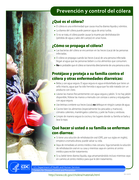
The document titled "Prevención y control del cólera" (Cholera Prevention and Control) provides essential guidance on preventing and managing cholera, a disease characterized by severe watery diarrhea and vomiting. Without prompt treatment, cholera can lead to death due to dehydration within hours
...
. The disease is primarily transmitted through the ingestion of food or water contaminated with the feces of an infected person.
To protect against cholera and other diarrheal diseases, the document emphasizes the importance of drinking safe water, such as bottled water with intact seals, boiled water, or water treated with chlorine products. Frequent handwashing with safe water and soap is recommended, and in the absence of soap, hands can be cleaned using ash or sand followed by rinsing with safe water. Proper sanitation practices, such as using latrines or burying feces and avoiding defecation near water sources, are crucial. The document also highlights safe food practices, including thoroughly cooking food (especially seafood), consuming it while hot, keeping it covered, and peeling fruits and vegetables. Ensuring the safe cleaning of kitchens and areas where the family bathes or washes clothes is also advised.
In case of diarrheal illness, the document stresses the immediate use of oral rehydration solution (ORS) to prevent dehydration and the importance of seeking medical attention as quickly as possible. Patients should continue ORS intake both at home and during transit to a health facility. These preventative measures and prompt treatment strategies are vital for reducing cholera transmission and mortality.
more

The Cholera Q&A Fact Sheet provides essential information about cholera, including its causes, symptoms, treatment, and prevention. Cholera is an acute diarrheal disease caused by Vibrio cholerae, which spreads through contaminated water and food. It leads to rapid dehydration and can be fatal if un
...
treated. Symptoms range from mild diarrhea to severe dehydration, shock, and death.
Treatment primarily involves Oral Rehydration Therapy (ORT) to replace lost fluids, and in severe cases, intravenous fluids. Antibiotics are generally not recommended for mass treatment. Prevention focuses on safe drinking water, sanitation, hand hygiene, and proper food handling.
The document also discusses cholera vaccination, with three WHO-approved oral vaccines available. However, vaccines should be used alongside other control measures. The Global Task Force on Cholera Control (GTFCC) aims to eliminate cholera transmission in 20 countries by 2030 through improved sanitation, vaccination, and rapid outbreak response.
more
Lymphatic filariasis (LF), a neglected tropical disease, is targeted for global elimination as a public health problem. This article reviews the history of LF control and elimination activities in the countries of the World Health Organization's (WHO) Eastern Mediterranean Region (EMR) over the last
...
2 decades. In 2000, the estimated at-risk population in EMR countries was 12.6 million people, accounting for approximately 1% of the global disease burden. Of the 22 EMR countries, 3 countries (Egypt, Sudan and Yemen) were LF endemic and the disease was suspected in 4 other countries (Djibouti, Oman, Somalia and Saudi Arabia). After almost 2 decades of implementing sustained control and prevention measures, Egypt and Yemen were successfully validated by the WHO as having achieved the elimination criteria in 2017 and 2019, respectively. In 2018, Sudan completed mapping of LF, reaching 26.2% geographical coverage where mass drug administration (MDA) is required and is scaling-up MDA. Extensive epidemiological assessment indicated the absence of LF transmission in the four suspected countries and no MDA required. Challenges faced during the elimination and post-elimination phases are described and discussed
more
