
Filter
1909
Text search:
House,
S.
Featured
Recommendations
119
New Publications
513
Language
Document type
No document type
1091
Studies & Reports
378
Guidelines
194
Manuals
100
Strategic & Response Plan
57
Training Material
36
Situation Updates
21
Fact sheets
21
Infographics
5
Brochures
2
Resource Platforms
2
Videos
2
Countries / Regions
India
152
Global
85
Kenya
53
Bangladesh
50
Sierra Leone
41
Ethiopia
41
Nigeria
40
Nepal
40
Myanmar / Burma
39
Liberia
37
Uganda
36
Western and Central Europe
35
Syria
31
South Africa
31
Rwanda
28
Tanzania
27
Latin America and the Carribbean
27
Philippines
25
Malawi
25
Namibia
22
Ukraine
22
Africa
22
Ghana
21
Zambia
20
Congo, Democratic Republic of
17
South Sudan
17
Mozambique
15
Zimbabwe
14
Germany
14
Eastern Europe
14
Haiti
13
Yemen
13
Brazil
12
Asia
12
Afghanistan
11
Indonesia
11
South–East Asia Region
11
Guinea
10
Senegal
9
East and Southern Africa
9
Russia
9
Vietnam
9
USA
8
Pakistan
8
Cambodia
8
Thailand
8
Lebanon
7
Central African Republic
7
Lesotho
7
Eswatini/ Swaziland
6
West and Central Africa
6
Venezuela
6
Cameroon
5
Jordan
5
Guatemala
5
Sri Lanka
5
Middle East and North Africa
5
Burkina Faso
4
Somalia
4
Peru
4
Colombia
4
Botswana
4
Eastern Europe and Central Asia
4
North America
4
Iraq
3
Chad
3
China
3
Honduras
3
El Salvador
3
Angola
3
Madagascar
3
Paraguay
3
Southern Africa
3
Laos
3
Timor Leste/ East Timor
3
Iran
3
Georgia
3
United Kingdom
3
Spain
3
Guinea-Bissau
2
Turkey
2
Papua New Guinea
2
Sudan
2
North Macedonia
2
Burundi
2
Nicaragua
2
Albania
2
Tajikistan
2
Portugal
2
Israel
2
Mali
1
Côte d’Ivoire / Ivory Coast
1
Niger
1
Malaysia
1
Dominican Republic
1
Ecuador
1
Bolivia
1
Libya
1
Mexico
1
Chile
1
Western Pacific Region
1
Bhutan
1
Poland
1
Palestine
1
Italy
1
Djibouti
1
Armenia
1
Canada
1
Romania
1
Moldova
1
Gabon
1
Uruguay
1
Japan
1
Belgium
1
France
1
Mauritius
1
Belarus
1
Belize
1
Costa Rica
1
Panama
1
Authors & Publishers
Publication Years
Category
Countries
772
Key Resources
124
Public Health
101
Clinical Guidelines
96
Women & Child Health
75
Capacity Building
34
Pharmacy & Technologies
19
Toolboxes
Mental Health
195
COVID-19
127
Disability
110
NTDs
97
HIV
88
Planetary Health
81
TB
74
Conflict
57
Ebola & Marburg
53
Natural Hazards
48
Refugee
48
AMR
48
Caregiver
40
Malaria
32
Global Health Education
28
Pharmacy
28
NCDs
28
Rapid Response
24
Health Financing Toolbox
20
Cholera
18
Polio
16
2.0 Rapid Response
12
Specific Hazards
10
Zika
9
Social Ethics
6
South Sudan
1
Typhoon
1

The sixteenth meeting of the Strategic and Technical Advisory Group for Neglected Tropical Diseases (STAG-NTD) was held as a hybrid meeting, 27–28 September 2022.
Dr Ren Minghui, Assistant Director-General, Universal Health Coverage/Communicable and Noncommunicable Diseases, welcomed participan
...
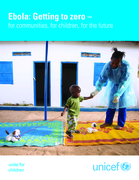
As slight hints of recovery begin to surface in West Africa, UNICEF is looking at the impact of Ebola on children and the response and work of the affected communities in the report, Ebola: Getting to zero – for communities, for children for the future. The document traces some of the outbreak’
...

The active participation and engagement of health and care workers (HCWs) in health emergency preparedness, readiness and response is crucial to support risk communication, community engagement and infodemic management (RCCE-IM) interventions during emergencies. HCWs hold unique position
...
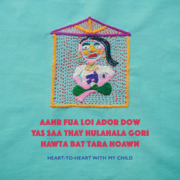
One booklet is called "Heart-to-Heart with My Child." Published for Rohingya adults and children, it conveys key child protection messages in accessible terms in both Rohingya and in English. The messages are illustrated with embroideries made by Rohingya female artists, engaged with IOM'
...
The document provides detailed guidelines for managing cholera outbreaks, focusing on prevention, diagnosis, treatment, and control strategies. It emphasizes the importance of setting up Cholera Treatment Centers (CTCs), ensuring access to clean water, promoting hygiene, and utilizing oral rehydrati
...
The audit was undertaken in order to ascertain whether allocations and donations received directly by the Government of Sierra Leone, in the fight against the Ebola Virus Disease were utilised with due regard to economy and efficiency and that internal controls were observed accordingly. The audit f
...
This scoping study done in Myanmar offers the chance for FoodSTART+ to explore prospects for future partnerships in another important country of the region. The study was done from October 2016 to February 2017 and included visits to selected major potato and cassava production areas to meet with re
...
Health Care Facilities (HCFs) are primarily responsible for management of the healthcare waste generated within the facilities, including activities undertaken by them in the community. The health care facilities, while generating the waste are responsible for segregation, collection, in-
...

In this report a nutrition governance framework was applied to research and analyse the provincial experience with nutrition policy in Pakistan, looking both at chronic and acute malnutrition. Twenty-one in-depth interviews with key stakeholders were also conducted along with a review of published a
...
Practical actions in cities to strengthen preparedness for the COVID-19 pandemic and beyond
recommended
This document accompanies the interim guidance on “Strengthening Preparedness for COVID-19 in cities and urban settings”. It provides local authorities, leaders and policy-makers in cities with a checklist tool to ensure that key areas have been covered. An excel version that local authorities m
...
The BRACED Myanmar Alliance was a three-year project aiming to ‘build the resilience of 350,000 people across Myanmar to climate extremes’. The project worked in 7 states, 8 townships and 155 communities. The main impact for project populations was intended to be ‘improved well-being and reduc
...

History has shown that governments tend to deprioritize environmental commitments during times of financial and public crises as they work to mitigate immediate needs—and the age of COVID-19 has been no different. Even though human interaction with wildlife is believed to be the cause of the pande
...
Vector-borne diseases are responsible for 17% of the global burden of communicable diseases and more than 500 000 deaths annually. The ambitious global targets for the control of vector-borne diseases come in the context of the (re-)emergence of diseases, increasing resistances to insecticides and u
...

The health and socioeconomic crisis triggered by the COVID-19 pandemic has hit the countries of Latin America hard and laid bare the profound inequities about which numerous international, regional and national reports have sounded warnings in recent decades. In this context, the historical politica
...

The Strategic Malaria Communication Guide for Central America is intended to facilitate the shift from malaria control to elimination by strengthening communication and advocacy initiatives throughout the region. Based on interviews and a review of literature, the guide offers National Malaria Progr
...

This document was developed by the Ministry of Health in Malawi in collaboration with national and international partners. It introduces a Social and Behaviour Change (SBC) malaria message guide that is aligned with the National Malaria Communication Strategy (NMCS) for the period 2023–2030. The g
...
The Manual for Parasitological Surveillance in Prevention of Reintroduction or Re-establishment of Malaria in Sri Lanka (2019) provides guidelines to health professionals on how to conduct effective malaria surveillance to prevent the reintroduction of the disease in Sri Lanka, which was certified m
...

Small drinking-water supplies commonly experience operational, managerial, technical and resourcing challenges that impact their ability to deliver safe and reliable services. The needs and opportunities associated with these supplies therefore warrant explicit consideration in policies and regulati
...
Since 1996, trachoma has been targeted for elimination as a public health problem worldwide. The active trachoma criterion for national elimination as a public health problem is a TF1–9 < 5%, sustained for at least two years in the absence of antibiotic mass drug administration (MDA), in each formerly endemic EU. Using A, F and E, health ministries and their partners have made considerable progress towards achieving this criterion in formerly endemic EUs worldwide. In 2002, an estimated 1517 million people lived in EUs in which EU-wide implementation of the A, F and E components of SAFE were thought to be needed for the purposes of global elimination of trachoma as a public health problem; by June 2021, that number had fallen to 136.2 million, a 91% reduction. Approximately 85% of the 136.2 million people living in EUs needing A, F and E in June 2021 were in WHO’
...
