
Filter
1045
Text search:
Global
Water
Partnership
Central
Africa
Featured
Recommendations
82
New Publications
292
Language
Document type
No document type
578
Studies & Reports
232
Strategic & Response Plan
77
Guidelines
76
Manuals
57
Situation Updates
10
Training Material
9
Fact sheets
5
Resource Platforms
1
Countries / Regions
Global
69
Ethiopia
43
Uganda
38
Zambia
37
Kenya
37
Liberia
36
Sierra Leone
35
Malawi
29
South Africa
25
Nigeria
24
Africa
23
Ghana
22
Tanzania
20
Rwanda
18
India
16
South Sudan
16
Zimbabwe
15
Lesotho
15
Mozambique
14
Namibia
14
West and Central Africa
14
Senegal
13
Congo, Democratic Republic of
13
Central African Republic
13
Middle East and North Africa
11
Syria
10
Guinea
9
East and Southern Africa
9
Bangladesh
8
Asia
8
Yemen
7
South–East Asia Region
7
Burkina Faso
6
Cameroon
6
Nepal
6
Botswana
6
Haiti
5
Somalia
5
Sudan
5
Pakistan
4
Thailand
4
Indonesia
4
Myanmar / Burma
4
Latin America and the Carribbean
4
Afghanistan
3
Cambodia
3
Ukraine
3
Madagascar
3
Western and Central Europe
3
Mali
2
Côte d’Ivoire / Ivory Coast
2
Niger
2
Lebanon
2
China
2
Papua New Guinea
2
Benin
2
Eswatini/ Swaziland
2
Burundi
2
Mexico
2
Western Pacific Region
2
Venezuela
2
Moldova
2
Iran
2
Japan
2
Bosnia and Herzegovina
2
Guinea-Bissau
1
Morocco
1
Saudi Arabia
1
Togo
1
Philippines
1
Iraq
1
Jordan
1
Chad
1
Gambia
1
Malaysia
1
Greece
1
Sri Lanka
1
Eastern Europe
1
Palestine
1
Albania
1
Djibouti
1
Southern Africa
1
Laos
1
Canada
1
Kyrgyzstan
1
Kazakhstan
1
Georgia
1
Vietnam
1
Gabon
1
Turkmenistan
1
Mauritius
1
Tunisia
1
Authors & Publishers
Publication Years
Category
Countries
439
Key Resources
110
Public Health
64
Clinical Guidelines
46
Women & Child Health
46
Capacity Building
11
Pharmacy & Technologies
4
Annual Report MEDBOX
1
Toolboxes
COVID-19
69
Planetary Health
69
Disability
48
HIV
48
AMR
43
Conflict
36
NTDs
36
Global Health Education
35
Ebola & Marburg
33
Refugee
28
Mental Health
27
Rapid Response
24
Natural Hazards
22
TB
21
Health Financing Toolbox
21
2.0 Rapid Response
21
Caregiver
20
Malaria
14
Cholera
9
Polio
6
NCDs
6
Zika
4
Pharmacy
4
Specific Hazards
2

Promoting health and preventing disease is a critical component of the effort required to achieve Universal Health Coverage (UHC). to date, efforts to achieve UHC have focused mostly on strengthening health systems and their capacities to provide curative care. However, experience from the COVID-19
...
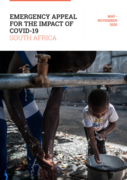
South Africa reported it fist case of COVID-19 on 5 March 2020. While the first cases were imported, local transmission has led to a rapid increase in the number of cases. As of 21 April 2020, more than 3,400 cases and 58 deaths had been confirmed.
...

While there has been real progress in addressing the burden of disease in the WHO African region, the COVID-19 pandemic has highlighted the link between health, economics and security, as the region saw decades of progress threatened, including positive trends in decreasing inequality. In the Africa
...

On August 13, 2024, the Africa CDC declared the mpox outbreak a Public Health Emergency of Continental Security (PHECS). The following day, the WHO declared it a Public Health Emergency of International Concern (PHEIC). A coordinated, continent-wide
...

The South African WHO Country Cooperation Strategy (CCS) 2023–2027 focuses on four key strategic priorities based on the country’s health needs and disease epidemiology, while also considering the need for building resilient health systems for UHC and health security in the post pandemic period.
...
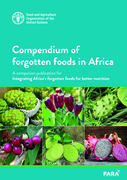
The Food and Agriculture Organization of the United Nations has launched a new Compendium of forgotten foods in Africa which is a first-of-its-kind comprehensive collection of 100 African forgotten food crops.
Also referred to as neglected, under
...
Rabies is entirely preventable, and vaccines, medicines, tools and technologies have long
been available to prevent people from dying of dog-mediated rabies. Nevertheless, rabies still
kills about 60 000 people a year, of whom over 40% are children under 15, mainly in rural areas
of economically
...
Advances have been made through expanded interventions delivered through five public health approaches: innovative and intensified disease management; preventive chemotherapy; vector ecology and management; veterinary public health services; and the provision of safe
...
This technical report presents results from the FEEDcities Project – Eastern Europe and Central Asia, a cross-sectional survey conducted in Almaty, Aktau and Kyzylorda, Kazakhstan, between July and August 2017, to evaluate the local street food en
...
This technical report presents the results of a cross-sectional survey conducted in Sarajevo, the Federation of Bosnia and Herzegovina, Bosnia and Herzegovina, between June and August 2017, as part of the FEEDcities Project (Food Environment Description in cities – eastern Europe and
...
This technical report contains the results from the FEEDcities Project – Eastern Europe and Central Asia, a cross-sectional survey of the local urban food environment conducted in Chișinău, Republic of Moldova between June and August 2016. It ch
...

Antibiotics and other antimicrobial agents are invaluable life savers, particularly in resource-limited countries where infectious diseases are abundant. Both uncomplicated and severe infections are potentially curable as long as the aetiological agents are susceptible to the
...
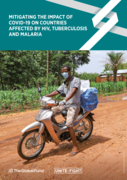
While many of the countries hit by the COVID-19 in the first few months of the year are now beginning to relax lockdown measures as infection and death rates fall, in the regions most affected by HIV, TB and malaria, such as Africa, South Asia and L
...
The UNICEF-GAIN Partnership Project
The report notes that iodine deficiency is a leading cause of preventable brain damage worldwide. Insufficient iodine during pregnancy and infancy results in neurological and psychological deficits, reducing ...
The report notes that iodine deficiency is a leading cause of preventable brain damage worldwide. Insufficient iodine during pregnancy and infancy results in neurological and psychological deficits, reducing ...

Antimicrobial resistance (AMR) is a multifaceted, international public health problem, which poses a direct threat to the safety of the population of South Africa. A national response is required to complement the development of a
...
The Zimbabwe Multi-Sectoral Cholera Elimination Plan (2018–2028) aims to eradicate cholera by improving water, sanitation, and healthcare infrastructure, strengthening disease surveillance, and expanding oral cholera vaccination (OCV). The strateg
...

Antimicrobial resistance (AMR) has emerged as a leading cause of death in the African region, surpassing fatalities from malaria, HIV, and TB. In response to this critical threat, the region has adopted the AMR Global Action Plan and the African Uni
...
The Arab region in the Middle East and North Africa (MENA) represents a substantial area of the terrestrial landmass encompassing several countries and ecosystems. This area is generally drier and warmer compared to the rest of the world and has ext
...
