
Filter
3878
Filtered Results: 3878
Text search:
Government
of
South
Africa
Featured
Recommendations
279
New Publications
888
Language
Document type
No document type
2036
Studies & Reports
979
Guidelines
321
Manuals
197
Strategic & Response Plan
144
Fact sheets
71
Training Material
51
Situation Updates
40
Infographics
27
Resource Platforms
10
Brochures
1
App
1
Countries / Regions
Global
243
South Africa
241
Kenya
128
Africa
121
Nigeria
109
Ethiopia
96
Uganda
89
Sierra Leone
67
India
66
Malawi
65
Liberia
65
Rwanda
61
Lesotho
58
Tanzania
58
Congo, Democratic Republic of
58
Namibia
58
Zambia
57
South Sudan
57
Ghana
51
East and Southern Africa
44
Zimbabwe
40
Mozambique
39
West and Central Africa
39
Nepal
37
Syria
33
Bangladesh
33
Asia
30
Senegal
27
Guinea
25
Botswana
25
Western and Central Europe
24
Middle East and North Africa
23
Cameroon
22
Central African Republic
22
Myanmar / Burma
22
Burkina Faso
21
South–East Asia Region
20
Eswatini/ Swaziland
20
Yemen
19
Latin America and the Carribbean
18
Indonesia
16
Haiti
14
Somalia
14
China
13
Afghanistan
12
Cambodia
12
Madagascar
12
Philippines
11
Sudan
11
Pakistan
11
Thailand
10
Ukraine
10
Brazil
10
Russia
10
Colombia
9
Benin
9
Mali
9
Eastern Europe and Central Asia
8
Southern Africa
8
Lebanon
8
Vietnam
8
Angola
8
Côte d’Ivoire / Ivory Coast
7
Eastern Europe
7
Togo
6
Venezuela
6
Iran
5
Burundi
5
Sri Lanka
5
Iraq
5
Mexico
4
Niger
4
Guinea-Bissau
4
Jordan
4
Western Pacific Region
4
Japan
4
Portugal
4
Chad
4
Tajikistan
3
Serbia
3
Gambia
3
Chile
3
Laos
3
Kyrgyzstan
3
Germany
3
Turkmenistan
3
Jamaica
3
Mauritius
3
Spain
3
Bosnia and Herzegovina
3
Moldova
3
Palestine
3
Libya
3
North Macedonia
2
Albania
2
Canada
2
Peru
2
Malaysia
2
Morocco
2
Italy
2
Gabon
2
France
2
Tunisia
2
United Kingdom
2
Argentina
2
Papua New Guinea
2
Egypt
2
Greece
2
North Korea
1
Timor Leste/ East Timor
1
Turkey
1
Kazakhstan
1
Estonia
1
Congo-Brazzaville
1
Vanuatu
1
Mongolia
1
Qatar
1
Armenia
1
USA
1
Croatia
1
Hungary
1
North America
1
Norway
1
Morocco
1
Azerbaijan
1
Israel
1
Djibouti
1
Romania
1
Georgia
1
Poland
1
Ecuador
1
Solomon Islands
1
Authors & Publishers
Publication Years
Category
Countries
1402
Key Resources
227
Public Health
225
Women & Child Health
197
Clinical Guidelines
196
Capacity Building
54
Pharmacy & Technologies
29
Toolboxes
HIV
371
COVID-19
337
Mental Health
273
Planetary Health
207
TB
194
Disability
193
Health Financing Toolbox
108
AMR
106
Global Health Education
105
Conflict
104
NTDs
97
Ebola & Marburg
94
Caregiver
91
Refugee
81
NCDs
70
Rapid Response
67
Pharmacy
52
Natural Hazards
46
2.0 Rapid Response
40
Malaria
38
Zika
18
Polio
18
Cholera
17
Social Ethics
16
Specific Hazards
13
South Sudan
2
Typhoon
2
The World Cities Report 2020 shows that the intrinsic value of sustainable urbanization can and should be harnessed for the wellbeing of all. The Report provides evidence and policy analysis of the value of urbanization from an economic, social and environmental perspective, including the unquantifi...

In this guide, the African Palliative Care Association (APCA) has put together evidence‑based information on the use of specific opioids commonly used in the management of moderate‑to‑severe pain to manage both cancer and non‑cancer pain. APCA hopes that this guide will be a useful tool i...
In light of the decline in new Ebola cases, strategies are now needed to scale down the activities and bed capacities in Ebola care facilities. These facilities include Ebola treatment units, community care centres, Ebola treatment centres and isolation centres. The Governments of Guinea, Liberia an...
The WHO Framework Convention on Tobacco Control (WHO FCTC) is an evidence-based treaty that reaffirms the right of all people to the highest standard of health and was developed in response to the globalization of the tobacco epidemic. Member States of the WHO South-East Asia Region have made...

The findings of the report are both urgent and devastating. At the current rate of progress, by 2040 we would still have 1.9 million new HIV infections and 990,000 AIDS-related deaths in children. But if funding for HIV prevention and treatment continues to fall as current trends suggest, the world ...
The WHO Guidelines on risk reduction of cognitive decline and dementia provide evidence-based recommendations on lifestyle behaviours and interventions to delay or prevent cognitive decline and dementia. These WHO Guidelines are an important tool for health care providers as well as governments, pol...
Executive summary On 27th and 28th April 2021, the division of Disease Control and Prevention in collaboration with Public Health England, organized a virtual consultative meeting as part of the consultations with Member States and partners for the development of the Africa CDC five years strategic ...

Cancer in sub-Saharan Africa
recommended
Lancet Oncol 2022; 23: e251–312Published OnlineMay 9, 2022 https://doi.org/10.1016/S1470-2045(21)00720-8
In sub-Saharan Africa (SSA), urgent action is needed to curb a growing crisis in cancer incidence and mortality.
Without rapid interventions, data estimates show a major increase in cancer mo...

This toolkit for integrated vector management (IVM) is designed to help national and regional programme managers coordinate across sectors to design and run large IVM programmes.
The toolkit provides the technical detail required to plan, implement, monitor and evaluate an IVM approach. IVM can...
The toolkit provides the technical detail required to plan, implement, monitor and evaluate an IVM approach. IVM can...
12 May 2021. This third survey in the series shows that the COVID-19 pandemic continues to impact societies, not only in terms of health, but also social and economic conditions and day-to-day life
RESULTS: Between 76 and 97% of the PHCS offered RMCAH services before the lockdown. Except in antenatal, delivery and adolescent care, there was a decline of between 2 and 6% in all the services during the lockdown and up to 10% decline after the lockdown with variation across and within States. Dur...
A series of data syntheses from the RCCE Collective Service. It focuses on public perceptions of the COVID-19 vaccinations, bringing together 66 data sources from quantitative surveys across 107 countries and six regions, underpinned by a rapid review of additional studies and community feedback dat...
WHO Guideline. Since 2010, countries in the meningitis belt have started to introduce a new serogroup A meningococcal conjugate vaccine conferring individual protection and herd immunity. Following the successful roll-out of this vaccine, epidemics due to Neisseria meningitidis serogroup A (NmA) are...

This report is the annual global monitoring report documenting progress towards Sustainable Development Goal (SDG) 2 targets 2.1 and 2.2. This year’s report explores the links between urbanization and changing food systems and how these changes are impacting the availability, affordability and des...
In February 2014, there was an outbreak of the Ebola Virus Disease (EVD) in Guinea, which has spread to Liberia, Mali, Nigeria, Senegal and Sierra Leone causing untold hardship and hundreds of deaths in these countries. As of 6 March 2015, a total of 24,282 cases, and 9,976 deaths, which were attrib...

The Strategy to respond to antimalarial drug resistance in Africa is a technical and advocacy document, grounded in the best available evidence to date and aimed at minimizing the threat and impact of antimalarial drug resistance of Plasmodium falciparum parasites in Africa. Its objectives are to: i...
mnesty International’s annual report on the state of the world’s human rights in 2021, published in March 2022, shows that promises to “build back better” after the Covid-19 pandemic were little more than lip service. Hopes of global cooperation withered in the face of vaccine hoarding and c...
This was a Phase 3, multi-center, randomized, open-label, parallel-group, active control study where 273 male and female patients with first stage Trypanosoma brucei gambiense HAT were treated at six sites: one trypanosomiasis reference center in Angola, one hospital in South Sudan, and four hospita...
This volume contains monographs prepared at the ninety-first meeting of the Joint FAO/WHO Expert Committee on Food Additives (JECFA), which met virtually online from 1 to 12 February 2021.
The detailed monographs in this volume summarize data on specific contaminants in food. Individual monographs ...
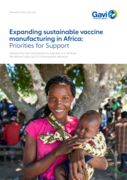
Despite high regional demand for vaccines valued at over US$ 1 billion annually, Africa’s vaccine industry provides only 0.1% of global supply. Vaccine inequity and hoarding at the start of the pandemic, which resulted in delays in obtaining COVID-19 doses, stimulated new resolve to address future...
