
Filter
2878
Text search:
Health
Care
without
Harm
Featured
Recommendations
328
New Publications
640
Language
Document type
No document type
1525
Guidelines
456
Studies & Reports
433
Manuals
224
Strategic & Response Plan
98
Training Material
67
Fact sheets
43
Situation Updates
15
Infographics
6
Brochures
5
Resource Platforms
2
Online Courses
2
App
1
Countries / Regions
Global
135
India
125
Western and Central Europe
65
Kenya
59
Syria
49
South Africa
47
Ukraine
45
Uganda
41
Nepal
38
Nigeria
34
Myanmar / Burma
34
Ethiopia
32
Bangladesh
31
Latin America and the Carribbean
29
Zambia
28
Tanzania
28
Sierra Leone
27
Namibia
25
Eastern Europe
21
Philippines
20
South–East Asia Region
20
Africa
20
Asia
19
Liberia
18
Ghana
17
South Sudan
16
Indonesia
16
Malawi
14
Rwanda
13
Congo, Democratic Republic of
12
Yemen
12
Germany
11
Lebanon
11
Eastern Europe and Central Asia
11
Cambodia
10
East and Southern Africa
10
Middle East and North Africa
10
Russia
10
Afghanistan
9
West and Central Africa
9
Vietnam
9
Zimbabwe
8
Pakistan
8
Jordan
8
Venezuela
8
Tajikistan
8
USA
7
Thailand
7
Lesotho
7
Haiti
6
Mozambique
6
Western Pacific Region
6
Iraq
5
Colombia
5
Botswana
5
Laos
5
Moldova
5
Georgia
5
Central African Republic
4
Brazil
4
Greece
4
Sri Lanka
4
Albania
4
United Kingdom
4
Guinea
3
Senegal
3
Turkey
3
China
3
Sudan
3
North Macedonia
3
Mexico
3
Poland
3
Iran
3
Kyrgyzstan
3
Somalia
2
Malaysia
2
Benin
2
Eswatini/ Swaziland
2
Serbia
2
Hungary
2
Croatia
2
Fiji
2
Palestine
2
Canada
2
Romania
2
Japan
2
Portugal
2
Spain
2
Morocco
1
Cameroon
1
Egypt
1
Gambia
1
Ireland
1
Singapore
1
Papua New Guinea
1
Argentina
1
Burundi
1
Ecuador
1
Libya
1
Guatemala
1
Madagascar
1
Chile
1
Bhutan
1
Armenia
1
Southern Africa
1
Qatar
1
Estonia
1
Lithuania
1
Uzbekistan
1
Kazakhstan
1
North America
1
Turkmenistan
1
Jamaica
1
Norway
1
Azerbaijan
1
Belarus
1
Bosnia and Herzegovina
1
Latvia
1
Authors & Publishers
Publication Years
Category
Countries
705
Key Resources
237
Women & Child Health
233
Clinical Guidelines
225
Public Health
143
Capacity Building
80
Pharmacy & Technologies
24
Toolboxes
Mental Health
460
HIV
356
COVID-19
212
Conflict
125
Caregiver
114
TB
104
Refugee
102
Planetary Health
99
Disability
89
Pharmacy
73
Global Health Education
56
AMR
49
Ebola & Marburg
44
Rapid Response
42
Specific Hazards
36
Natural Hazards
34
NCDs
30
2.0 Rapid Response
29
NTDs
28
Health Financing Toolbox
22
Social Ethics
19
Malaria
17
Polio
11
Zika
11
Cholera
9
South Sudan
1

Promoting health and preventing disease is a critical component of the effort required to achieve Universal Health Coverage (UHC). to date, efforts to achieve UHC have focused mostly on strengthenin
...
Noma (cancrum oris) is a severe gangrenous disease of the mouth and face. It mostly affects children between the ages of 2 and 6 years living in extreme poverty. In addition to the known factors such as malnutrition, lack of vaccination in children and poor oral hygiene, several social and environme
...
This technical guidance outlines current evidence, knowledge and best practice relating to incidences of violence and injuries among refugees and migrants in the WHO European Region. It highlights key principles, summarizes priority actions and challenges, maps existing international commitments and
...
Q7: What is the effectiveness, safety and role of pharmacological and non-pharmacological interventions, within non- specialist health care for children with a diagnosis of Attention-deficit hyperac
...
More than 700 000 people lose their life to suicide every year. The world is not on track to reach the 2030 suicide reduction targets. WHO advocates for countries to take action to prevent suicide, ideally through a comprehensive national suicide prevention strategy. Governments and communities can
...

The Infection prevention and control in the context of coronavirus disease 2019 (COVID-19): a living guideline consolidates technical guidance developed and published during the COVID-19 pandemic into evidence-informed recommendations for infection prevention and control (IPC). This living guideline
...
This new guideline on non-clinical interventions to reduce unnecessary caesarean sections incorporates the views, fears and beliefs of both women and health professionals about caesarean sections. It also considers the complex dynamics and limitatio
...
This updated step by step guide aims to assist the ministries of health (MoHs) in developing the national action plans for noma prevention and control, with a view to sustainably reducing the incidence of noma as a public
...

About one fourth of the world’s population is estimated to have been infected with the tuberculosis (TB) bacilli, and about 5–10% of those infected develop TB disease in their lifetime. The risk for TB disease after infection depends on several factors, the most important being the person’s im
...

July 2021. This publication brings together important clinical and programmatic updates produced by WHO since 2016 and provides comprehensive, evidence-informed recommendations and good practice statements within a public health, rights-based and pe
...
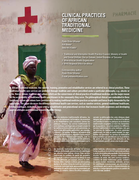
In African traditional medicine, the curative, training, promotive and rehabilitative services are referred to as clinical practices. These traditional health care services are provided through trad
...
The aim of this document is to provide interim guidance for interventions to reduce the risk of maternal Zika virus infection and to manage potential complications during pregnancy. This guidance is based on the best available research evidence and covers areas prioritized by an international, multi
...

About one fourth of the world’s population is estimated to have been infected with the tuberculosis (TB) bacilli, and about 5–10% of those infected develop TB disease in their lifetime. The risk for TB disease after infection depends on several factors, the most important being the person’s im
...

The Global guidance framework for the responsible use of the life sciences: mitigating biorisks and governing dual-use research (the framework) aims to provide values and principles, tools and mechanisms to support Member States and key stakeholders to mitigate and prevent biorisks and govern dual-u
...
The revised guidelines contain recommendations for specific administrative, environmental controls and respiratory protection, following the assessment made by an external group of experts convened as members of the Guideline Development Group. Moreover, these guidelines focus on interventions speci
...
This handbook was designed primarily as a tool for district clinical specialist teams (DCSTs), and for the provincial specialists who will guide and support their work. This handbook will also be useful to managers of health facilities, heads of cli
...
Policy brief.
HIV self-testing (HIVST) is a convenient and confidential option for HIV testing. In 2016 WHO recommended HIVST as a safe, accurate and effective way to reach people who may not test otherwise, including people from key populations, men and young people. Lay users can perform HIVST r
...
Infectious disease outbreaks are frequently characterized by scientific uncertainty, social and institutional disruption, and an overall climate of fear and distrust. Policy makers and public health professionals may be forced to weigh and prioritiz
...
Climate change has important implications for the health and futures of children and young people, yet they have little power to limit its harm, making them vulnerable to climate anxiety. This is th
...
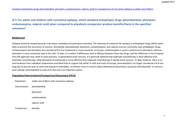
Q 7: For adults and children with convulsive epilepsy, which standard antiepileptic drugs (phenobarbital, phenytoin, carbamazepine, valproic acid) when compared to placebo/a comparator produce benefits/harm in the specified outcomes?
