
Filter
589
Text search:
World
Health
Organization
(WHO),
United
Nations
Populations
Fund
(UNFPA)
Featured
42
229
Language
Document type
397
81
47
25
18
6
6
5
1
1
1
Countries / Regions
25
25
24
24
20
19
18
14
13
12
12
11
10
9
9
8
8
7
6
6
6
6
5
5
4
4
4
4
4
4
4
4
4
4
4
4
4
3
3
3
3
3
3
3
3
2
2
2
2
2
2
2
2
2
2
1
1
1
1
1
1
1
1
1
1
1
1
1
1
1
1
1
1
1
1
1
1
1
Authors & Publishers
Publication Years
Category
275
95
35
27
16
12
1
Toolboxes
80
30
30
18
17
13
11
10
10
9
4
4
3
3
3
2
2
1
1
1
The Republic of the Union of Myanmar’s National Strategic Plan on HIV/AIDS 2016–2020 is the strategic guide for the country’s response to HIV at national, state/regional and local levels. The framework describes the current dynamics of the HIV epidemic and articulates a strategy to optimize in
...
National Tuberculosis and Leprosy Conrol Programme
Accessed: 04.10.2019
The data collection process was organized by UCDC Director, Natalia Nizova, and M&E Department Head, Igor Kuzin, and implemented by M&E specialists from oblast AIDS Centers: Zhanna Antonenko, Oksana Gorbachuk, Volodymyr Zahorovskyi (Kiev City); Anna Lopatenko, Irina Kozina, I
...
The project will support preventive actions, traditional medicine and the coordination and
implementation capacities of the national framework for HIV/AIDS control.
The Blueprint is intended to guide programming, resource allocation, and commitments to achieve the national objective of a contraceptive prevalence rate (CPR) of 36 percent by 2018.
A Policy analysis


UNICEF Strategic Plan 2018-2021. Draft Theory of Change Paper

Developing countries face disastrous healthcare setbacks, hunger and huge international debt as covid-19’s ‘final wave’

Regional Network for Equity in Health in east and southern Africa (EQUINET): Disussion Paper 110
This report compiles evidence from published, grey literature and key informants on the UNMHCP since its introduction in Uganda’s ...
This report compiles evidence from published, grey literature and key informants on the UNMHCP since its introduction in Uganda’s ...

This publication provides guidance to governments, civil society organizations (nongovernmental organizations and community-based organizations) and other partners implementing HIV prevention, care and treatment programs with key populations. This g
...
Strengthening HIV prevention among most-at-risk populations (MARPs) in the Syrian Arab Republic:
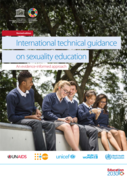
This revised and fully updated edition of the
International technical guidance on sexuality education
benefits from a new review of the current evidence, and reaffirms the position of sexuality education within a framework of human rights and gender equality. It promotes structured learning about
...

Real Time Evaluation of the Ebola Control Programs in Guinea, Sierra Leone and Liberia. Final Report
The scope includes the assessment of activities to improve the response to affected populations, stakeholders, partners and donors, building on lessons learnt so far in this outbreak.

The GFF needs an additional US$2.5 billion from 2021 to 2025 to enable countries to protect health gains and accelerate progress toward the 2030 Goals. Of this amount, the GFF urgently needs to secure new pledges of US$1.2 billion by the end of 202
...
