
Filter
1801
Text search:
livelihoods
Featured
133
545
Language
Document type
865
458
136
125
90
49
36
29
4
4
3
2
Countries
116
87
64
62
59
50
46
38
37
35
34
33
33
31
30
26
25
25
24
23
23
22
22
21
20
16
16
15
14
14
14
13
13
13
13
13
12
12
11
11
10
10
9
9
8
8
8
8
7
7
7
6
6
5
5
5
5
5
5
5
4
4
4
4
4
4
4
4
3
3
3
3
3
3
3
3
2
2
2
2
2
2
2
2
2
2
2
2
2
2
2
2
2
2
2
2
2
1
1
1
1
1
1
1
1
1
1
1
1
1
1
1
1
1
1
1
1
1
Authors & Publishers
Publication Years
Category
699
239
58
43
19
13
1
Toolboxes
251
202
164
104
101
91
85
65
48
45
31
24
21
21
18
18
12
9
7
6
6
4
4
3
3
2
1

This study aimed to estimate the cost-effectiveness of a community-based rehabilitation (CBR) programme known as Inspire2Care (I2C), implemented in Nepal by Karuna Foundation Nepal. In the absence of any gold standard methodology to measure cost-effectiveness, the authors developed a new methodology
...

This article describes a Community-Based Participatory Approach (CBPA) for children with intellectual disability in Endosulfan affected areas of Kasaragod district in Kerala state of India. The CBPA strategy evolved from Community Based Rehabilitation (CBR) and was led by Local Self-Government (LSG)
...
Myanmar 2019 Humanitarian needs overview
recommended
Over 244,000 displaced people remain in camps or camp-like situations in Kachin, Shan, Rakhine
and Kayin states. Children make up at least 50 per cent of this population, while women and„Myanmar: 2019 Humanitarian Needs Overview - Myanmar“. ReliefWeb. Zugegriffen 4. Januar 2019. https://reliefw
...
While much of Myanmar’s population continues to benefit from the ongoing process of political and economic reforms, there are close to one million people who remain in need of emergency assistance and protection as a result of ongoing crises in Rakhine, Kachin and Shan. In addition, despite signif
...

EVALUATION REPORT | This evaluation is the first comprehensive global exercise to examine UNICEF’s programme response in protecting children in emergencies. Its purpose is to strengthen child protection programming by assessing performance in recent years and to draw lessons and recommendations th
...
The recruitment and use of children violates their rights and causes them physical, developmental, emotional, mental, and spiritual harm. The impact on their mental and physical well-being breaches the most fundamental human rights and represents a grave threat to durable peace and sustainable deve
...
This checklist will help child psychosocial support and Child Friendly Space supervisors adhere to quality standards during program implementation. This checklist was developed by consultant Nicole Bohl, based on her previous work with Plan International and Save the Children. It has been adapted wi
...
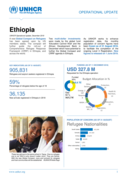
KEY INDICATORS (AS OF 31 AUGUST)
905,831 Refugees and asylum seekers registered in Ethiopia
59% Percentage of refugees below the age of 18
36,135 New arrivals registered in Ethiopia in 2018
Crisis Group’s Watch List identifies ten countries or regions at risk of deadly conflict or escalation thereof in 2021. In these places, early action, driven or supported by the EU and its member states, could enhance prospects for peace and stability.
Crisis Group’s early-warning Watch List id
...
UNHCR, the UN Refuge Agency, and NGO partners are launching an appeal for US$2.7 billion to address the live-saving humanitarian needs of South Sudanese refugees in 2019 and 2020.
Five years on since the onset of a brutal civil war, over 2.2 million South Sudanese refugees have sought safety in six
...
The Joint Response Plan sets out a comprehensive programme shaped around three strategic objectives – deliver protection, provide life-saving assistance and foster social cohesion. The Plan covers all humanitarian sectors and addresses key cross-cutting issues, including protection and gender main
...
Investing in Child Protection
Building Inclusive, Productive and Resilient Communities in Malawi

This document is designed to provide UNICEF staff and UNICEF partner staff with principles and concepts that can assist them to respond to the psychosocial needs of children in natural disasters and social emergencies such as armed conflict and other forms of violence. It aims to introduce humanitar
...
The objective of this study is to analyze the strengths, weaknesses, sustainability, and impact of the tsunami response in Sri Lanka and Indonesia 10 years later. A cross cutting theme of this study is the assessment of whether communities are now better prepared to respond to and cope with disaster
...
Around the world, approximately 1 in 45 children are on the move – nearly 50 million boys and girls that have migrated across borders or been forcibly displaced within their own countries.1 Climate-related events
and their impacts are already contributing significantly to these staggering numbers
...
The disaster and Red Cross Red Crescent response to date
9 March 2019: Tropical Cyclone Idai forms over Northern Mozambique Channel. CVM preparedness and early warning actions underway
13 March 2019: IFRC Surge Capacity is deployed to Maputo
14 March 2019: 342,562 Swiss francs allocated from th
...
