
Filter
3578
Text search:
US
Agency
for
International
Development
Featured
284
1016
Language
3421
109
60
47
31
18
14
11
7
6
4
3
3
2
2
2
2
2
2
2
2
2
2
2
2
2
2
2
2
2
2
2
2
1
1
1
1
1
1
1
1
1
1
1
1
1
1
1
1
1
1
Document type
2054
715
328
209
134
61
29
28
10
6
1
1
1
Countries / Regions
181
116
91
87
85
81
78
74
70
68
68
67
66
56
54
54
52
51
50
50
44
41
38
36
36
36
32
32
30
29
29
28
27
25
25
21
21
18
17
16
16
15
15
15
14
14
13
12
12
12
11
11
11
10
10
10
10
9
9
9
9
8
8
8
7
7
7
7
6
6
5
5
5
5
4
4
4
4
4
4
4
4
4
4
4
3
3
3
3
3
3
3
3
3
3
3
3
3
3
2
2
2
2
2
2
2
2
2
2
2
2
1
1
1
1
1
1
1
1
1
1
1
1
1
1
1
1
1
1
1
1
1
1
1
1
Authors & Publishers
386
146
143
129
97
70
70
57
43
38
27
26
25
23
21
19
18
17
17
16
16
15
15
15
15
15
14
13
12
12
12
12
11
11
11
11
10
10
10
10
9
9
9
9
9
9
8
8
8
8
8
8
8
8
8
7
7
7
7
7
7
7
7
7
7
7
7
6
6
6
6
6
6
6
6
6
6
6
6
6
6
6
6
6
6
6
6
6
6
5
5
5
5
5
5
5
5
5
5
5
5
5
5
5
5
5
5
5
5
5
5
4
4
4
4
4
4
4
4
4
4
4
4
4
4
4
4
4
4
4
4
4
4
4
4
4
4
4
4
4
4
4
4
4
4
4
4
4
4
4
4
4
4
3
3
3
3
3
3
3
3
3
3
3
3
3
3
3
3
3
3
3
3
3
3
3
3
3
3
3
3
3
3
3
3
3
3
3
3
3
3
3
3
3
3
3
3
3
3
3
3
3
3
3
3
3
3
3
3
3
3
3
3
3
3
3
3
3
3
3
3
3
3
3
3
3
3
3
3
3
3
3
3
2
2
2
2
2
2
2
2
2
2
2
2
2
2
2
2
2
2
2
2
2
2
2
2
2
2
2
2
2
2
2
2
2
2
2
2
2
2
2
2
2
2
2
2
2
2
2
2
2
2
2
2
2
2
2
2
2
2
2
2
2
2
2
2
2
2
2
2
2
2
2
2
2
2
2
2
2
2
2
2
2
2
2
2
2
2
2
2
2
2
2
2
2
2
2
2
2
2
2
2
2
2
2
2
2
2
2
2
2
2
2
2
2
2
2
2
2
2
2
2
2
2
2
2
2
2
2
2
2
2
2
2
2
2
2
2
2
2
2
2
2
2
2
2
2
2
2
2
2
2
2
2
2
2
2
2
2
2
2
2
2
2
2
2
2
2
2
2
2
2
2
2
2
2
2
2
2
2
2
2
2
2
2
2
2
2
2
2
2
2
2
2
2
2
2
2
2
2
2
2
2
2
2
2
2
2
2
2
2
2
2
2
2
2
2
2
2
2
2
2
2
2
1
1
1
1
1
1
1
1
1
1
1
1
1
1
1
1
1
1
1
1
1
1
1
1
1
1
1
1
1
1
1
1
1
1
1
1
1
1
1
1
1
1
1
1
1
1
1
1
1
1
1
1
1
1
1
1
1
1
1
1
1
1
1
1
1
1
1
1
1
1
1
1
1
1
1
1
1
1
1
1
1
1
1
1
1
1
1
1
1
1
1
1
1
1
1
1
1
1
1
1
1
1
1
1
1
1
1
1
1
1
1
1
1
1
1
1
1
1
1
1
1
1
1
1
1
1
1
1
1
1
1
1
1
1
1
1
1
1
1
1
1
1
1
1
1
1
1
1
1
1
1
1
1
1
1
1
1
1
1
1
1
1
1
1
1
1
1
1
1
1
1
1
1
1
1
1
1
1
1
1
1
1
1
1
1
1
1
1
1
1
1
1
1
1
1
1
1
1
1
1
1
1
1
1
1
1
1
1
1
1
1
1
1
1
1
1
1
1
1
1
1
1
1
1
1
1
1
1
1
1
1
1
1
1
1
1
1
1
1
1
1
1
1
1
1
1
1
1
1
1
1
1
1
1
1
1
1
1
1
1
1
1
1
1
1
1
1
1
1
1
1
1
1
1
1
1
1
1
1
1
1
1
1
1
1
1
1
1
1
1
1
1
1
1
1
1
1
1
1
1
1
1
1
1
1
1
1
1
1
1
1
1
1
1
1
1
1
1
1
1
1
1
1
1
1
1
1
1
1
1
1
1
1
1
1
1
1
1
1
1
1
1
1
1
1
1
1
1
1
1
1
1
1
1
1
1
1
1
1
1
1
1
1
1
1
1
1
1
1
1
1
1
1
1
1
1
1
1
1
1
1
1
1
1
1
1
1
1
1
1
1
1
1
1
1
1
1
1
1
1
1
1
1
1
1
1
1
1
1
1
1
1
1
1
1
1
1
1
1
1
1
1
1
1
1
1
1
1
1
1
1
1
1
1
1
1
1
1
1
1
1
1
1
1
1
1
1
1
1
1
1
1
1
1
1
1
1
1
1
1
1
1
1
1
1
1
1
1
1
1
1
1
1
1
1
1
1
1
1
1
1
1
1
1
1
1
1
1
1
1
1
1
1
1
1
1
1
1
1
1
1
1
1
1
1
1
1
1
1
1
1
1
1
1
1
1
1
1
1
1
1
1
1
1
1
1
1
1
1
1
1
1
1
1
1
1
1
1
1
1
1
1
1
1
1
1
1
1
1
1
1
1
1
1
1
1
1
1
1
1
1
1
1
1
1
1
1
1
1
1
1
1
1
1
1
1
1
1
1
1
1
1
1
1
1
1
1
1
1
1
1
1
1
1
1
1
1
1
1
1
1
1
1
1
1
1
1
1
1
1
1
1
1
1
1
1
1
1
1
1
1
1
1
1
1
1
1
1
1
1
1
1
1
1
1
1
1
1
1
1
1
1
1
1
1
1
1
1
1
1
1
1
1
1
1
1
1
1
1
1
1
1
1
1
1
1
1
1
1
1
1
1
1
1
1
1
1
1
1
1
1
1
1
1
1
1
1
1
1
1
1
1
1
1
1
1
1
1
1
1
1
1
1
1
1
1
1
1
1
1
1
1
1
1
1
1
1
1
1
1
1
1
1
1
1
1
1
1
1
1
1
1
1
1
1
1
1
1
1
1
1
1
1
1
1
1
1
1
1
1
1
1
1
1
1
1
1
1
1
1
1
1
1
1
1
1
1
1
1
1
1
1
1
1
1
1
1
1
1
1
1
1
1
1
1
1
1
1
1
1
1
1
1
1
1
1
1
1
1
1
1
1
1
1
1
1
1
1
1
1
1
1
1
1
1
1
1
1
1
1
1
1
1
1
1
1
1
1
1
1
1
1
1
1
1
1
1
1
1
1
1
1
1
1
1
1
1
1
1
1
1
1
1
1
1
1
1
1
1
1
1
1
1
1
1
1
1
1
1
1
1
1
1
1
1
1
1
1
1
1
1
1
1
1
1
1
1
1
1
1
1
1
1
1
1
1
1
1
1
1
1
1
1
1
1
1
1
1
1
1
1
1
1
1
1
1
1
1
1
1
1
1
1
1
1
1
1
1
1
1
1
1
1
1
1
1
1
1
1
1
1
1
1
1
1
1
1
1
1
1
1
1
1
1
1
1
1
1
1
1
1
1
1
1
1
1
1
1
1
1
1
1
1
1
1
1
1
1
1
1
1
1
1
1
1
1
1
1
1
1
1
1
1
1
1
1
1
1
1
1
1
1
1
1
1
1
1
1
1
1
1
1
1
1
1
1
1
1
1
1
1
1
1
1
1
1
1
1
1
1
1
1
1
1
1
1
1
1
1
1
1
1
1
1
1
1
1
1
1
1
1
1
1
1
1
1
1
1
1
1
1
1
1
1
1
1
1
1
1
1
1
1
1
1
1
1
1
1
1
1
1
1
1
1
1
1
1
1
1
1
1
1
1
1
1
1
1
1
1
1
1
1
1
1
1
1
1
1
1
1
1
1
1
1
1
1
1
1
1
1
1
1
1
1
1
1
1
1
1
1
1
1
1
1
1
1
1
1
1
1
1
1
1
1
1
1
1
1
1
1
1
1
1
1
1
1
1
1
1
1
1
1
1
1
1
1
1
1
1
1
1
1
1
1
1
1
1
1
1
1
1
1
1
1
1
1
1
1
1
1
1
1
1
1
1
1
1
1
1
1
1
1
1
1
1
1
1
1
1
1
1
1
1
1
1
1
1
1
1
1
1
1
1
1
1
1
1
1
1
1
1
1
1
1
1
1
1
1
1
1
1
1
1
1
1
1
1
1
1
1
1
1
1
1
1
1
1
1
1
1
1
1
1
1
1
1
1
1
1
1
1
1
1
1
1
1
1
1
1
1
1
1
1
1
1
1
1
1
1
1
1
1
1
1
1
1
1
1
1
1
1
1
1
1
1
1
1
1
1
1
1
1
1
1
1
1
1
1
1
1
1
1
1
1
1
1
1
1
1
1
1
1
1
1
1
1
1
1
1
1
1
1
1
1
1
1
1
1
1
1
1
1
1
1
1
1
1
1
1
1
1
1
1
1
1
1
1
1
1
1
1
1
1
1
1
1
1
1
1
1
1
1
1
1
1
1
1
1
1
1
1
1
1
1
1
1
1
1
1
1
1
1
1
1
1
1
1
1
1
1
1
1
1
1
1
1
1
1
1
1
1
1
1
1
1
1
1
1
1
1
1
1
1
1
1
1
1
1
1
1
1
1
1
1
1
1
1
1
1
1
1
1
1
1
1
1
1
1
1
1
1
1
1
1
1
1
1
1
1
1
1
1
1
1
1
1
1
1
1
1
1
1
1
1
1
1
1
1
1
1
1
1
1
1
1
1
1
1
1
1
1
1
1
1
1
1
1
1
1
1
1
1
1
1
1
1
1
1
1
1
1
1
1
1
1
1
1
1
1
1
1
1
1
1
1
1
1
1
1
1
1
1
1
1
1
1
1
1
1
1
1
1
1
1
1
1
1
1
1
1
1
1
1
1
1
1
1
1
1
1
1
1
1
1
1
1
1
1
1
1
1
1
1
1
1
1
1
1
1
1
1
1
1
1
1
1
1
1
1
1
1
1
1
1
1
1
1
1
1
1
1
1
1
1
1
1
1
1
1
1
1
1
1
1
1
1
1
1
1
1
1
1
1
1
1
1
1
1
1
1
1
1
1
1
1
1
1
1
1
1
1
1
1
1
1
1
1
1
1
1
1
1
1
1
1
1
1
1
1
1
1
1
1
1
1
1
1
1
1
1
1
1
1
1
1
1
1
1
1
1
1
1
1
1
1
1
1
1
1
1
1
1
1
1
1
1
1
1
1
1
1
1
1
1
1
1
1
1
1
1
1
1
1
1
1
1
1
1
1
1
1
1
1
1
1
1
1
1
1
1
1
1
1
1
1
1
1
1
1
1
1
1
1
1
1
1
1
1
1
1
1
1
1
1
1
1
1
1
1
1
1
1
1
1
1
1
1
1
1
1
1
1
1
1
1
1
1
1
1
1
1
1
1
1
1
1
1
1
1
1
1
1
1
1
1
1
1
1
1
1
1
1
1
1
1
1
1
1
1
1
1
1
1
1
1
1
1
1
1
1
1
1
1
1
1
1
1
1
1
1
1
1
1
1
1
1
1
1
1
1
1
1
1
1
1
1
1
1
1
1
1
1
1
1
1
1
1
1
1
1
1
1
1
1
1
1
1
1
1
1
1
1
1
1
1
1
1
1
1
1
1
1
1
1
1
1
1
1
1
1
1
1
1
1
1
1
1
1
1
1
1
1
1
1
1
1
1
1
1
1
1
1
1
1
1
1
1
1
1
1
1
1
1
1
1
1
1
1
1
1
1
1
1
1
1
1
1
1
1
1
1
1
1
1
1
1
1
1
1
1
1
1
1
1
1
1
1
1
1
1
1
1
1
1
1
1
1
1
1
1
1
1
1
1
1
1
1
1
1
1
1
1
1
1
1
1
1
1
1
1
1
1
1
1
1
1
1
1
1
1
1
1
1
1
1
1
1
1
1
1
1
1
1
1
1
1
1
1
1
1
1
1
1
1
1
1
1
1
1
1
1
1
1
1
1
1
1
1
1
1
1
1
1
1
1
1
1
1
1
1
1
1
1
1
1
1
1
1
1
1
1
1
1
1
1
1
1
1
1
1
1
1
1
1
1
1
1
1
1
1
1
1
1
1
1
1
1
1
1
1
1
1
1
1
1
1
1
1
1
1
1
1
1
1
1
1
1
1
1
1
1
1
1
1
1
1
1
1
1
1
1
1
1
1
1
1
1
1
1
1
1
1
1
1
1
1
1
1
1
1
1
1
1
1
1
1
1
1
1
1
1
1
1
1
1
1
1
1
1
1
1
1
1
1
1
1
1
1
1
1
1
1
1
1
1
1
1
1
1
1
1
1
1
1
1
1
1
1
1
1
1
1
1
1
1
1
1
1
1
1
1
1
1
1
1
1
1
1
1
1
1
1
1
1
1
1
1
1
1
1
1
1
1
1
1
1
1
1
1
1
1
1
1
1
1
1
1
1
1
1
1
1
1
1
1
1
1
1
1
1
1
1
1
1
1
1
1
1
1
1
1
1
1
1
1
1
1
1
1
1
1
1
1
1
1
1
1
1
1
1
1
1
1
1
1
1
1
1
1
1
1
1
1
1
1
1
1
1
1
1
1
1
1
1
1
1
1
1
1
1
1
1
1
1
1
1
1
1
1
1
1
1
1
1
1
1
1
1
1
1
1
1
1
1
1
1
1
1
1
1
1
1
1
1
1
1
1
1
1
1
1
1
1
1
1
1
1
1
1
1
1
1
1
1
1
1
1
1
1
1
1
1
1
1
1
1
1
1
1
1
1
1
1
1
1
1
1
1
1
1
1
1
1
1
1
1
1
1
1
1
1
1
1
1
1
1
1
1
1
1
1
1
1
1
1
1
1
1
1
1
1
1
1
1
1
1
1
1
1
1
1
1
1
1
1
1
1
1
1
1
1
1
1
1
1
1
1
1
1
1
1
1
1
1
1
1
1
1
1
1
1
1
1
1
1
1
1
1
1
1
1
1
1
1
1
1
1
1
1
1
1
1
1
1
1
1
1
1
1
1
1
1
1
1
1
1
1
1
1
1
1
1
1
1
1
1
1
1
1
1
1
1
1
1
1
1
1
1
1
1
1
1
1
1
1
1
1
1
1
1
1
1
1
1
1
1
1
1
1
1
1
1
1
1
1
1
1
1
1
1
1
1
1
1
1
1
1
1
1
1
1
1
1
1
1
1
1
1
1
1
1
1
1
1
1
1
1
1
1
1
1
1
1
1
1
1
1
1
1
1
1
1
1
1
1
1
1
1
1
1
1
1
1
1
1
1
1
1
1
1
1
1
1
1
1
1
1
1
1
1
1
1
1
1
1
1
1
1
1
1
1
1
1
1
1
1
1
1
1
1
1
1
1
1
1
1
1
1
1
1
1
1
1
1
1
1
1
1
1
1
1
1
1
1
1
1
1
1
1
1
1
1
1
1
1
1
1
1
1
1
1
1
1
1
1
1
1
1
1
1
1
1
1
1
1
1
1
1
1
1
1
1
1
1
1
1
1
1
1
1
1
1
1
1
1
1
1
1
1
1
1
1
1
1
1
1
1
1
1
1
1
1
1
1
1
1
1
1
1
1
1
1
1
1
1
1
1
1
1
1
1
1
1
1
1
1
1
1
1
1
1
1
1
1
1
1
1
1
1
1
1
1
1
1
1
1
1
1
1
1
1
1
1
1
1
1
1
1
1
1
1
1
1
1
1
1
1
1
1
1
1
1
1
1
1
1
1
1
1
1
1
1
1
1
1
1
Publication Years
929
2314
326
7
2
Category
1357
286
215
172
171
70
38
Toolboxes
244
205
192
188
180
177
148
99
89
87
86
77
73
69
68
61
45
44
43
33
32
25
18
17
14
2
2

This publication presents the Agenda for the Americas on Health, Environment, and Climate Change 2021–2030 (the Agenda). The Agenda is a call to action to the health sector to lead the charge to address environmental determinants of health in the
...
Americas. The Pan American Health Organization (PAHO) will work with Member States to achieve its goal and objective to ensure healthy lives and promote well-being for all at all ages using a sustainable and equitable approach that places a priority on reducing health inequity. The Agenda has been developed under the umbrella of the WHO Global Strategy on Health, Environment, and Climate Change, and builds upon the commitments set forth in the Sustainable Health Agenda for the Americas 2018–2030 and the PAHO Strategic Plan 2020–2025. The Agenda was developed in consultation with the Technical Advisory Group and through a consensus-driven decision-making process with Member States during the 2019–2020 period. Looking toward the achievement of Sustainable Development Goal 3, the Agenda focuses on: improving the performance of environmental public health programs and institutions; fostering environmentally resilient and sustainable health systems; and promoting environmentally healthy and resilient cities and communities. Its implementation will be context-specific, based on the needs and realities of the countries. It will benefit countries and territories by promoting good governance practices, strengthening the leadership and coordination roles of the health sector, fostering cross-sectoral action, focusing on primary prevention, and enhancing evidence and communication. It will facilitate access to human, technical, and financial resources necessary to address environmental determinants of health and ensure that the Region is fully engaged in global health, environment, and climate change processes and agreements. The objective of the Agenda is to strengthen the capacity of health actors in the health and non-health sectors to address and adapt to environmental determinants of health (EDHs), prioritizing populations living in conditions of vulnerability, in order to meet Outcome 18 of the PAHO Strategic Plan 2020–2025 directly and several other outcomes of the Plan indirectly. To address and adapt to the challenges of EDHs in the Region, an integrated and evidence-informed approach within the health sector and across sectors will be needed, one enabled, and supported by good governance practices, adequate management mechanisms, high-level political will, and adequate human, technical, technological, and financial resources.
more
These guidelines provide a recommendation on iodine thyroid blocking (ITB), via oral administration of stable iodine, as an urgent protective action in responding to a nuclear accident. This recommendation aims to support emergency planners, policy makers, public health specialists, clinicians and o
...
ther relevant stakeholders, in order to strengthen public health preparedness for radiation emergencies in WHO Member States as required by the International Health Regulations (IHR) and in line with the international safety standards (GSR Part 7). The scope of the guidelines is confined to public health aspects of planning and implementation of ITB before and during a radiation emergency, such as dosage and timing of ITB administration, adverse effects of stable iodine, its packaging, storage, and distribution.
These guidelines supersede the 1999 WHO Guidelines for Iodine Prophylaxis following Nuclear Accidents.
more
Today more people are exposed to hazards. While humanitarian action to mitigate the impact of disasters will always be vitally important, the community is facing critical challenge- how to better anticipate, manage and reduce - disaster risks by integrating the potential threat into its planning and
...
policies at the community level. This manual aims to improve the capacity of the Panchayati Raj Institutions - the local self government and communities that face hazards due to environmental reasons. To help such capacity development efforts, we need learning materials focusing on key areas - water supply, environmental sanitation for better disaster management and preparedness.
more
These draft guidelines are designed to encourage humanitarian and development non-governmental organisation (NGO) practitioners to think about the types of scientific information and expertise they may need, how to access and use them, and how to en
...
sure that they are applied in an ethical and accountable manner. The publication addresses the need to defines the problem and the purpose of integrating science with the users of science, issues around access to science and understanding scientific information, how to apply the science and the important of monitoring and evaluation of impact. Case studies include a project from Christian Aid and the Evangelical Association of Malawi which brought together community members from Village Civil Protection Committees with scientists from the Department of Climate Change and Meteorology and District Council staff responsible for water management and disaster risk reduction in order to tackle a problem of flooding
more
This guide is strongly practice -oriented and intended as an open resource when replicating similar methods of psychosocial care in other projects. It describes the steps in the development of our pilot project
"Low threshold psychos
...
ocial support for refugees and asylum seekers’ in Germany ", from the initial idea of the project to its practical implementation. It is to be understood as apractical report for transferring the working methods of MSF from project countries to the German context. A particular focus is the training and working methods of psychosocial peer counsellors. They are at the heart of our approach to low-
threshold psychosocial care
more
The purpose of this strategy is to guide the planning, management and development of human resources for health in Rwanda for the period 2011 - 201
...
6. The overall aim of the plan is to increase the number of appropriately skilled, motivated and equitably distributed health service providers for Rwanda.
more
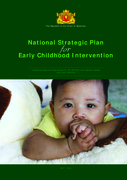
A National Service Programme for All Children with Special Needs and their Families
In Myanmar, we estimate that at least 40% of children require ECI services for short to longer periods of time. ... At present, 35.1% of Myanmar children are moderately to severely stunted; all of these children are likely to have one or more developmental delays. In addition, at least 5% to 12% of the nation’s children will be identified to have disabilities, chronic diseases or atypical behaviours.
Over time, approximately 70% of the children who will be served will improve in their development, attain expected levels of development for their age, and will consolidate their gains within one to two years. Other children, approximately 30%, will have lifelong disabilities or other conditions, and ECI services usually greatly improve their development and help them to achieve their full potential. more
In Myanmar, we estimate that at least 40% of children require ECI services for short to longer periods of time. ... At present, 35.1% of Myanmar children are moderately to severely stunted; all of these children are likely to have one or more developmental delays. In addition, at least 5% to 12% of the nation’s children will be identified to have disabilities, chronic diseases or atypical behaviours.
Over time, approximately 70% of the children who will be served will improve in their development, attain expected levels of development for their age, and will consolidate their gains within one to two years. Other children, approximately 30%, will have lifelong disabilities or other conditions, and ECI services usually greatly improve their development and help them to achieve their full potential. more
This update of the Guidelines for poison control, entitled Guidelines for establishing a poison centre, reflects the development of the role of poi
...
son centres in public health and the sound management of chemicals, described in section 1, and the opportunities provided by new technology. Assessments carried out under the IHR show
continuing gaps in capacity for managing chemicals (2). In particular, many countries still lack access to poison
centre services (3). There is therefore demand for updated guidance.
more
The 2021 COVID-19 Strategic Preparedness and Response Plan (SPRP) for AFR serves as a regional guide for a holistic public health response to COVID‑19 at regional, national and sub-national levels
...
. The 2021
SPRP:
1. Builds upon the lessons learnt from the implementation of the 2020 SPRP and outlines a regional preparedness, response and recovery strategy for COVID‑19.
2. Has been adapted to reflect the Regional context including COVID-19 vaccination. It also considers epidemiological changes and recommen-dations emerging from the evaluation report of the 2020 SPRP4.
3. Highlights to Member States strategic preparedness and response actions to be sustained at national and sub-national levels, as well as the critical inter-agency and partner support required.
4. provides the indicative resource requirements to reinforce WHO planned interventions in the African Region to enhance countries’ capacities to suppress transmission, save lives and mitigate the impact of the pandemic on people and health systems.
5. Provides a road map for mitigating potential resurgence in the Region as economies reopen and ensure country level continuity of other essential health services.
more

The Implementation toolkit for accessible telehealth services provides practical guidance to support governments, industry partners, health service providers and civil society groups in the use and implementation of the WHO-ITU Global standard
...
for accessibility of telehealth services. The toolkit is the result of a collaboration between the World Health Organization and the International Telecommunication Union, and was developed in response to the growing challenges that persons with disabilities and other marginalized populations experience when accessing and using telehealth platforms around the world.
more

Based on WHO South-East Asia Regional Strategy on Autism Spectrum Disorder
The collaborative framework for implementation of the “WHO South-East Asia Regional Strategy on Autism Spectrum Disorders” articulates to Member States: the nature o ... f autism spectrum disorder and the issues faced by PwASD and their caregivers; the foundation on which the Regional Strategy and the collaborative framework is based; desired outcomes against each objective of the ASD Regional Strategy; recommended actions to fulfill each objective; requisite parameters that should govern the recommended actions; and suggested guidelines for monitoring, evaluating and reporting a Member State’s progress towards fulfilling the objectives. It encourages Member States to share best practices and information for promoting cooperation and partnerships for development of effective and sustainable programmes. more
The collaborative framework for implementation of the “WHO South-East Asia Regional Strategy on Autism Spectrum Disorders” articulates to Member States: the nature o ... f autism spectrum disorder and the issues faced by PwASD and their caregivers; the foundation on which the Regional Strategy and the collaborative framework is based; desired outcomes against each objective of the ASD Regional Strategy; recommended actions to fulfill each objective; requisite parameters that should govern the recommended actions; and suggested guidelines for monitoring, evaluating and reporting a Member State’s progress towards fulfilling the objectives. It encourages Member States to share best practices and information for promoting cooperation and partnerships for development of effective and sustainable programmes. more
Nature Reviews Microbiology Vol. 17 (2019)pp.51-62
Antimicrobial susceptibility testing (AST) technologies help to accelerate the
initiation of targeted antimicrobial therapy for patients with infections and could potentially
extend the lifespan
...
of current narrow- spectrum antimicrobials. Although conceptually new and
rapid AST technologies have been described, including new phenotyping methods, digital
imaging and genomic approaches, there is no single major, or broadly accepted, technological
breakthrough that leads the field of rapid AST platform development
more
Global Sexual and Reproductive Health Service Package for Men and Adolescent Boys
IPPF, UNFPA
(2017)
The Global Sexual and Reproductive Health Service Package for Men and Adolescent Boys has been developed to support providers of sexual and reproductive health (SRH) services to increase the range and quality of services to meet the specific and div
...
erse needs of men and adolescent boys. This package focuses specifically on the provision of such services integrated
within clinical and non-clinical contexts and follows a gender-transformative approach. It covers men and adolescent boys in all their diversity and takes a positive approach to SRH, seeing this not just as the absence of disease, but the positive expression of one’s gender, sex and sexuality. In doing so, this service package contributes to efforts to ensure universal access to sexual and reproductive health and rights (SRHR) as prioritized in the Sustainable Development Goals. This package is in no way intended to detract from the sexual and reproductive health and rights of women and adolescent girls, nor to divert resources, funding or attention from much-needed SRH services and programmes for women and adolescent girls.
more
Key considerations for the use of law to prevent noncommunicable diseases in the WHO European Region
Report of an intensive legal training and capacity-building workshop on law and noncommunicable diseases (Moscow, 30 May–3 June 2016)
The report summarizes important issues, themes and topics discussed during the meeting in Moscow, ranging from the design and implementation of legislation, reconc
...
iling public health objectives with international trade and investment law commitments, to examples of regional integration, such as the European Union and the Eurasian Economic Union.
more
Enabling young children to achieve their full developmental potential is a human right and an essential requisite for sustainable development. Given the critical importance of enabling children to m
...
ake the best start in life, the health sector, among other sectors, has an important role and responsibility to support nurturing care for early childhood development. This guideline provides direction for strengthening policies and programmes to better address early childhood development.
more

This integrated operational framework provides an overview of the connections between mental health, neurological and substance use (MNS) conditions, and their links to health, well-being and the broader public health and sustainable development age
...
nda. The need for integrated approaches is increasingly recognized as critical to address the complex interactions between mental health, brain health, substance use, and physical health, particularly in light of global threats such as the COVID-19 pandemic. The framework also provides a series of actions for governments and health service planners and advisors to achieve integration across four domains: leadership and governance; care services; promotion and prevention; and health information systems, evidence generation and research.
more
This resource is a practical, user-friendly tools that aid in the application of gender-transformative approaches for everyday work at the frontlines within the social, health, education, or legal sectors, among others.
Gender-transformative appr
...
oaches intentionally challenge harmful gender norms, roles, and relations towards a more equal redistribution of power and resources. This includes engaging diverse stakeholders, such as men, boys, and traditional leaders, in redefining gender roles and increasing the agency of women and girls.
more
Climate change is damaging human health now and is projected to have a greater impact in the future. Low- and middle-income countries are seeing the worst effects as they are most vulnerable to climate shifts and least able to adapt given weak health systems and poor infrastructure. Low-carbon appro
...
ach can provide effective, cheaper care while at the same time being climate smart. Low-carbon healthcare can advance institutional strategies toward low-carbon development and health-strengthening imperatives and inspire other development institutions and investors working in this space. Low-carbon healthcare provides an approach for designing, building, operating, and investing in health systems and facilities that generate minimal amounts of greenhouse gases. It puts health systems on a climate-smart development path, aligning health development and delivery with global climate goals. This approach saves money by reducing energy and resource costs. It can improve the quality of care in a diversity of settings. By prompting ministries of health to tackle climate change mitigation and foster low-carbon healthcare, the development community can help governments strengthen local capacity and support better community health.
more
