
Filter
4308
Text search:
child
participation
Featured
Recommendations
331
New Publications
1321
Language
Document type
No document type
2850
Studies & Reports
572
Guidelines
377
Manuals
197
Strategic & Response Plan
169
Training Material
72
Fact sheets
30
Situation Updates
21
Resource Platforms
8
Infographics
6
Brochures
5
Online Courses
1
Countries / Regions
India
198
Kenya
149
Global
144
Nepal
125
Ethiopia
116
Uganda
109
Myanmar / Burma
99
Sierra Leone
91
Zambia
88
Nigeria
87
Bangladesh
85
Tanzania
79
Malawi
78
Liberia
76
Rwanda
75
South Africa
73
Ghana
66
Western and Central Europe
60
Syria
54
Namibia
54
Africa
50
Congo, Democratic Republic of
46
Philippines
43
Indonesia
42
Latin America and the Carribbean
42
South Sudan
41
Lesotho
40
Zimbabwe
38
Cambodia
38
Ukraine
34
Senegal
33
Mozambique
28
South–East Asia Region
26
Haiti
25
Burkina Faso
21
Botswana
20
Cameroon
19
Venezuela
19
Eastern Europe
18
Germany
17
Benin
17
East and Southern Africa
17
Jordan
16
Lebanon
16
Asia
16
Guinea
15
Pakistan
15
Colombia
13
Middle East and North Africa
13
Afghanistan
12
Central African Republic
12
Madagascar
12
Yemen
12
Eswatini/ Swaziland
11
Russia
11
Thailand
10
Somalia
9
Brazil
9
West and Central Africa
9
Sudan
8
Peru
8
Sri Lanka
8
Albania
8
Laos
8
Vietnam
8
Mali
7
China
6
Eastern Europe and Central Asia
6
Moldova
6
Georgia
6
Iraq
5
Burundi
5
Paraguay
5
Tajikistan
5
Togo
4
Chad
4
Honduras
4
Western Pacific Region
4
Palestine
4
Southern Africa
4
Côte d’Ivoire / Ivory Coast
3
Turkey
3
Egypt
3
Papua New Guinea
3
Argentina
3
North Macedonia
3
Hungary
3
Bolivia
3
Guatemala
3
Mexico
3
Poland
3
Timor Leste/ East Timor
3
Romania
3
Portugal
3
Guinea-Bissau
2
Morocco
2
USA
2
Malaysia
2
Singapore
2
Serbia
2
Croatia
2
Ecuador
2
Greece
2
Angola
2
Canada
2
Iran
2
Kyrgyzstan
2
North America
2
Spain
2
Belarus
2
Niger
1
Gambia
1
Ireland
1
El Salvador
1
Nicaragua
1
Chile
1
Other region
1
Bhutan
1
Armenia
1
Congo-Brazzaville
1
Bulgaria
1
Lithuania
1
Kazakhstan
1
Turkmenistan
1
Jamaica
1
Japan
1
France
1
Maldives
1
Mauritius
1
United Kingdom
1
Norway
1
Azerbaijan
1
Israel
1
Bosnia and Herzegovina
1
Authors & Publishers
Publication Years
Category
Countries
1933
Women & Child Health
323
Key Resources
249
Public Health
219
Clinical Guidelines
203
Capacity Building
129
Pharmacy & Technologies
9
Toolboxes
Disability
375
Mental Health
375
HIV
324
COVID-19
199
Conflict
150
TB
113
Caregiver
104
Refugee
97
NTDs
90
Planetary Health
81
Global Health Education
80
Ebola & Marburg
60
Natural Hazards
45
Malaria
43
Rapid Response
37
AMR
37
NCDs
30
Health Financing Toolbox
28
Pharmacy
23
Cholera
21
2.0 Rapid Response
21
Polio
20
Zika
17
Social Ethics
17
Specific Hazards
8
South Sudan
2
Typhoon
1
This second edition of the Basic Malaria Microscopy package is a stand-alone product,
providing all that is needed to conduct a complete training course

The "Integrated Management of Malaria Training – Health Worker’s Manual" is a practical guide developed by Uganda’s Ministry of Health to train healthcare workers at all levels in the effective diagnosis, treatment, prevention, and management of malaria. It aligns with national malaria treatme
...
Vector control, alongside case management, remains the most effective approach to controlling and eliminating malaria. Key interventions, such as indoor residual spraying (IRS) and long-lasting insecticidal nets (LLINs), have significantly reduced malaria transmission in many African countries. This
...

The National Strategic Plan for Malaria Elimination 2021–2025 outlines Bangladesh’s roadmap to achieve zero indigenous malaria cases by 2030, with an interim goal to reduce transmission to near-zero levels by 2025. The strategy builds upon earlier successes in malaria control and shifts focus to
...
This training module on malaria case management has been developed to support the staff involved in malaria control and elimination programmes in the effective organization of malaria diagnosis and case management services

A historic funding crisis is threatening to unravel decades of progress unless countries can make radical shifts to HIV programming and funding. The report highlights the impact that the sudden, large-scale funding cuts from international donors are having on countries most affected by HIV. Yet it a
...

This policy brief presents a summary of current evidence on vulnerability to TB and proposes interventions for equitable, person-centred, and human rights-based TB prevention and care. It aligns with WHO policies and guidance on TB prevention and screening, management of TB and comorbidities, access
...

The Ghana National Malaria Strategic Plan 2021–2025 aims to reduce malaria mortality by 90% and malaria cases by 50% (using 2019 as baseline) and to achieve pre-elimination in at least six districts by 2025. The plan focuses on scaling up prevention measures like distributing insecticide-treated n
...

The National Malaria Elimination Strategic Plan (NMESP) 2024–2028 of Ghana outlines the country’s roadmap to shift from malaria control to elimination. Despite major progress—like reducing malaria deaths from nearly 2,800 in 2012 to 151 in 2022—malaria remains a major public health challenge
...
This operational guidance provides a structured approach to support countries in sustaining priority services for HIV, viral hepatitis and sexually transmitted infections in the context of reduced external funding. The guidance is intended for national governments, public health programmes, communit
...

The Compendium of Solid Waste Management in Humanitarian Contexts is a comprehensive, structured and userfriendly manual and planning guide that provides a systematic overview of existing Solid Waste Management (SWM) technologies and approaches appropriate for use in humanitarian contexts.

Growing emergencies and displacements across the world demand increasingly complex interventions and responses. The World Health Organization (WHO) has developed Malaria control in emergencies: a field manual to provide technical guidance to help partners respond effectively to malaria in emergency
...

Noncommunicable diseases (NCDs) (e.g., cardiovascular diseases, cancers, diabetes, and chronic respiratory diseases) and mental health conditions (e.g., Alzheimer’s disease and related dementias, depression, anxiety, autism spectrum disorders) are the world’s leading cause of preventable illness
...

Non-Communicable Diseases (NCDs) have emerged as conditions of great public health concern in Kenya accounting for 39% of deaths annually. The Ministry of Health through the Department of Non-Communicable Diseases has adopted the vision of achieving a nation free from preventable burden of NCDs. Fur
...
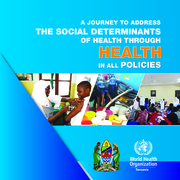
Health in All Policies (HiAP) promotes health and equity. It is based on the recognition that our greatest health challenges for example, non-communicable diseases, health inequities and inequalities, climate change, and spiraling health care costs are highly complex and often linked through the soc
...

To guide the provision of quality palliative care services across the African region, the African Palliative Care Association (APCA) has developed a framework of core palliative care competencies that can be used by service providers, educators and other stakeholders to guide programmes development.
...

For education to be competency-based and effective, appropriate training methodologies have to be used to support the learner to have the appropriate knowledge and to translate this knowledge into skills and competencies. Such education and training should lead to a change in attitudes, beliefs a
...

To contribute to the availability of basic knowledge and skills for the provision of palliative care in
the African region, the African Palliative Care Association (APCA) has developed a competencybased core curriculum framework for use in introductory training on palliative care. The curriculum
...

The African Palliative Care Association is pleased to publish the first edition of Palliative Care Standards for Africa. The development of these standards was achieved through wide consultation with service beneficiaries and providers, and they have been developed to suit different levels of
...

WHO guideline on balanced national controlled medicines policies to ensure medical access and safety
Access to medicines is essential for attainment of universal health coverage, which is central to achievement of the health-related Sustainable Development Goals. Controlled medicines include those such as opioids, benzodiazepines, barbiturates, amphetamines and others with identified or emergent cl
...
