Filter
1665
Text search:
randomized
Featured
200
274
Language
1416
94
73
70
30
24
17
15
8
4
4
2
2
2
2
1
1
1
1
Document type
797
390
292
81
36
28
25
7
4
3
1
Countries
73
69
36
29
28
21
21
21
18
16
15
15
15
15
14
14
14
13
13
13
12
11
10
10
9
9
8
8
8
7
7
7
7
7
7
6
6
6
6
6
5
5
5
5
5
4
4
4
4
4
4
4
3
3
3
3
3
3
3
2
2
2
2
2
2
2
2
2
2
2
2
1
1
1
1
1
1
1
1
1
1
1
1
1
1
1
1
1
1
1
Authors & Publishers
375
130
87
83
49
37
31
25
16
15
14
13
12
10
9
9
9
8
8
7
7
6
6
6
5
5
5
5
5
5
5
4
4
4
4
4
4
4
4
4
4
4
3
3
3
3
3
3
3
3
3
3
3
3
3
3
3
3
3
3
3
3
3
3
3
3
3
3
3
3
3
3
3
3
3
3
3
3
3
3
3
3
3
3
3
3
3
3
2
2
2
2
2
2
2
2
2
2
2
2
2
2
2
2
2
2
2
2
2
2
2
2
2
2
2
2
2
2
2
2
2
2
2
2
2
2
2
2
2
2
2
2
2
2
2
2
2
2
2
2
2
2
2
2
2
2
2
2
2
2
2
2
2
2
2
2
2
2
2
2
2
2
2
2
2
2
2
2
2
2
2
2
2
2
2
2
2
2
2
2
2
2
2
2
2
2
2
2
2
2
2
2
2
1
1
1
1
1
1
1
1
1
1
1
1
1
1
1
1
1
1
1
1
1
1
1
1
1
1
1
1
1
1
1
1
1
1
1
1
1
1
1
1
1
1
1
1
1
1
1
1
1
1
1
1
1
1
1
1
1
1
1
1
1
1
1
1
1
1
1
1
1
1
1
1
1
1
1
1
1
1
1
1
1
1
1
1
1
1
1
1
1
1
1
1
1
1
1
1
1
1
1
1
1
1
1
1
1
1
1
1
1
1
1
1
1
1
1
1
1
1
1
1
1
1
1
1
1
1
1
1
1
1
1
1
1
1
1
1
1
1
1
1
1
1
1
1
1
1
1
1
1
1
1
1
1
1
1
1
1
1
1
1
1
1
1
1
1
1
1
1
1
1
1
1
1
1
1
1
1
1
1
1
1
1
1
1
1
1
1
1
1
1
1
1
1
1
1
1
1
1
1
1
1
1
1
1
1
1
1
1
1
1
1
1
1
1
1
1
1
1
1
1
1
1
1
1
1
1
1
1
1
1
1
1
1
1
1
1
1
1
1
1
1
1
1
1
1
1
1
1
1
1
1
1
1
1
1
1
1
1
1
1
1
1
1
1
1
1
1
1
1
1
1
1
1
1
1
1
1
1
1
1
1
1
1
1
1
1
1
1
1
1
1
1
1
1
1
1
1
1
1
1
1
1
1
1
1
1
1
1
1
1
1
1
1
1
1
1
1
1
1
1
1
1
1
1
1
1
1
1
1
1
1
1
1
1
1
1
1
1
1
1
1
1
1
1
1
1
1
1
1
1
1
1
1
1
1
1
1
1
1
1
1
1
1
1
1
1
1
1
1
1
1
1
1
1
1
1
1
1
1
1
1
1
1
1
1
1
1
1
1
1
1
1
1
1
1
1
1
1
1
1
1
1
1
1
1
1
1
1
1
1
1
1
1
1
1
1
1
1
1
1
1
1
1
1
1
1
1
1
1
1
1
1
1
1
1
1
1
1
1
1
1
1
1
1
1
1
1
1
1
1
1
1
1
1
1
1
1
1
1
1
1
1
1
1
1
1
1
1
1
1
1
1
1
1
1
1
1
1
1
1
1
1
1
1
1
1
1
1
1
1
1
1
1
1
1
1
1
1
1
1
1
1
1
1
1
1
1
1
1
1
1
1
1
1
1
1
1
1
1
1
1
1
1
1
1
1
1
1
1
1
1
1
1
1
1
1
1
1
1
1
1
1
1
1
1
1
1
1
1
1
1
1
1
1
1
1
1
1
1
1
1
1
1
1
1
1
1
1
1
1
1
1
1
1
1
1
1
1
1
1
1
1
1
1
1
1
1
1
1
1
1
1
1
1
1
1
1
1
1
1
1
1
1
1
1
1
1
1
1
1
1
1
1
1
1
1
1
1
1
1
1
1
1
1
1
1
1
1
1
1
1
1
1
1
1
1
1
1
1
1
1
1
1
1
1
1
1
1
1
1
1
1
1
1
1
1
1
1
1
1
1
1
1
1
1
1
1
1
1
1
1
1
1
1
1
1
1
1
1
1
1
1
1
1
1
1
1
1
1
1
1
1
1
1
1
1
1
1
1
1
1
1
1
1
1
1
1
1
1
1
1
1
1
1
1
1
1
1
1
1
1
1
1
1
1
1
1
1
1
1
1
1
1
1
1
1
1
1
1
1
1
1
1
1
1
1
1
1
1
1
1
1
1
1
1
1
1
1
1
1
1
1
1
1
1
1
1
1
1
1
1
1
1
1
1
1
1
1
1
1
1
1
1
1
1
1
1
1
1
1
1
1
1
1
1
1
1
1
1
1
1
1
1
1
1
1
1
1
1
1
1
1
1
1
1
1
1
1
1
1
1
1
1
1
1
1
1
1
1
1
1
1
1
1
1
1
1
1
1
1
1
1
1
1
1
1
1
1
1
1
1
1
1
1
1
1
1
1
1
1
1
1
1
1
1
1
1
1
1
1
1
1
1
1
1
1
1
1
1
1
1
1
1
1
1
1
1
1
1
1
1
1
1
1
1
1
1
1
1
1
1
1
1
1
1
1
1
1
1
1
1
1
1
1
1
1
1
1
1
1
1
1
1
1
1
1
1
1
1
1
1
1
1
1
1
1
1
1
1
1
1
1
1
1
1
1
1
1
1
1
1
1
1
1
1
1
1
1
1
1
1
1
1
1
1
1
1
1
1
1
1
1
1
1
1
1
1
1
1
1
1
1
1
1
1
1
1
1
1
1
1
1
1
1
1
1
1
1
1
1
1
1
1
1
1
1
1
1
1
1
1
1
1
1
1
1
1
1
1
1
1
1
1
1
1
1
1
1
1
1
1
1
1
1
1
1
1
1
1
1
1
1
1
1
1
1
1
1
1
1
1
1
1
1
1
1
1
1
1
1
1
1
1
1
1
1
1
1
1
1
1
1
1
1
1
1
1
1
1
1
1
1
1
1
1
1
1
1
1
1
1
1
1
1
1
1
1
1
1
1
1
1
1
1
1
1
1
1
1
1
1
1
1
1
1
1
1
1
1
1
1
1
1
1
1
1
1
1
1
1
1
1
1
1
1
1
1
1
1
1
1
1
1
1
1
1
1
1
1
1
1
1
1
1
1
1
1
1
1
1
1
1
1
1
1
1
1
1
1
1
1
1
1
1
1
1
1
1
1
1
1
1
1
1
1
1
1
1
1
1
1
1
1
1
1
1
1
1
1
1
1
1
1
1
1
1
1
1
1
1
1
1
1
1
1
1
1
1
1
1
1
1
1
1
1
1
1
1
1
1
1
1
1
1
1
1
1
1
1
1
1
1
1
1
1
1
1
1
1
1
1
1
1
1
1
1
1
1
1
1
1
1
1
1
1
1
1
1
1
1
1
1
1
1
1
1
1
1
1
1
1
1
1
1
1
1
1
1
1
1
1
1
1
1
1
1
1
1
1
1
1
1
1
1
1
1
1
1
1
1
1
1
1
1
1
1
1
1
1
1
1
1
1
1
1
1
1
1
1
1
1
1
1
1
1
1
1
1
1
1
1
1
1
Publication Years
561
999
102
3
Category
396
247
137
118
43
16
6
Toolboxes
312
197
103
93
90
69
62
34
33
29
25
22
19
18
16
16
12
12
9
7
6
6
5
4
1
WHO recommends that pre-exposure prophylaxis (PrEP) be offered as an additional prevention choice for HIV-negative individuals at substantial risk of HIV infection as part of combination prevention approaches.
HIV drug resistance has been rarely reported among PrEP users who tested HIV positive i
...
n randomized controlled trials or open-label studies. However, PrEP-selected HIV drug resistance could potentially negatively impact the effectiveness of treatment options among PrEP users who acquire HIV, since there is a potential for overlapping resistance profiles between antiretroviral drugs used for both PrEP and first-line antiretroviral therapy.
more
Chapter 1 of the WHO manual for male circumcision as an HIV prevention strategy
provides an overview of how medical male circumcision (VMMC) can reduce the risk of female-to-male HIV transmission. It explains that VMMC is an effective and safe risk-reduction method that, according to three
...
randomized controlled trials, reduces HIV acquisition by approximately 60%. The chapter highlights that VMMC should be offered as part of a combination prevention approach, alongside other strategies like safer sex education and condom use, to address concerns about potential behavioral changes.
more
WHO Living guideline: Drugs to prevent COVID-19
recommended
Interim guidance 2 march 2021
Current use of drugs to prevent COVID-19 is variable, reflecting large-scale uncertainty. Numerous randomized trials of many different drugs are underway to inform practice. This first version of the Drugs to prevent C
...
OVID-19: A WHO living guideline contains new information and a recommendation on hydroxychloroquine. It follows the publication of six trials synthesized in a living network meta-analysis (NMA).
more

To test for ethnic discrimination in access to outpatient health care services, we carry out
an email-correspondence study in Germany. We approach 3,224 physician offices in the 79
largest cities in Germany with fictitious appointment requests and random
...
ized patients’
characteristics. We find that patients’ ethnicity, as signaled by distinct Turkish versus Ger-
man names, does not affect whether they receive an appointment or wait time. In contrast,
patients with private insurance are 31 percent more likely to receive an appointment. Hold-
ing a private insurance also increases the likelihood of receiving a response and reduces the
wait time. This suggests that physicians use leeway to prioritize privately insured patients
to enhance their earnings, but they do not discriminate persons of Turkish origin based
on taste. Still, their behavior creates means-based barriers for economically disadvantaged
groups.
more

In 2014, an estimated 40 million women of reproductive age were infected with Schistosoma haematobium, S. japonicum and/or S. mansoni. In both 2003 and 2006, the World Health Organization (WHO) recommended that all schistosome-infected pregnant and breastfeeding women be offered treatment, with praz
...
iquantel, either individually or during treatment campaigns. In 2006, WHO also stated the need for randomized controlled trials to assess the safety and efficacy of such treatment. Some countries have yet to follow the recommendation on treatment and many programme managers and pregnant women in other countries remain reluctant to follow the recommended approach.
more

PLoS Med 16(3): e1002768. https://doi.org/10.1371/journal.pmed.1002768
Home delivery and late and infrequent attendance at antenatal care (ANC) are responsible for substantial avoidable maternal and pediatric morbidity and mortality in sub-Saharan Africa. This cluster-
...
randomized trial aimed to determine the impact of a community health worker (CHW) intervention on the proportion of women who visit ANC fewer than 4 times during their pregnancy and deliver at home.
more

Cognitive Training for Schizophrenia in Developing Countries: A Pilot Trial in Brazil (Clinical Study)
Pontes LM, Martins CB, Napolitano IC, Fonseca JR, Oliveira GM, Iso SM, Menezes AK, Vizzotto AD, di Sarno ES, Elkis H.
Schizophrenia Research and Treatment
(2013)
CC
Cognitive deficits in schizophrenia can massively impact functionality and quality of life, furthering the importance of cognitive training. Despite the development of the field in Europe and in the United States, no programmes have been developed and tested in developing countries. Different cultur
...
al backgrounds, budget restrictions, and other difficulties may render treatment packages created in high income countries difficult for adoption by developing nations. We performed a pilot double-blind, randomized, controlled trial in order to investigate the efficacy and feasibility of an attention and memory training programme specially created in
a developing nation. The intervention used simple, widely available materials, required minimal infrastructure, and was conducted in groups.The sample included seventeen stable Brazilians with schizophrenia. Sessions were conducted weekly during five months. The cognitive training group showed significant improvements in inhibitory control and set-shifting over time. Both groups showed improvements in symptoms, processing speed, selective attention, executive function, and long-term visual memory. Improvements were found in the control group in long-term verbal memory and concentration. Our findings reinforce the idea that cognitive training in schizophrenia can be constructed using simple resources and infrastructure, facilitating its adoption by developing countries, and it may improve cognition.
more
Clinical management standard operating procedures.
Ebola virus disease (EVD) is a life-threatening multisystem illness associated with fever and gastrointestinal (GI) symptoms that frequently leads to hypovolaemia, metabolic acidosis, hypoglycaemia, and multi-organ failure. The prolonged 2013–201
...
6 EVD outbreak in West Africa allowed for an evolution of care such that by outbreak end many patients received individualized and optimized supportive care (oSoC), including volume resuscitation, symptom control, laboratory and bedside monitoring of glucose, electrolyte levels and organ dysfunction, as well as rapid detection and treatment of co-infections, potentially contributing to the downward trend in the case fatality rate (CFR).
This guidance should serve as a foundation for oSoC that should be followed to ensure both the best possible chance for survival and allow for reliable comparison of investigational therapeutic interventions as part of a randomized controlled trial. This guideline provides recommendations for the management of adults and children.
more

Each year, ≈795 000 individuals in the United States experience a stroke, of which 87% (690 000) are ischemic and 185 000 are recurrent.1 Approximately 240 000 individuals experience a transient ischemic attack (TIA) each year.2 The risk of recurrent stroke or TIA is high but can be mitiga
...
ted with appropriate secondary stroke prevention. In fact, cohort studies have shown a reduction in recurrent stroke and TIA rates in recent years as secondary stroke prevention strategies have improved.3,4 A meta-analysis of randomized controlled trials (RCTs) of secondary stroke prevention therapies published from 1960 to 2009 showed a reduction in annual stroke recurrence from 8.7% in the 1960s to 5.0% in the 2000s, with the reduction driven largely by improved blood pressure (BP) control and use of antiplatelet therapy.5 The changes may have been influenced by changes in diagnostic criteria and differing sensitivities of diagnostic tests over the years.
more

Background
Low- and middle-income countries now experience the highest prevalence and mortality rates of cardiovascular disease.
Main text
While improving the availability and delivery of proven, effective therapies will no doubt mitigate this burden, we posit that studies evaluating cardiovasc
...
ular disease risk factors, management strategies and service delivery, in diverse settings and diverse populations, are equally critical to improving outcomes in low- and middle-income countries. Focusing on examples drawn from four cardiovascular diseases — coronary artery disease, stroke, diabetes and kidney disease — we argue that ethnicity, culture and context matter in determining the risk factors for disease as well as the comparative effectiveness of medications and other interventions, particularly diet and lifestyle interventions.
Conclusion
We believe that a host of cohort studies and randomized control trials currently being conducted or planned in low- and middle-income countries, focusing on previously understudied race/ethnic groups, have the potential to increase knowledge about the cause(s) and management of cardiovascular diseases across the world.
more
The evolving epidemic of type 2 diabetes mellitus has challenged health-care professionals. It stands among the leading causes of mortality in the present world. It warrants new and versatile approaches to improve mortality and the associated huge quality-adjusted life years lost to it once diagnose
...
d. A possible venue to lower the incidence is to assess the safety and efficacy of various diabetes prevention strategies. Diet and exercise have a well-developed role in the prevention of weight gain and, ultimately, diabetes mellitus type II in high-risk individuals. However, high-risk individuals can also benefit from adjunct pharmacotherapy. In light of this information, we decided to conduct a systematic review of randomized controlled trials. This article summarizes the evidence in the literature on the pharmacological prevention of diabetes in high-risk individuals.
more
Background
The core clinical symptoms of addiction include an enhanced incentive for drug taking (craving), impaired self-control (impulsivity and compulsivity), emotional dysregulation (negative mood) and increased stress reactivity. Symptoms related to impaired self-control involve reduced activi
...
ty in anterior cingulate cortex (ACC), adjacent prefrontal cortex (mPFC) and other brain areas. Behavioral training such as mindfulness meditation can increase the function of control networks including those leading to improved emotion regulation and thus may be a promising approach for the treatment of addiction.
Methods
In a series of randomized controlled trials (RCTs), we tested whether increased ACC/mPFC activity is related to better self-control abilities in executive functions, emotion regulation and stress response in healthy and addicted populations. After a brief mindfulness training (Integrative Body-Mind Training, IBMT), we used the Positive and Negative Affect Schedule (PANAS) and Profile of Mood States (POMS) to measure emotion regulation, salivary cortisol for the stress response and fMRI for brain functional and DTI structural changes. Relaxation training was used to serve as an active control.
Results
In both smokers and nonsmokers, improved self-control abilities in emotion regulation and stress reduction were found after training and these changes were related to increased ACC/mPFC activity following training. Compared with nonsmokers, smokers showed reduced ACC/mPFC activity in the self-control network before training, and these deficits were ameliorated after training.
Conclusions
These results indicate that promoting emotion regulation and improving ACC/mPFC brain activity can help for addiction prevention and treatment.
more
BACKGROUND: Growing political attention to antimicrobial resistance (AMR) offers a rare opportunity for achieving meaningful action. Many governments have developed national AMR action plans, but most have not yet implemented policy interventions to reduce antimicrobial overuse. A systematic evidenc
...
e map can support governments in making evidence-informed decisions about implementing programs to reduce AMR, by identifying, describing, and assessing the full range of evaluated government policy options to reduce antimicrobial use in humans.
METHODS AND FINDINGS: Seven databases were searched from inception to January 28, 2019, (MEDLINE, CINAHL, EMBASE, PAIS Index, Cochrane Central Register of Controlled Trials, Web of Science, and PubMed). We identified studies that (1) clearly described a government policy intervention aimed at reducing human antimicrobial use, and (2) applied a quantitative design to measure the impact. We found 69 unique evaluations of government policy interventions carried out across 4 of the 6 WHO regions. These evaluations included randomized controlled trials (n = 4), non-randomized controlled trials (n = 3), controlled before-and-after designs (n = 7), interrupted time series designs (n = 25), uncontrolled before-and-after designs (n = 18), descriptive designs (n = 10), and cohort designs (n = 2). From these we identified 17 unique policy options for governments to reduce the human use of antimicrobials. Many studies evaluated public awareness campaigns (n = 17) and antimicrobial guidelines (n = 13); however, others offered different policy options such as professional regulation, restricted reimbursement, pay for performance, and prescription requirements. Identifying these policies can inform the development of future policies and evaluations in different contexts and health systems. Limitations of our study include the possible omission of unpublished initiatives, and that policies not evaluated with respect to antimicrobial use have not been captured in this review.
CONCLUSIONS: To our knowledge this is the first study to provide policy makers with synthesized evidence on specific government policy interventions addressing AMR. In the future, governments should ensure that AMR policy interventions are evaluated using rigorous study designs and that study results are published.
more

Two decades of epidemiological research shows that silent cerebrovascular disease is common and is associated with future risk for stroke and dementia. It is the most common incidental finding on brain scans. To summarize evidence on the diagnosis and management of silent cerebrovascular disease to
...
prevent stroke, the Stroke Council of the American Heart Association convened a writing committee to evaluate existing evidence, to discuss clinical considerations, and to offer suggestions for future research on stroke prevention in patients with 3 cardinal manifestations of silent cerebrovascular disease: silent brain infarcts, magnetic resonance imaging white matter hyperintensities of presumed vascular origin, and cerebral microbleeds. The writing committee found strong evidence that silent cerebrovascular disease is a common problem of aging and that silent brain infarcts and white matter hyperintensities are associated with future symptomatic stroke risk independently of other vascular risk factors. In patients with cerebral microbleeds, there was evidence of a modestly increased risk of symptomatic intracranial hemorrhage in patients treated with thrombolysis for acute ischemic stroke but little prospective evidence on the risk of symptomatic hemorrhage in patients on anticoagulation. There were no randomized controlled trials targeted specifically to participants with silent cerebrovascular disease to prevent stroke. Primary stroke prevention is indicated in patients with silent brain infarcts, white matter hyperintensities, or microbleeds. Adoption of standard terms and definitions for silent cerebrovascular disease, as provided by prior American Heart Association/American Stroke Association statements and by a consensus group, may facilitate diagnosis and communication of findings from radiologists to clinicians.
more
Информационный лист.
Что такое депрессия? - Признаки депрессии у детей дошкольного возраста, школьников и подростков
- лечение депрессии -последствия невылеченÐ
...
½ой депрессии
more
-1-توصیاتللدول الأعضاء بشأن تحسین ممارسات نظافة الأیدي للمساعدة علىمنع انتقال فیروس كوفید-19
The Panel recommendations on initial combination regimens for the antiretroviral therapy (ART)-naive, HIV-infected patients.
Q 2: How long should treatment with antidepressants continue in adults with depressive episode/disorder?
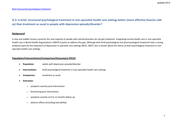
Q 3: Is brief, structured psychological treatment in non-specialist health care settings better (more effective than/as safe as) than treatment as usual in people with depressive episode/disorder?