
Filter
211
Text search:
hai
global
Featured
Recommendations
28
New Publications
41
Language
Document type
No document type
56
Guidelines
55
Studies & Reports
45
Manuals
24
Strategic & Response Plan
18
Situation Updates
4
Training Material
2
Brochures
2
Infographics
2
Online Courses
2
Fact sheets
1
Countries / Regions
South Africa
14
Global
13
India
9
Vietnam
8
Kenya
7
Tanzania
5
South Sudan
4
Sierra Leone
3
Nigeria
3
Ethiopia
3
Haiti
3
Nepal
3
Cambodia
3
Argentina
3
Namibia
3
Ukraine
3
Latin America and the Carribbean
3
Mali
2
Ghana
2
Uganda
2
Philippines
2
Iraq
2
Jordan
2
Syria
2
Thailand
2
Malawi
2
Sudan
2
Brazil
2
Bolivia
2
Myanmar / Burma
2
Africa
2
Guinea
1
Burkina Faso
1
Liberia
1
Senegal
1
USA
1
Zimbabwe
1
Somalia
1
Afghanistan
1
Germany
1
Indonesia
1
Bangladesh
1
Benin
1
Central African Republic
1
North Macedonia
1
Botswana
1
Mexico
1
South–East Asia Region
1
Western Pacific Region
1
Western and Central Europe
1
Italy
1
Laos
1
Romania
1
Maldives
1
Authors & Publishers
Publication Years
Category
Countries
83
Key Resources
23
Clinical Guidelines
16
Public Health
15
Capacity Building
4
Women & Child Health
4
Pharmacy & Technologies
1
Toolboxes
AMR
62
COVID-19
20
Caregiver
14
NTDs
13
HIV
11
Pharmacy
10
2.0 Rapid Response
10
Rapid Response
9
Conflict
8
Mental Health
7
TB
7
Planetary Health
5
Disability
4
Ebola & Marburg
4
NCDs
4
Global Health Education
3
Natural Hazards
2
Malaria
2
Polio
1

Participant Manual
February 2011
Edition 3.0
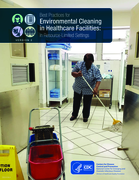
Healthcare-associated infections (HAI) are a significant burden globally, with millions of patients affected each year. These infections affect both high- and limited-resource healthcare settings, but in limited-resource settings, rates are approxim
...

GLOBAL EDUCATION MONITORING REPORT 2017/8

National tuberculosis (TB) prevalence surveys provide a nationally representative measurement of the burden of TB disease in the population, at a given point in time. Repeat surveys allow assessment of trends and tracking of progress towards national and g
...
Health care-associated infections (HAI) are one of the most common adverse events in care delivery and a major public health problem with an impact on morbidity, mortality and quality of life. At any one time, up to 7% of patients in developed and 1
...
Antimicrobial resistance (AMR) is a global threat that requires urgent
collaborative action within and among countries. As a result of the worldwide reports of the increasing rates of AMR to hospital and community-acquired infections and in the agr
...

Antimicrobial resistance (AMR) is a global public health crisis that resulted in 1.14 million deaths in 2021. According to the Institute for Health Metrics and Evaluation estimates, 96 416 of these deaths occurred in the World Health Organizatio
...

The objectives of NAP are aligned with the global action plan based on national needs and priorities. The emphasis is on One Health approach with all sectors especially human health, animal health and environment contributing towards minimizing the
...

Antimicrobial resistance (AMR) is a multifaceted, international public health problem, which poses a direct threat to the safety of the population of South Africa. A national response is required to complement the development of a global plan, as ar
...

The issue of Antimicrobial resistance has become one of the most substantial health issues, prompting the World Health Assembly (WHA) to urge Member States to finalise tailor made national action plans by May 2017, aligning them with objectives of the Glob
...
Confronted with the important issue of patient safety, in 2002 the Fifty-fifth World Health Assembly adopted a resolution urging countries to pay the closest possible attention to the problem and to strengthen safety and monitoring systems. In May 2004, the Fifty-seventh World Health Assembly approv
...

AMR is one of the Key priority of the global health security agenda action package, as well as it is one of the commitments of Ministry of Public Health Afghanistan to combat AMR. In Afghanistan because of war and some other political issues the bor
...
The threat posed by antimicrobial resistance (AMR) to public health as well as global health security has been reiterated in umerous World Health Assembly (WHA) resolutions. AMR is also prioritized under the
...
Nosocomial infections, or hospital-acquired infec-tions (HAI), are among the most significant causesof morbidity and mortality in healthcare settingsthroughout the world.Prevention of HAIs iscentral to providing high quality and safe health-care, e
...
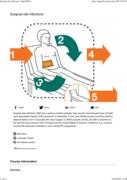
Surgical site infections (SSI) are a serious problem globally; they are the most frequent type of health care-associated infection (HAI) observed on admission in low- and middle-income countries (LMICs). Approximately one in 10 people who have surge
...
Improvements in water sanitation and hygiene (WASH) and wastewater management in all sectors are critical elements of preventing infections and reducing the spread of antimicrobial resistance (AMR) as identified in the Global Action Plan to combat A
...

This manual presents a compelling case for action on carbapenem-resistant organisms (CROs) and describes the linkages between the prevention and control of CROs and the Global Action Plan on Antimicrobial Resistance (AMR). It describes how the eight
...
A MANUAL FOR WASH IMPLEMENTERS, BOTSWANA
Sightsavers | Department for International Development | The International Trachoma Initiative | Children Without Worms | WaterAid | WASH Advocates | Center for Global Safe Water, Emory University | CARE USA
...
Antibiotic resistance is no longer a concern for the distant future but is a pressing issue, both globally and in Nepal. As part of global effort to preserve the effectiveness of antibiotics, the
...
Version 1.1. The WHO protocol has been adapted to resource-limited settings and builds on existing methodologies from the European Centre for Disease Prevention and Control (ECDC), the Global PPS project from University of Antwerp, the US Centers fo
...
