
Filter
753
Text search:
South
East
Asia
&
Western
Pacific
Featured
103
169
Language
Document type
288
225
117
49
32
11
10
9
6
3
1
1
Countries
83
23
18
16
15
13
10
10
9
9
9
8
8
7
6
6
4
4
4
4
4
4
4
4
4
4
3
3
3
3
3
3
3
3
3
3
2
2
2
2
2
2
2
2
2
2
2
2
1
1
1
1
1
1
1
1
1
1
1
1
1
1
1
1
1
1
1
1
1
1
1
1
1
1
1
Authors & Publishers
Publication Years
Category
129
93
64
62
45
15
10
Toolboxes
92
64
59
37
36
33
30
26
25
25
24
22
22
22
18
15
13
12
12
12
7
4
3
3
3
1
Training Modules for climate change and Health - WHO
Traditional medicine, including the knowledge, skills and practices of holistic health care, exists in all cultures. It is based on indigenous theories, beliefs and experiences and is widely accepted for its role in health maintenance and the treatment of disease.Medicinal plants are the main ingred
...
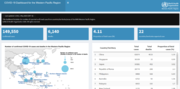
This dashboard includes the number of reported confirmed cases from countries/territories/areas of the WHO Western Pacific Region

Public health emergencies, including pandemics, highlight the need for health systems and services that are prepared, resilient and ready to respond to health security threats. Endorsed by Member States in 2023, the Asia
...
Measuring progress towards universal health coverage.
This sixth edition of Health at a Glance Asia/Pacific presents a set of key indicators of health status, the determinants of health, health car
...

Parasites & Vectors volume 15, Article number: 389 (2022)
Dengue is one of the common arboviral infections and is a public health problem in South East
...
Advances have been made through expanded interventions delivered through five public health approaches: innovative and intensified disease management; preventive chemotherapy; vector ecology and management; veterinary public health services; and the provision of safe water, sanitation and hygiene. I
...

Internationally, there is a growing concern over antimicro-bial resistance (AMR) which is currently estimated to ac-count for more than 700,000 deaths per year worldwide. If no appropriate measures are taken to halt its pro-gress, AMR will cost approximately 10 million lives andabout US$100 trillion
...
Best practice for hand hygiene requires the availability of clean water, soap, and single use disposable towels or alcohol based hand sanitiser with a concentration of 70%. Availability of these resources is not always assured. When resources for hand hygiene are not available other materials need t
...
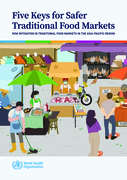
Traditional food markets play important economic, cultural, and social role and are sources of livelihood for millions of people in urban and rural areas. The manual Five keys for safer traditional food markets: risk mitigation in traditional food markets in the
...

Regional data extracted from the
2023 Global AIDS Update
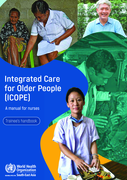
This manual will aid in building the capacity of nurses with clinical knowledge of the unique needs, complex health problems, common geriatric syndromes, and principles of care of older people. It will also enable them to acquire the skills necessary to perform an in-depth multidimensional geriatric
...
Antimicrobial resistance (AMR) is a serious public health concern with economic, social and political implications that are global in scope, and cross all environmental and ethnic boundaries. As a global threat, AMR risks the achievements of modern medicine, and has the po
...

Mental health problem is one of the growing major public health issues in the Asia Pacific region. It contributes to the high number of Disability Adjusted Life Years (DALYs), morbidity and mortalit
...
Since the start of the pandemic, the region has been hit by multiple natural and biological disasters. At the same time, climate change has continued to warm the world, exacerbating the impacts of many of these disasters. The *Asia-
...
Peripheral artery disease (PAD) is the most underdiagnosed, underestimated and undertreated of the atherosclerotic vascular diseases despite its poor prognosis. There may be racial or contextual differences in the Asia-
...
Western Pacific surveillance and response journal: WPSAR Vol.14 No. 6, Special Edition, pp.1-17
