
Filter
437
Text search:
ICRC
Featured
Recommendations
53
New Publications
148
Language
Document type
No document type
276
Guidelines
43
Studies & Reports
39
Manuals
37
Situation Updates
11
Strategic & Response Plan
10
Training Material
9
Fact sheets
7
Infographics
2
Dashboards/Maps
1
Resource Platforms
1
Online Courses
1
Countries / Regions
Syria
26
Myanmar / Burma
18
Congo, Democratic Republic of
13
South Sudan
13
Bangladesh
11
Guinea
9
Ukraine
9
Sierra Leone
8
Nepal
8
Kenya
8
Liberia
7
Western and Central Europe
7
Nigeria
6
Indonesia
6
Yemen
6
Venezuela
6
Global
6
Ethiopia
5
Uganda
5
Philippines
4
Central African Republic
4
Colombia
4
Senegal
3
Haiti
3
Iraq
3
Jordan
3
Peru
3
Russia
3
Mali
2
Côte d’Ivoire / Ivory Coast
2
India
2
Gambia
2
Rwanda
2
Brazil
2
Croatia
2
Burundi
2
Honduras
2
El Salvador
2
Asia
2
Africa
2
Eastern Europe
2
Guinea-Bissau
1
Cameroon
1
Togo
1
Zimbabwe
1
Somalia
1
Pakistan
1
Afghanistan
1
Germany
1
Lebanon
1
Zambia
1
Turkey
1
Chad
1
Cambodia
1
South Africa
1
Mozambique
1
Sudan
1
Benin
1
Vanuatu
1
Argentina
1
Dominican Republic
1
Namibia
1
Eswatini/ Swaziland
1
Hungary
1
Ecuador
1
Botswana
1
Bolivia
1
Greece
1
Guatemala
1
Madagascar
1
Lesotho
1
Mexico
1
Nicaragua
1
Middle East and North Africa
1
Western Pacific Region
1
Latin America and the Carribbean
1
Eastern Europe and Central Asia
1
Poland
1
Palestine
1
Laos
1
Romania
1
Moldova
1
Belarus
1
Authors & Publishers
Publication Years
Category
Key Resources
107
Countries
102
Clinical Guidelines
17
Public Health
15
Women & Child Health
15
Capacity Building
11
Pharmacy & Technologies
2
Toolboxes
Conflict
75
COVID-19
47
Ebola & Marburg
31
Natural Hazards
26
Mental Health
24
Refugee
23
Disability
22
Rapid Response
16
Specific Hazards
14
TB
13
Planetary Health
7
Global Health Education
5
Pharmacy
5
2.0 Rapid Response
5
Zika
4
Caregiver
4
HIV
3
Cholera
2
Typhoon
1
NTDs
1
Health Financing Toolbox
1
Action on behalf of unaccompanied and separated children should be guided by principles enshrined in international standards. The validity of these principles has been confirmed by experience and lessons learnt from conflicts and natural disasters in recent years. The objective of the present public
...
These ICRC guidelines outline the organization’s approach to mental health and psychosocial support (MHPSS) during and after armed conflict and other situations of violence. They provide a framework for harmonizing MHPSS programmes within the orga
...

This guidelines is aimed at humanitarian and human rights actors engaged in protection work, and is intended to act as an easy reference to the minimum standards to be met and the recommended guidelines to be followed in such work.
The 45 standards and 15 guidelines are reproduced in full, together
...
A guidance document in simple language for health personnel, setting out their rights and responsibilities in conflict and other situations of violence. It explains how responsibilities and rights for health personnel can be derived from international humanitarian law, human rights law and medical e
...
Working with limited resources in armed conflict and other situations of violence. Vol.2
Medical Waste Management
recommended
Accessed: 25.04.2020
COVID-19 represents a dramatic new threat to life in war-torn countries. International humanitarian law (IHL) is a key legal framework that provides crucial safeguards to people affected by armed conflicts. This overview summarizes some of the main provisions of IHL that may
...
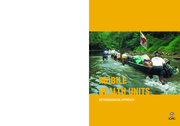

It is targeted towards humanitarian settings and aims to complement other guidance on the management of the dead with a stronger focus on the practical realities faced when dealing with the dead in humanitarian settings. The guidance offers practical recommendations for the management of the bodies
...
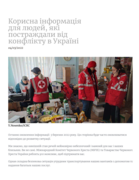
We know that your current situation is incredibly dangerous and distressing for you and your loved ones. You are not alone. The International Committee of the Red Cross (ICRC) and the Ukrainian Red Cross Society are doing their best to help you.
Yo
...
With its expert practical advice on security in situations of armed conflict, this updated set of guidelines will prove invaluable to humanitarian personnel working at the operational level. Following on from the success of the first edition, published in 1999, it addresses new and developing threat
...
As the crisis in Syria moves into its second decade, a survey commissioned by the International Committee of the Red Cross highlights the heavy price paid by young Syrians.
1,400 Syrians between the ages of 18-25 were surveyed in Syria, Lebanon and Germany. Across the three countries, young peopl
...
Many migrants find themselves with limited access, if any, to information about risks, prevention measures, health care and other essential services. Migrants in transit, those in need of international protection or without legal status are likely to be particularly vulnerable, as well as those who
...
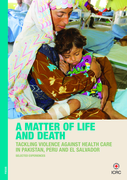
Every day, health-care providers are being attacked, patients discriminated against, ambulances held up at checkpoints, hospitals bombed, medical supplies looted and entire communities cut off from critical services around the world.
Between January 2012 and December 2014, the ...
Between January 2012 and December 2014, the ...
We know that your current situation is incredibly dangerous and distressing for you and your loved ones. You are not alone. The International Committee of the Red Cross (ICRC), the Ukrainian Red Cross Society and other partners are doing their best
...
Security Survey for Health Facilities
recommended
The purpose of the survey is to identify the level of preparedness required by a health-care facility to be able to continue operating during, or following a conflict-related security event.
The survey method provides a measure of the security and preparedness of a given health facility in it ...
The survey method provides a measure of the security and preparedness of a given health facility in it ...
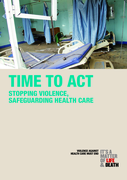
Doctors, nurses, ambulance drivers and first-aiders are coming under attack while trying to save lives. They are threatened, arrested or beaten, their hospitals looted or bombed. Some are unable to work because medical supplies can’t get through; some are forced to flee for their lives. Some are e
...
We have long been working to prevent and end sexual violence in armed conflicts and to ensure that the countless victims – men, women, boys and girls – receive the help they need.
In this document, we examine sexual violence specifically in relation to people deprived of their liberty. We c ...
In this document, we examine sexual violence specifically in relation to people deprived of their liberty. We c ...
The Safer COVID-19 Response checklist has been produced for managers of health-care services, individual practitioners and health policymakers worried about the impact of violence against health-care workers, facilities and patients during the COVID-19 response. It provides a practical, actionable s
...
