
Filter
3929
Text search:
Action
Aid
Featured
402
1138
Language
3637
233
76
52
52
25
19
18
10
9
9
6
6
5
5
4
4
4
4
3
3
3
3
3
3
3
3
2
2
2
2
2
2
2
2
2
2
2
2
1
1
1
1
1
1
1
1
1
1
1
1
1
1
1
1
1
Document type
2154
644
413
283
175
109
71
49
14
7
5
1
1
1
Countries
197
147
113
105
94
90
85
84
81
79
75
68
65
61
49
48
47
46
45
41
40
37
35
34
34
33
33
32
28
28
27
25
24
23
22
21
20
19
19
18
18
17
17
17
15
15
13
12
12
11
11
10
10
9
8
8
8
8
8
7
7
7
7
7
6
6
6
5
5
5
5
5
4
4
4
4
4
4
4
4
3
3
3
3
3
3
3
3
3
3
2
2
2
2
2
2
2
2
2
2
2
2
2
2
2
2
2
2
2
2
1
1
1
1
1
1
1
1
1
1
1
1
1
1
1
1
1
1
1
1
1
1
1
1
1
1
Authors & Publishers
396
137
116
79
78
73
70
54
52
45
35
27
27
25
25
22
22
22
20
20
18
17
17
16
16
16
16
15
15
14
14
14
14
13
12
12
12
11
11
11
11
11
10
10
10
10
10
10
10
9
9
9
9
9
9
9
9
9
9
8
8
8
8
8
8
8
8
7
7
7
7
7
7
7
7
7
7
7
7
7
6
6
6
6
6
6
6
6
6
6
6
6
6
6
6
6
6
6
6
6
6
5
5
5
5
5
5
5
5
5
5
5
5
5
5
5
5
5
5
5
5
5
5
5
5
5
5
5
5
5
5
5
5
4
4
4
4
4
4
4
4
4
4
4
4
4
4
4
4
4
4
4
4
4
4
4
4
4
4
4
4
4
4
4
4
4
4
4
4
4
4
4
4
4
4
4
4
4
4
4
4
4
4
4
4
4
4
4
3
3
3
3
3
3
3
3
3
3
3
3
3
3
3
3
3
3
3
3
3
3
3
3
3
3
3
3
3
3
3
3
3
3
3
3
3
3
3
3
3
3
3
3
3
3
3
3
3
3
3
3
3
3
3
3
3
3
3
3
3
3
3
3
3
3
3
3
3
3
3
3
3
3
3
3
3
3
3
3
3
3
3
3
3
3
3
3
3
2
2
2
2
2
2
2
2
2
2
2
2
2
2
2
2
2
2
2
2
2
2
2
2
2
2
2
2
2
2
2
2
2
2
2
2
2
2
2
2
2
2
2
2
2
2
2
2
2
2
2
2
2
2
2
2
2
2
2
2
2
2
2
2
2
2
2
2
2
2
2
2
2
2
2
2
2
2
2
2
2
2
2
2
2
2
2
2
2
2
2
2
2
2
2
2
2
2
2
2
2
2
2
2
2
2
2
2
2
2
2
2
2
2
2
2
2
2
2
2
2
2
2
2
2
2
2
2
2
2
2
2
2
2
2
2
2
2
2
2
2
2
2
2
2
2
2
2
2
2
2
2
2
2
2
2
2
2
2
2
2
2
2
2
2
2
2
2
2
2
2
2
2
2
2
2
2
2
2
2
2
2
2
2
2
2
2
2
2
2
2
2
2
2
2
2
2
2
2
2
2
2
2
2
2
2
2
2
2
2
2
2
2
2
2
2
2
2
2
2
2
2
2
2
2
2
2
2
2
2
2
2
2
2
2
2
2
2
2
2
2
2
2
2
1
1
1
1
1
1
1
1
1
1
1
1
1
1
1
1
1
1
1
1
1
1
1
1
1
1
1
1
1
1
1
1
1
1
1
1
1
1
1
1
1
1
1
1
1
1
1
1
1
1
1
1
1
1
1
1
1
1
1
1
1
1
1
1
1
1
1
1
1
1
1
1
1
1
1
1
1
1
1
1
1
1
1
1
1
1
1
1
1
1
1
1
1
1
1
1
1
1
1
1
1
1
1
1
1
1
1
1
1
1
1
1
1
1
1
1
1
1
1
1
1
1
1
1
1
1
1
1
1
1
1
1
1
1
1
1
1
1
1
1
1
1
1
1
1
1
1
1
1
1
1
1
1
1
1
1
1
1
1
1
1
1
1
1
1
1
1
1
1
1
1
1
1
1
1
1
1
1
1
1
1
1
1
1
1
1
1
1
1
1
1
1
1
1
1
1
1
1
1
1
1
1
1
1
1
1
1
1
1
1
1
1
1
1
1
1
1
1
1
1
1
1
1
1
1
1
1
1
1
1
1
1
1
1
1
1
1
1
1
1
1
1
1
1
1
1
1
1
1
1
1
1
1
1
1
1
1
1
1
1
1
1
1
1
1
1
1
1
1
1
1
1
1
1
1
1
1
1
1
1
1
1
1
1
1
1
1
1
1
1
1
1
1
1
1
1
1
1
1
1
1
1
1
1
1
1
1
1
1
1
1
1
1
1
1
1
1
1
1
1
1
1
1
1
1
1
1
1
1
1
1
1
1
1
1
1
1
1
1
1
1
1
1
1
1
1
1
1
1
1
1
1
1
1
1
1
1
1
1
1
1
1
1
1
1
1
1
1
1
1
1
1
1
1
1
1
1
1
1
1
1
1
1
1
1
1
1
1
1
1
1
1
1
1
1
1
1
1
1
1
1
1
1
1
1
1
1
1
1
1
1
1
1
1
1
1
1
1
1
1
1
1
1
1
1
1
1
1
1
1
1
1
1
1
1
1
1
1
1
1
1
1
1
1
1
1
1
1
1
1
1
1
1
1
1
1
1
1
1
1
1
1
1
1
1
1
1
1
1
1
1
1
1
1
1
1
1
1
1
1
1
1
1
1
1
1
1
1
1
1
1
1
1
1
1
1
1
1
1
1
1
1
1
1
1
1
1
1
1
1
1
1
1
1
1
1
1
1
1
1
1
1
1
1
1
1
1
1
1
1
1
1
1
1
1
1
1
1
1
1
1
1
1
1
1
1
1
1
1
1
1
1
1
1
1
1
1
1
1
1
1
1
1
1
1
1
1
1
1
1
1
1
1
1
1
1
1
1
1
1
1
1
1
1
1
1
1
1
1
1
1
1
1
1
1
1
1
1
1
1
1
1
1
1
1
1
1
1
1
1
1
1
1
1
1
1
1
1
1
1
1
1
1
1
1
1
1
1
1
1
1
1
1
1
1
1
1
1
1
1
1
1
1
1
1
1
1
1
1
1
1
1
1
1
1
1
1
1
1
1
1
1
1
1
1
1
1
1
1
1
1
1
1
1
1
1
1
1
1
1
1
1
1
1
1
1
1
1
1
1
1
1
1
1
1
1
1
1
1
1
1
1
1
1
1
1
1
1
1
1
1
1
1
1
1
1
1
1
1
1
1
1
1
1
1
1
1
1
1
1
1
1
1
1
1
1
1
1
1
1
1
1
1
1
1
1
1
1
1
1
1
1
1
1
1
1
1
1
1
1
1
1
1
1
1
1
1
1
1
1
1
1
1
1
1
1
1
1
1
1
1
1
1
1
1
1
1
1
1
1
1
1
1
1
1
1
1
1
1
1
1
1
1
1
1
1
1
1
1
1
1
1
1
1
1
1
1
1
1
1
1
1
1
1
1
1
1
1
1
1
1
1
1
1
1
1
1
1
1
1
1
1
1
1
1
1
1
1
1
1
1
1
1
1
1
1
1
1
1
1
1
1
1
1
1
1
1
1
1
1
1
1
1
1
1
1
1
1
1
1
1
1
1
1
1
1
1
1
1
1
1
1
1
1
1
1
1
1
1
1
1
1
1
1
1
1
1
1
1
1
1
1
1
1
1
1
1
1
1
1
1
1
1
1
1
1
1
1
1
1
1
1
1
1
1
1
1
1
1
1
1
1
1
1
1
1
1
1
1
1
1
1
1
1
1
1
1
1
1
1
1
1
1
1
1
1
1
1
1
1
1
1
1
1
1
1
1
1
1
1
1
1
1
1
1
1
1
1
1
1
1
1
1
1
1
1
1
1
1
1
1
1
1
1
1
1
1
1
1
1
1
1
1
1
1
1
1
1
1
1
1
1
1
1
1
1
1
1
1
1
1
1
1
1
1
1
1
1
1
1
1
1
1
1
1
1
1
1
1
1
1
1
1
1
1
1
1
1
1
1
1
1
1
1
1
1
1
1
1
1
1
1
1
1
1
1
1
1
1
1
1
1
1
1
1
1
1
1
1
1
1
1
1
1
1
1
1
1
1
1
1
1
1
1
1
1
1
1
1
1
1
1
1
1
1
1
1
1
1
1
1
1
1
1
1
1
1
1
1
1
1
1
1
1
1
1
1
1
1
1
1
1
1
1
1
1
1
1
1
1
1
1
1
1
1
1
1
1
1
1
1
1
1
1
1
1
1
1
1
1
1
1
1
1
1
1
1
1
1
1
1
1
1
1
1
1
1
1
1
1
1
1
1
1
1
1
1
1
1
1
1
1
1
1
1
1
1
1
1
1
1
1
1
1
1
1
1
1
1
1
1
1
1
1
1
1
1
1
1
1
1
1
1
1
1
1
1
1
1
1
1
1
1
1
1
1
1
1
1
1
1
1
1
1
1
1
1
1
1
1
1
1
1
1
1
1
1
1
1
1
1
1
1
1
1
1
1
1
1
1
1
1
1
1
1
1
1
1
1
1
1
1
1
1
1
1
1
1
1
1
1
1
1
1
1
1
1
1
1
1
1
1
1
1
1
1
1
1
1
1
1
1
1
1
1
1
1
1
1
1
1
1
1
1
1
1
1
1
1
1
1
1
1
1
1
1
1
1
1
1
1
1
1
1
1
1
1
1
1
1
1
1
1
1
1
1
1
1
1
1
1
1
1
1
1
1
1
1
1
1
1
1
1
1
1
1
1
1
1
1
1
1
1
1
1
1
1
1
1
1
1
1
1
1
1
1
1
1
1
1
1
1
1
1
1
1
1
1
1
1
1
1
1
1
1
1
1
1
1
1
1
1
1
1
1
1
1
1
1
1
1
1
1
1
1
1
1
1
1
1
1
1
1
1
1
1
1
1
1
1
1
1
1
1
1
1
1
1
1
1
1
1
1
1
1
1
1
1
1
1
1
1
1
1
1
1
1
1
1
1
1
1
1
1
1
1
1
1
1
1
1
1
1
1
1
1
1
1
1
1
1
1
1
1
1
1
1
1
1
1
1
1
1
1
1
1
1
1
1
1
1
1
1
1
1
1
1
1
1
1
1
1
1
1
1
1
1
1
1
1
1
1
1
1
1
1
1
1
1
1
1
1
1
1
1
1
1
1
1
1
1
1
1
1
1
1
1
1
1
1
1
1
1
1
1
1
1
1
1
1
1
1
1
1
1
1
1
1
1
1
1
1
1
1
1
1
1
1
1
1
1
1
1
1
1
1
1
1
1
1
1
1
1
1
1
1
1
1
1
1
1
1
1
1
1
1
1
1
1
1
1
1
1
1
1
1
1
1
1
1
1
1
1
1
1
1
1
1
1
1
1
1
1
1
1
1
1
1
1
1
1
1
1
1
1
1
1
1
1
1
1
1
1
1
1
1
1
1
1
1
1
1
1
1
1
1
1
1
1
1
1
1
1
1
1
1
1
1
1
1
1
1
1
1
1
1
1
1
1
1
1
1
1
1
1
1
1
1
1
1
1
1
1
1
1
1
1
1
1
1
1
1
1
1
1
1
1
1
1
1
1
1
1
1
1
1
1
1
1
1
1
1
1
1
1
1
1
1
1
1
1
1
1
1
1
1
1
1
1
1
1
1
1
1
1
1
1
1
1
1
1
1
1
1
1
1
1
1
1
1
1
1
1
1
1
1
1
1
1
1
1
1
1
1
1
1
1
1
1
1
1
1
1
1
1
1
1
1
1
1
1
1
1
1
1
1
1
1
1
1
1
1
1
1
1
1
1
1
1
1
1
1
1
1
1
1
1
1
1
1
1
1
1
1
1
1
1
1
1
1
1
1
1
1
1
1
1
1
1
1
1
1
1
1
1
1
1
1
1
1
1
1
1
1
1
1
1
1
1
1
1
1
1
1
1
1
1
1
1
1
1
1
1
1
1
1
1
1
1
1
1
1
1
1
1
1
1
1
1
1
1
1
1
1
1
1
1
1
1
1
1
1
1
1
1
1
1
1
1
1
1
1
1
1
1
1
1
1
1
1
1
1
1
1
1
1
1
1
1
1
1
1
1
1
1
1
1
1
1
1
1
1
1
1
1
1
1
1
1
1
1
1
1
1
1
1
1
1
1
1
1
1
1
1
1
1
1
1
1
1
1
1
1
1
1
1
1
1
1
1
1
1
1
1
1
1
1
1
1
1
1
1
1
1
1
1
1
1
1
1
1
1
1
1
1
1
1
1
1
1
1
1
1
1
1
1
1
1
1
1
1
1
1
1
1
1
1
1
1
1
1
1
1
1
1
1
1
1
1
1
1
1
1
1
1
1
1
1
1
1
1
1
1
1
1
1
1
1
1
1
1
1
1
1
1
1
1
1
1
1
1
1
1
1
1
1
1
1
1
1
1
1
1
1
1
1
1
1
1
1
1
1
1
1
1
1
1
1
1
1
1
1
1
1
1
1
1
1
1
1
1
1
1
1
1
1
1
1
1
1
1
1
1
1
1
1
1
1
1
1
1
1
1
1
1
1
1
1
1
1
1
1
1
1
1
1
1
1
1
1
1
1
1
1
1
1
1
1
1
1
1
1
1
1
1
1
1
1
1
1
1
1
1
1
1
1
1
1
1
1
1
1
1
1
1
1
1
1
1
1
1
1
1
1
1
1
1
1
1
1
1
1
1
1
1
1
1
1
1
1
1
1
1
1
1
1
1
1
1
1
1
1
1
1
1
1
1
1
1
1
1
1
1
1
1
1
1
1
1
1
1
1
1
1
1
1
1
1
1
1
1
1
1
1
1
1
1
1
1
1
1
1
1
1
1
1
1
1
1
1
1
1
1
1
1
1
1
1
1
1
1
1
1
1
1
1
1
1
1
1
1
1
1
1
1
1
1
1
1
1
1
1
1
1
1
1
1
1
1
1
1
1
1
1
1
1
1
1
1
1
1
1
1
1
1
1
1
1
1
1
1
1
1
1
1
1
1
1
1
1
1
1
1
1
1
1
1
1
1
1
1
1
1
1
1
1
1
1
1
1
1
1
1
1
1
1
1
1
1
1
1
1
1
1
1
1
1
1
1
1
1
1
1
1
1
1
1
1
1
1
1
1
1
1
1
1
1
1
1
1
1
1
1
1
1
1
1
1
1
1
1
1
1
1
1
1
1
1
1
1
1
1
1
1
1
1
1
1
1
1
1
1
1
1
1
1
1
1
1
1
1
1
1
1
1
1
1
1
1
1
1
1
1
1
1
1
1
1
1
1
1
1
1
1
1
1
1
1
1
1
1
1
1
1
1
1
1
1
1
1
1
1
1
1
1
1
1
1
1
1
1
1
1
1
1
1
1
1
1
1
1
1
1
1
1
1
1
1
1
1
1
1
1
1
1
1
1
1
1
1
1
1
1
1
1
1
1
1
1
1
1
1
1
1
1
1
1
1
1
1
1
1
1
1
1
1
1
1
1
1
1
1
1
1
1
1
1
1
1
1
1
1
1
1
1
1
1
1
1
1
1
1
1
1
1
1
1
1
1
1
1
1
1
1
1
1
1
1
1
1
1
1
1
1
1
1
1
1
1
1
1
1
Publication Years
1113
2396
391
26
1
1
1
Category
1440
484
218
177
170
113
25
3
Toolboxes
336
270
245
245
132
127
125
118
102
99
95
93
79
76
76
73
59
46
45
42
34
28
26
22
13
6
2
Over the last decade, there have been numerous disasters and major emergencies that have profoundly impacted the lives of millions of people worldwide. To support these crises, national and international emergency medical teams (EMTs) are often deployed to assist disaster affected populations. EMTs
...
are teams of healthcare professionals composed most frequently of doctors, nurses, psychologists and others to provide direct clinical care to people affected by disasters and conflicts and to support local health systems. In agreement with the World Health Organization’s (WHO) Global Health Emergency Health Workforce programme, any health professional coming from another country to practice health care in a disaster setting must be part of a team that is qualified, trained, equipped, resourced, and meets minimum acceptable standards to practice.
more
The world faces grave consequences from the lack of available mental health services and treatment. Mental illness impacts every country, culture and community, with the World Health Organization (WHO) stating that 10% of the global burden of disease is related to mental, neurological and substance
...
use disorders. In low-and middle-income countries, more than 75% of people with mental disorders receive no treatment at all for their disorder. During 2020, as a result of the global pandemic, 93% of countries reported their mental health services were either halted or interrupted (WHO, 2020e). WHO reported a 25% increase in depression and anxiety alone during the pandemic. The Organisation for Economic Co-operation and Development estimates depression and anxiety cost the global economy US $1 trillion dollars a year. All nurses have a health care role in mental health and substance use. ICN strongly advocates for the investment of further education and professional development in this area in order to support individuals and communities achieve the highest attainable standard of health which includes
physical, mental and social wellbeing.
more

Uganda hosts approximately 1.1 million refugees making it Africa’s largest refugee hosting country and one of the five largest refugee hosting countries in the world. Most recently, throughout 2016- 2018, Uganda was impacted by three parallel emergencies from South Sudan, the Democratic Republic o
...
f the Congo (DRC), and Burundi. In view of the on-going conflicts and famine
vulnerabilities in the Great Lakes Region, more refugee influxes and protracted refugee situations are anticipated in the foreseeable future. The unprecedented mass influx of refugees into Uganda in 2016-2018 has put enormous pressure on
the country’s basic service provision, in particular health and education services. Refugees share all social services with the local host communities. The refugee hosting districts are among the least developed districts in the country, and thus the additional refugee population is putting a high strain on already limited resources.
more

This document, Programme and curriculum development guide, presents a systematic approach to developing programmes and curricula for implementation of the family planning (FP) and comprehensive abortion care (CAC) competencies,and the theory behind the approach. Specifically, the aim is for effectiv
...
e implementation of these competencies in the context of pre-service education and training, post-graduate studies and continuing professional development (CPD). This guide is designed for programme and curriculum developers who are preparing or revising formal education and training programmes and curricula for the FP and CAC workforce.
This guide proposes a new FP and CAC Educational Design Model for programme and curriculum development. This model can support competency-based education (CBE) for current and future FP and CAC services, with a pre-service training pathway of at least 12 months, and can also support in-service training. CBE provides the most effective means to orient educational programmes and curricula towards effective health services that meet population health needs, and this Educational Design Model provides a guide for linking the competencies required to provide a range of health services
more
Obesity and diet-related noncommunicable diseases (NCDs) have been steadily increasing globally, and with them, a pressing need to implement effective responses to address the contributing factors. Among the available evidence-based policy options that enable healthier choices and improved diets is
...
the implementation of taxes on sugar-sweetened beverages (SSBs).
This tax manual is a practical guide for policy-makers and others involved in SSB tax policy development to promote healthy diets and populations. It features summaries and case studies of SSB global taxation evidence, and provides support on the policy-cycle development process to implement SSB taxation — from problem identification and situation analysis through policy design, development and implementation to the monitoring and evaluation phase. Additionally, the manual identifies and debunks industry tactics designed to dissuade policy-makers from implementing these taxes.
SSB taxes can be a win-win-win strategy: a win for public health (and averted health-care costs), a win for government revenue, and a win for health equity.
more

This manual provides a framework for morbidity management and disability prevention of patients affected by NIDs and gives specific guidance for the proper care of patients suffering from chronic conditions caused by lymphatic filariasis, leprosy, trachoma, and Chagas disease. It is intended to be u
...
sed mainly by health care workers at the primary health care level, but health workers at more complex and specialized levels may also find it useful.
more
UNFPA implements programmes addressing gender-based violence (GBV) in 153 countries and territories, many of which face humanitarian emergencies. Leading resources used by GBV practitioners include the Inter-Agency Minimum Standards for Gender-Based Violence in Emergencies Programming (the GBViE Min
...
imum Standards) released in 2019 and the Essential Services Package for Women and Girls Subject to Violence released in 2015. Experiences across UNFPA have shown that GBV practitioners have faced challenges in determining when and how to use these tools and how to adapt different approaches to diverse contexts.
more
This Guide responds to requests from practitioners and country teams who have learned about the Nurturing care framework and want to understand how to adapt health and nutrition services to be supportive of nurturing care and strengthen caregivers’ capacity.
Report of the WHO/Bill & Melinda Gates Foundation Consultation. The Consultation was organized back-to-back with the first annual meeting of the International Coordinating Group of the BMGF-funded project for human and dog rabies elimination in developing countries, held at WHO headquarters, Geneva,
...
Switzerland, from 5 to 7 October 2009. This allowed the Consultation to benefit from the participation of the national coordinators and advisers of the BMGF-funded projects in the Philippines, South Africa (KwaZulu-Natal) and the United Republic of Tanzania
more
L’objectif de ces lignes directrices est de présenter l’ensemble complet des recommandations et des énoncés de meilleures pratiques de l’OMS en matière d’avortement

This report provides a review and analysis of the research landscape for three diseases – Chagas disease, human African trypanosomiasis and leishmaniasis – that disproportionately afflict poor and remote populations with limited access to health services. It represents the work of the disease re
...
ference group on Chagas Disease, Human African Trypanosomiasis and Leishmaniasis (DRG3) which was established to identify key research priorities through review of research evidence and input from stakeholders' consultations.
more

After five consecutive below-average rains, the humanitarian crisis in the Horn of Africa is expanding and deepening.
Combined with insecurity and macroeconomic volatility, the impact of the drought on food and nutrition security has been devastating. Across Ethiopia, Kenya and Somalia, an estima
...
ted 22 million people are now acutely food insecure because of the drought. The malnutrition situation is also critical. Some 5.1 million children across drought-affected areas of the three countries are acutely malnourished in 2023, with dire implications for their health, growth and survival. Concerningly, the upcoming March-May 2023 rains are also forecast to be below-average. Should these rains fail, and humanitarian assistance not be delivered at scale, food insecurity will continue to deteriorate.
Regardless of how the 2023 rains perform, extremely high humanitarian needs will persist through 2023 while a full recovery from a drought of this magnitude will take years. To address the devastating drought-induced hunger and malnutrition across the region, WFP is pursuing an integrated dual track approach; meeting immediate life-saving food and nutritional needs while simultaneously building resilience to extreme climate variability.
more
The Return Counselling Toolkit is a capacity-building instrument aimed at providing a harmonized and coherent approach to return counselling, based on key migrant-centred principles while protecting migrants’ rights. Mindful of the specific needs and rights pertaining to children, this additional
...
module on counselling children and families further complements the first five modules of the Return Counselling Toolkit. It provides specialized guidance on how to prepare and deliver return counselling to accompanied, unaccompanied and separated children while upholding child rights and safeguards.
more

The Food and Agriculture Organization of the United Nations (FAO) launched a new Framework for Environmental and Social Management (FESM) to ensure that both people and the environment are protected from any potential impacts of FAO programmes and projects.
“This Framework ensures that our proj
...
ects do both “no harm” and support the transformation to more efficient, more inclusive, more resilient and more sustainable agrifood systems by upholding the highest international standards for risk management,” FAO Director-General QU Dongyu explained during a virtual event.
The Framework, which includes key elements of a people-centered approach and establishes environmental and social performance requirements for FAO programming, is also intended to ensure that all stakeholders, including local and indigenous communities, have ample opportunities to actively participate in projects’ activities and to voice their concerns about them.
more
Food security, human health and wellbeing largely depend on biodiversity. Biodiversity supports agriculture through ecosystem services such as pollination and water purification, and provides access to natural medicines,
which are the primary source of health care for 4 billion people worldwide
Cholera is a diarrheal disease caused by the bacterium Vibrio cholera. The infection primarily spreads through contaminated water and food. Symptoms include the onset of acute diarrhea and/or vomiting, muscle cramps, and body weakness. If untreated, the infection can result in rapid dehydration and
...
death within hours.
more
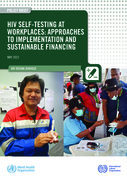
Countries are making progress toward the global goal of 95% of people living with HIV knowing their status by 2025. However, considerable gaps remain in achieving these goals globally. Men in high HIV burden settings and men from key populations in all settings are consistently less likely to know t
...
heir HIV status than women. Globally, 78% of men ages 15 years and older who are living with HIV are aware of their HIV status, compared with 86% of women with HIV of these ages.
Offering HIV testing services, including HIV self-testing, at formal and informal workplaces has emerged as an effective, acceptable and feasible approach for reaching men. A 2018 World Health Organization (WHO) and International Labour Organization (ILO) policy brief provides key guiding principles for HIVST implementation at workplaces. Building on the 2018 policy brief, this brief captures early experience with HIVST implementation at workplaces and discusses emerging approaches of sustainable financing that can be adapted for HIV self-testing at workplaces.
The primary audiences for this policy brief are ministries of health and labour, national HIV programmes, employers’ organizations, workers’ organizations (labour unions), enterprises, implementing partners, including civil society organizations, and health insurance agencies.
more
Snakebite envenoming is a potentially life-threatening disease that typically results from the injection of a mixture of different toxins (“venom”) following the bite of a venomous snake. Envenoming can also be caused by venom being sprayed into a person’s eyes by certain species of snakes tha
...
t have the ability to spit venom as a defence measure. Not all snakebites result in envenoming: some snakes are non-venomous and venomous snakes do not always inject venom during a bite. About 50–55% of all snakebites result in envenoming. Snake venoms are complex mixtures of protein and peptide toxins, varying from one species to another, and even within species. The toxins in snake venoms are evolutionarily adapted to interact with a large variety of cellular targets in the organisms exposed to them. In humans and animals, snakebite envenoming affects multiple organ systems (depending on the particular species of snake and the classes of toxins present in the venom) and can cause, among other things: haemorrhage and prolonged disruption of haemostasis, neuromuscular paralysis, tissue necrosis, myolysis (muscle degeneration), cardiotoxicity, acute kidney injury, thrombosis and hypovolaemic shock.
more

As of 12 December 2022, over 645 million people worldwide have been diagnosed with COVID-19, with over 6.6 million deaths (4).
The Omicron variant, which emerged in late November 2021, and its subvariants, are now the dominant circulating viruses, contributing to the ongoing surge in several countr
...
ies (4). Vaccination has substantially reduced case numbers and hospitalizations in many countries,but limitations in global access to vaccines mean that many populations, including those in low- and middle-income countries, remain vulnerable. Even in vaccinated individuals, uncertainties remain about duration of protection and efficacy, and the degree of crossprotection with new variants.
There remains a need for more effective treatment and management for those affected by COVID-19. The pandemic – and the
explosion of both research and misinformation – has highlighted the need for trustworthy, accessible and regularly updated living
guidelines to place emerging findings into context and provide clear recommendations for clinical practice
more

Rabies is fatal, vaccine-preventable disease responsible for an estimated 59,000 human deaths each year. Most cases are transmitted by dogs, and most deaths occur in underserved populations in Africa and Asia. Approximately 40% of deaths occur in children.
