
Filter
482
Text search:
Geneva
University
Hospitals
Featured
Recommendations
53
New Publications
93
Language
Document type
No document type
252
Studies & Reports
89
Guidelines
66
Manuals
40
Strategic & Response Plan
17
Training Material
9
Fact sheets
4
Situation Updates
2
Videos
2
Resource Platforms
1
Countries / Regions
Global
18
Malawi
10
India
9
Kenya
9
South Africa
9
Ethiopia
8
Syria
8
Eastern Europe
8
Rwanda
7
Western and Central Europe
7
Sierra Leone
6
Uganda
6
Nepal
6
Zambia
6
Tanzania
6
Ukraine
6
Yemen
6
Latin America and the Carribbean
6
Liberia
5
Africa
5
Guinea
4
Nigeria
4
Bangladesh
4
Myanmar / Burma
4
Ghana
3
Afghanistan
3
Mozambique
3
Namibia
3
Brazil
3
South–East Asia Region
3
Burkina Faso
2
Mali
2
Somalia
2
Turkey
2
Chad
2
Cambodia
2
Botswana
2
Lesotho
2
Middle East and North Africa
2
Asia
2
Venezuela
2
Armenia
2
Estonia
2
Congo, Democratic Republic of
1
Saudi Arabia
1
Cameroon
1
Zimbabwe
1
Haiti
1
Pakistan
1
South Sudan
1
Jordan
1
Germany
1
Thailand
1
Sudan
1
Benin
1
Central African Republic
1
Argentina
1
Peru
1
Eswatini/ Swaziland
1
Libya
1
Mexico
1
Chile
1
East and Southern Africa
1
West and Central Africa
1
Western Pacific Region
1
Eastern Europe and Central Asia
1
Palestine
1
Albania
1
Timor Leste/ East Timor
1
Russia
1
Lithuania
1
Iran
1
Kazakhstan
1
Georgia
1
Vietnam
1
Denmark
1
France
1
United Kingdom
1
Portugal
1
Spain
1
Authors & Publishers
Publication Years
Category
Countries
122
Clinical Guidelines
56
Key Resources
46
Women & Child Health
34
Public Health
28
Pharmacy & Technologies
8
Capacity Building
5
Toolboxes
Mental Health
48
COVID-19
39
HIV
30
TB
29
Disability
25
AMR
25
Caregiver
18
Planetary Health
18
Rapid Response
16
Conflict
15
Pharmacy
14
NTDs
12
Ebola & Marburg
11
2.0 Rapid Response
11
NCDs
8
Refugee
7
Natural Hazards
6
Global Health Education
6
Cholera
3
Polio
3
Specific Hazards
2
Social Ethics
2
Malaria
2
Zika
1
Health Financing Toolbox
1
Suicide is largely preventable. Unlike for many other health issues, the tools to significantly reduce the most tragic loss of life by suicide are available. With collective action to acknowledge and address this serious problem, as well as commitment to effective interventions, supported by politic
...
DHS Further Analysis Reports No. 108 - This report examines levels, trends, and inequalities in maternal health in Rwanda from 2010 to 2014-15 among women age 15-49 with a recent birth. The analysis uses Demographic and Health Survey (DHS) data for 15 key indicators of maternal health: 6 for antenat
...
It is impossible to address the many complex needs of respiratory virus surveillance with a single surveillance system. Multiple systems, investigations and studies must each be fit-for-purpose to specific priority surveillance objectives, and only together can they provide essential information to
...
Effective Media Communication during Public Health Emergencies. Handbook and Field Guide
recommended
This handbook describes a seven-step process to assist public health officials and others to communicate effectively through the media during emergencies. At the core of this process is the belief that positive action must be taken to interactively facilitate effective media coverage
of events and
...
This document provides an overview of the issues and challenges surrounding medical device donations, and offers considerations and best practices that may be useful for making and soliciting donations. The document highlights the importance of an active participatory role for the intended recipient
...

Report of a mission 20–24 April 2015

This manual provides practical guidelines for the management of children with severe malnutrition. It seeks to promote the best available therapy so as to reduce the risk of death, shorten the length of time spent in hospital, and facilitate rehabilitation and full recovery. Emphasis is given to the
...
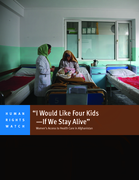
Over the past two decades, Afghanistan has depended on international donor support to fund essential services like health care. But this donor support has been falling for years and will likely to continue do so—perhaps precipitously—following the announcement by United States President Joe Bide
...

In 2015, 5.9 million children under age five died (1). The major causes of child deaths globally are pneumonia, prematurity, intrapartum-related complications, neonatal sepsis, congenital anomalies, diarrhoea, injuries and malaria (2). Most of these diseases and conditions are at least partially cau
...

As of 12 December 2022, over 645 million people worldwide have been diagnosed with COVID-19, with over 6.6 million deaths (4).
The Omicron variant, which emerged in late November 2021, and its subvariants, are now the dominant circulating viruses, contributing to the ongoing surge in several countr
...

Report of a World Health Organization and International Diabetes Federation meeting
The approach is in line with two of the five objectives outlined in the Every Newborn Action Plan (ENAP): Strategic Objective 2 – Improve the quality of maternal and newborn care; and Strategic Objective 5 – Count every newborn through measurement, programme-tracking and accountability to genera
...
Communicable Diseases Control in Emergencies
recommended
A field manual
The Asia Pacific Observatory on Health Systems and Policies is a collaborative partnership which supports and promotes evidence-based health policy making in the Asia Pacific Region. Based in WHO’s Regional Office for South-East Asia, it brings together governments, international agencies, foundat
...
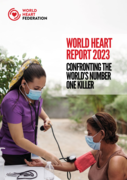
Global progress against cardiovascular disease (CVD) is flatlining.
Though rates of CVD deaths globally have fallen in the last three
decades, this trend has begun to stall and, without concerted
efforts, is at risk of reversing.

Non-communicable diseases (NCDs) are the second common cause of death in sub-Saharan Africa (SSA) accounting for about 35% of all deaths, after a composite of communicable, maternal, neonatal, and nutritional diseases. Despite prior perception of low NCDs mortality rates, current evidence suggests t
...

Rreport of a WHO Consultative Meeting Kolkata India 2012
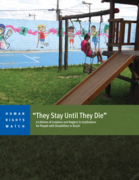
This report found that many people with disabilities enter institutions as children and remain there for their entire lives. Most of these institutions visited by Human Rights Watch researchers did not provide for more than people’s basic needs, such as food and hygiene, with scarce contact with t
...
