
Filter
2549
Text search:
Institutional
delivery
Featured
164
875
Language
2513
50
44
26
26
17
12
3
2
2
1
1
1
1
1
1
1
1
1
1
1
1
1
1
1
1
1
1
1
1
1
1
1
1
Document type
1534
437
231
136
128
38
22
12
7
2
1
Countries
182
100
98
89
78
77
74
68
61
60
59
56
54
54
51
48
45
44
32
29
28
26
25
23
22
20
20
20
19
18
17
17
17
17
16
12
11
11
11
10
10
9
8
8
8
7
7
7
7
6
6
6
6
5
5
5
5
5
4
4
4
4
4
4
3
3
3
3
3
3
3
3
3
3
2
2
2
2
2
2
2
2
2
2
2
2
2
1
1
1
1
1
1
1
1
1
1
1
1
1
1
1
1
1
1
1
1
1
1
1
Authors & Publishers
289
80
65
62
58
53
52
26
26
25
24
17
16
16
14
14
14
14
14
14
12
12
11
10
10
10
10
10
10
10
10
9
9
8
8
8
8
8
8
8
7
7
7
7
7
7
7
7
7
7
7
7
6
6
6
6
6
6
6
6
6
6
5
5
5
5
5
5
5
5
5
5
5
5
5
5
5
5
5
5
5
5
5
5
5
5
5
4
4
4
4
4
4
4
4
4
4
4
4
4
4
4
4
4
4
4
4
4
4
4
4
4
4
4
4
4
3
3
3
3
3
3
3
3
3
3
3
3
3
3
3
3
3
3
3
3
3
3
3
3
3
3
3
3
3
3
3
3
3
3
3
3
3
3
3
3
3
3
3
3
3
3
3
3
3
3
3
3
3
3
3
3
3
3
2
2
2
2
2
2
2
2
2
2
2
2
2
2
2
2
2
2
2
2
2
2
2
2
2
2
2
2
2
2
2
2
2
2
2
2
2
2
2
2
2
2
2
2
2
2
2
2
2
2
2
2
2
2
2
2
2
2
2
2
2
2
2
2
2
2
2
2
2
2
2
2
2
2
2
2
2
2
2
2
2
2
2
2
2
2
2
2
2
2
2
2
2
2
2
2
2
2
2
2
2
2
2
2
2
2
2
2
2
2
2
2
2
2
2
2
2
2
2
2
2
2
2
2
2
2
2
2
2
2
2
2
2
2
2
2
2
2
2
2
2
2
2
2
2
2
2
2
2
2
2
2
2
1
1
1
1
1
1
1
1
1
1
1
1
1
1
1
1
1
1
1
1
1
1
1
1
1
1
1
1
1
1
1
1
1
1
1
1
1
1
1
1
1
1
1
1
1
1
1
1
1
1
1
1
1
1
1
1
1
1
1
1
1
1
1
1
1
1
1
1
1
1
1
1
1
1
1
1
1
1
1
1
1
1
1
1
1
1
1
1
1
1
1
1
1
1
1
1
1
1
1
1
1
1
1
1
1
1
1
1
1
1
1
1
1
1
1
1
1
1
1
1
1
1
1
1
1
1
1
1
1
1
1
1
1
1
1
1
1
1
1
1
1
1
1
1
1
1
1
1
1
1
1
1
1
1
1
1
1
1
1
1
1
1
1
1
1
1
1
1
1
1
1
1
1
1
1
1
1
1
1
1
1
1
1
1
1
1
1
1
1
1
1
1
1
1
1
1
1
1
1
1
1
1
1
1
1
1
1
1
1
1
1
1
1
1
1
1
1
1
1
1
1
1
1
1
1
1
1
1
1
1
1
1
1
1
1
1
1
1
1
1
1
1
1
1
1
1
1
1
1
1
1
1
1
1
1
1
1
1
1
1
1
1
1
1
1
1
1
1
1
1
1
1
1
1
1
1
1
1
1
1
1
1
1
1
1
1
1
1
1
1
1
1
1
1
1
1
1
1
1
1
1
1
1
1
1
1
1
1
1
1
1
1
1
1
1
1
1
1
1
1
1
1
1
1
1
1
1
1
1
1
1
1
1
1
1
1
1
1
1
1
1
1
1
1
1
1
1
1
1
1
1
1
1
1
1
1
1
1
1
1
1
1
1
1
1
1
1
1
1
1
1
1
1
1
1
1
1
1
1
1
1
1
1
1
1
1
1
1
1
1
1
1
1
1
1
1
1
1
1
1
1
1
1
1
1
1
1
1
1
1
1
1
1
1
1
1
1
1
1
1
1
1
1
1
1
1
1
1
1
1
1
1
1
1
1
1
1
1
1
1
1
1
1
1
1
1
1
1
1
1
1
1
1
1
1
1
1
1
1
1
1
1
1
1
1
1
1
1
1
1
1
1
1
1
1
1
1
1
1
1
1
1
1
1
1
1
1
1
1
1
1
1
1
1
1
1
1
1
1
1
1
1
1
1
1
1
1
1
1
1
1
1
1
1
1
1
1
1
1
1
1
1
1
1
1
1
1
1
1
1
1
1
1
1
1
1
1
1
1
1
1
1
1
1
1
1
1
1
1
1
1
1
1
1
1
1
1
1
1
1
1
1
1
1
1
1
1
1
1
1
1
1
1
1
1
1
1
1
1
1
1
1
1
1
1
1
1
1
1
1
1
1
1
1
1
1
1
1
1
1
1
1
1
1
1
1
1
1
1
1
1
1
1
1
1
1
1
1
1
1
1
1
1
1
1
1
1
1
1
1
1
1
1
1
1
1
1
1
1
1
1
1
1
1
1
1
1
1
1
1
1
1
1
1
1
1
1
1
1
1
1
1
1
1
1
1
1
1
1
1
1
1
1
1
1
1
1
1
1
1
1
1
1
1
1
1
1
1
1
1
1
1
1
1
1
1
1
1
1
1
1
1
1
1
1
1
1
1
1
1
1
1
1
1
1
1
1
1
1
1
1
1
1
1
1
1
1
1
1
1
1
1
1
1
1
1
1
1
1
1
1
1
1
1
1
1
1
1
1
1
1
1
1
1
1
1
1
1
1
1
1
1
1
1
1
1
1
1
1
1
1
1
1
1
1
1
1
1
1
1
1
1
1
1
1
1
1
1
1
1
1
1
1
1
1
1
1
1
1
1
1
1
1
1
1
1
1
1
1
1
1
1
1
1
1
1
1
1
1
1
1
1
1
1
1
1
1
1
1
1
1
1
1
1
1
1
1
1
1
1
1
1
1
1
1
1
1
1
1
1
1
1
1
1
1
1
1
1
1
1
1
1
1
1
1
1
1
1
1
1
1
1
1
1
1
1
1
1
1
1
1
1
1
1
1
1
1
1
1
1
1
1
1
1
1
1
1
1
1
1
1
1
1
1
1
1
1
1
1
1
1
1
1
1
1
1
1
1
1
1
1
1
1
1
1
1
1
1
1
1
1
1
1
1
1
1
1
1
1
1
1
1
1
1
1
1
1
1
1
1
1
1
1
1
1
1
1
1
1
1
1
1
1
1
1
1
1
1
1
1
1
1
1
1
1
1
1
1
1
1
1
1
1
1
1
1
1
1
1
1
1
1
1
1
1
1
1
1
1
1
1
1
1
1
1
1
1
1
1
1
1
1
1
1
1
1
1
1
1
1
1
1
1
1
1
1
1
1
1
1
1
1
1
1
1
1
1
1
1
1
1
1
1
1
1
1
1
1
1
1
1
1
1
1
1
1
1
1
1
1
1
1
1
1
1
1
1
1
1
1
1
1
1
1
1
1
1
1
1
1
1
1
1
1
1
1
1
1
1
1
1
1
1
1
1
1
1
1
1
1
1
1
1
1
1
1
1
1
1
1
1
1
1
1
1
1
1
1
1
1
1
1
1
1
1
1
1
1
1
1
1
1
1
1
1
1
1
1
1
1
1
1
1
1
1
1
1
1
1
1
1
1
1
1
1
1
1
1
1
1
1
1
1
1
1
1
1
1
1
1
1
1
1
1
1
1
1
1
1
1
1
1
1
1
1
1
1
1
1
1
1
1
1
1
1
1
1
1
1
1
1
1
1
1
1
1
1
1
1
1
1
1
1
1
1
1
1
1
1
1
1
1
1
1
1
1
1
1
1
1
1
1
1
1
1
1
1
1
1
1
1
1
1
1
1
1
1
1
1
1
1
1
1
1
1
1
1
1
1
1
1
1
1
1
1
1
1
1
1
1
1
1
1
1
1
1
1
1
1
1
1
1
1
1
1
1
1
1
1
1
1
1
1
1
1
1
1
1
1
1
1
1
1
1
1
1
1
1
1
1
1
1
1
1
1
1
1
1
1
1
1
1
1
1
1
1
1
1
1
1
1
1
1
1
1
1
1
1
1
1
1
1
1
1
1
1
1
1
1
1
1
1
1
1
1
1
1
1
1
1
1
1
1
1
1
1
1
1
1
1
1
1
1
1
1
1
1
1
1
1
1
1
1
1
1
1
1
1
1
1
1
1
1
1
1
1
1
1
1
1
1
1
1
1
1
1
1
1
1
1
1
1
1
1
1
1
1
1
1
1
1
1
1
1
1
1
1
1
1
1
1
1
1
1
1
1
1
1
1
1
1
1
1
1
1
1
1
1
1
1
1
1
1
1
1
1
1
1
1
1
1
1
1
1
1
1
1
1
1
1
1
1
1
1
1
1
1
1
1
1
1
1
1
1
1
1
1
1
1
1
1
1
1
1
1
1
1
1
1
1
1
1
1
1
1
1
1
1
1
1
1
1
1
1
1
1
1
1
1
1
1
1
1
1
1
1
1
1
1
1
1
1
1
1
1
1
1
1
1
1
1
1
1
1
1
1
1
1
1
1
1
1
1
1
1
1
1
1
1
1
1
1
1
1
1
1
1
1
1
1
1
1
1
1
1
1
1
1
1
1
1
1
1
1
1
1
1
1
1
1
1
1
1
1
1
1
1
1
1
1
1
1
1
1
1
1
1
1
1
1
1
1
1
1
1
1
1
1
1
1
1
1
1
1
1
1
1
1
1
1
1
1
1
1
1
1
1
1
1
1
1
1
1
1
1
1
1
1
1
1
1
1
1
1
1
1
1
1
1
1
1
1
1
1
1
1
1
1
1
1
1
1
1
1
1
1
1
1
1
1
1
1
1
1
1
1
1
1
1
1
1
1
1
1
1
1
1
1
1
1
1
1
1
1
1
1
1
1
1
1
1
1
1
1
1
1
1
1
1
1
1
1
1
1
1
1
1
1
1
1
1
1
1
1
1
1
1
1
1
1
1
1
1
1
1
1
1
1
1
1
1
1
1
1
1
1
1
1
1
1
1
1
1
1
1
1
1
1
1
1
1
1
1
1
1
1
1
1
1
1
1
1
1
1
1
1
1
1
1
1
1
1
1
1
1
1
1
1
1
1
1
1
1
1
1
1
1
1
1
1
1
1
1
1
1
1
1
1
1
1
1
1
1
1
1
1
1
1
1
1
1
1
1
1
1
1
1
1
1
1
1
1
1
1
1
1
1
1
1
1
1
1
1
1
1
1
1
1
1
1
1
1
1
1
1
1
1
1
1
1
1
1
1
1
1
1
1
1
1
1
1
1
1
1
1
1
1
1
1
Publication Years
683
1614
245
6
1
Category
1317
217
127
120
89
43
11
Toolboxes
149
127
112
102
96
85
70
57
56
55
52
48
46
45
38
38
30
29
23
23
16
8
8
5
5
5

Action Plan for Implementation of Recommendations from the Evaluation of PAHO's Response to COVID-19
An external team evaluated PAHO’s response to COVID-19 to provide an independent assessment of the Pan American Sanitary Bureau’s (PASB) performance regarding preparedness for and response to the COVID-19 pandemic. The evaluations’ final report culminates with eight recommendations for actions
...
to future response to health emergencies. The final report of EPRC culminates with eight evidence-based recommendations of actions to strengthen future pandemic responses, while building a resilient recovery in the Region. The recommendations by the external team focus on PAHO’s governance and management, on specialized regional mechanisms, diversified funding models, and use of new technologies, among others.
more
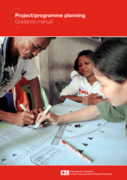
The aim of this guidance manual is to introduce the user to project/programme plan- ning in a Red Cross Red Crescent environment. It describes the different stages of the planning phase of the “project/programme cycle” within the context of Results-Based Management (RBM). It also gives an overvi
...
ew of the various components of RBM and explains how to integrate and apply this approach in practice. In addition, the manual summarizes briefly the other key phases of the cycle (assessment, imple- mentation and monitoring, evaluation) and provides references to the key Federation manuals on these phases.
The manual has been developed primarily for use by people managing projects and programmes either in a National Society or the secretariat of the International Federation of Red Cross and Red Crescent Societies (International Federation). Although it is mainly designed for use at the country level, the basic principles can be applied to project and programme planning at any level. The manual draws on two International Red Cross and Red Crescent Movement publications – the International Federation’s Project Planning Process (2002) and the ICRC Economic Security Unit’s Programme/ Project Management: The Results-Based Approach (2008) – reflecting the significant similarity of approach. The International Federation has developed the manual internally to suit the particular needs and uses of project/programme management within the organization.
more

The document, "Progress on the Prevention and Control of Non-Communicable Diseases," reports on global efforts to reduce the impact of NCDs, such as heart disease, cancer, diabetes, and chronic respiratory diseases, following the commitments made at high-level United Nations meetings. It highlights
...
the inadequate progress in meeting the targets set under the Sustainable Development Goal 3.4 to reduce premature NCD mortality by one-third by 2030. Key challenges include insufficient funding, limited implementation of effective interventions, and political and economic barriers, especially in low-income countries. The report calls for strengthened international cooperation, policy reform, and innovative approaches to meet global health targets.
more

Public health emergencies, including pandemics, highlight the need for health systems and services that are prepared, resilient and ready to respond to health security threats. Endorsed by Member States in 2023, the Asia Pacific Health Security Action Framework (APHSAF) is designed to engage m
...
ultisectoral actors in health security, and to reflect the complex nature of current and future public health emergencies. The Framework presents six interconnected, multisectoral domains of work that together form a comprehensive, multi-hazard health security system — emphasizing the One Health approach. The Framework also supports progress towards the Sustainable Development Goals and universal health coverage while meeting the responsibilities and obligations of the International Health Regulations (2005).
more
The article is a scoping review that explores the challenges in diagnosing asthma in children in three sub-Saharan African countries: Nigeria, South Africa, and Uganda. It identifies key barriers, such as a lack of community awareness, inadequate healthcare access, limited diagnostic tools like spir
...
ometry, and insufficient knowledge among healthcare workers. The review also highlights the stigma associated with asthma and the absence of relevant diagnostic guidelines. Solutions proposed include community education, development and adherence to diagnostic guidelines, and strengthening healthcare systems. The study aims to inform policymakers and healthcare providers to improve asthma diagnosis and care for children in these regions.
more

Providing quality, stigma-free services is essential to equitable health care for all and achieving global HIV goals and broader Sustainable Development Goals related to health. Every person has the right to the highest attainable standard of physical and mental health. Countries have a legal obliga
...
tion to develop and implement legislation and policies that guarantee universal access to quality health services and address the root causes of health disparities, including poverty, stigma and discrimination.
The health sector is uniquely placed to lead in addressing inequity, assuring safe personcentred care for everyone and improving social determinants of health by overcoming taboos and discriminatory or stigmatizing behaviours associated with HIV, viral hepatitis and sexually transmitted infections (STIs). Improving health care quality and reducing stigma work together to enhance health outcomes for people living with HIV. Together, they make health care services more accessible, trustworthy and supportive. This encourages early diagnosis, consistent treatment and improved mental well-being. Thus, people living with HIV are more likely to engage with and benefit from health care services, leading to improved overall health.
more

Background
Asthma education, a key component of long-term asthma management, is challenging in resource-limited settings with shortages of clinical staff. Task-shifting educational roles to lay (non-clinical) staff is a potential solution. We conducted a randomised controlled trial of an enhanced a
...
sthma care intervention for children in Malawi, which included reallocation of asthma education tasks to lay-educators. In this qualitative sub-study, we explored the experiences of asthmatic children, their families and lay-educators, to assess the acceptability, facilitators and barriers, and perceived value of the task-shifting asthma education intervention.
Methods
We conducted six focus group discussions, including 15 children and 28 carers, and individual interviews with four lay-educators and a senior nurse. Translated transcripts were coded independently by three researchers and key themes identified.
Results
Prior to the intervention, participants reported challenges in asthma care including the busy and sometimes hostile clinical environment, lack of access to information and the erratic supply of medication. The education sessions were well received: participants reported greater understanding of asthma and their treatment and confidence to manage symptoms. The lay-educators appreciated pre-intervention training, written guidelines, and access to clinical support. Low education levels among carers presented challenges, requiring an open, non-critical and individualised approach.
Discussion
Asthma education can be successfully delivered by lay-educators with adequate training, supervision and support, with benefits to the patients, their families and the community. Wider implementation could help address human resource shortages and support progress towards Universal Health Coverage.
more

This report explores the extent to which evidence, policy, normative guidance and commitments on HIV and gender-based violence, and their interlinkages, is being translated into action on the ground in fragile settings. These issues are explored through the lens of training of peace support operatio
...
ns deploying African troops across Africa and beyond.
more

About one fourth of the world’s population is estimated to have been infected with the tuberculosis (TB) bacilli, and about 5–10% of those infected develop TB disease in their lifetime. The risk for TB disease after infection depends on several factors, the most important being the person’s im
...
munological status. TB preventive treatment (TPT) given to people at highest risk of progressing from TB infection to disease remains a critical element to achieve the global targets of the End TB Strategy, as reiterated by the second UN High Level Meeting on TB in 2023. Delivering TPT effectively and safely necessitates a programmatic approach to implement a comprehensive package of interventions along a cascade of care: identifying individuals at highest risk, screening for TB and ruling out TB disease, testing for TB infection, and choosing the preventive treatment option that is best suited to an individual, managing adverse events, supporting medication adherence and monitoring programmatic performance
more

The European Respiratory Society (ERS)/American Thoracic Society (ATS) Task Force on severe asthma includes an updated definition of severe asthma, a discussion of severe asthma phenotypes in relation to genetics, natural history, pathobiology and physiology, as well as sections on evaluation and tr
...
eatment of severe asthma where specific recommendations for practice are made. See the unabridged online version of the document for detailed discussion of the definition of severe asthma, phenotypes and recommendations for practice.
more

The key to a lasting world free of all forms of poliovirus lies in rapidly interrupting all remaining endemic transmission of WPV in the endemic areas of Pakistan and Afghanistan. This is the only way to ensure that such strains do not re-emerge globally through international spread. It lays the cor
...
nerstone for the eventual cessation of all oral polio vaccine use, in order to eliminate the long-term risks associated with variant poliovirus strains, which is the GPEI’s top operational priority. The target for certifying the
world free of all WPV remains end-2026.
more

This integrated operational framework provides an overview of the connections between mental health, neurological and substance use (MNS) conditions, and their links to health, well-being and the broader public health and sustainable development agenda. The need for integrated approaches is increasi
...
ngly recognized as critical to address the complex interactions between mental health, brain health, substance use, and physical health, particularly in light of global threats such as the COVID-19 pandemic. The framework also provides a series of actions for governments and health service planners and advisors to achieve integration across four domains: leadership and governance; care services; promotion and prevention; and health information systems, evidence generation and research.
more

Malawi is a landlocked country with a surface area of 118,484 km2. Administratively, the country is divided into three regions, namely the Northern, Central and Southern regions. The country has 28 districts, which are further divided into traditional authorities (TA) ruled by chiefs. The TAs are su
...
b-divided into villages, which form the smallest administrative units. The Village Development Committees (VDCs) under the TAs are responsible for development activities. Politically, each district is divided into constituencies that are represented by Members of Parliament (MPs) in the National Assembly for purposes of legislations. Constituencies are further divided into wards which are represented by a ward councillor at district assembly.
more

An estimated 1.3 billion people globally experience significant disability. This figure has grown over the last decade and will continue to rise due to demographic and epidemiological changes. In 2022, the World Health Organization launched the Global report on health equity for persons with disabil
...
ities. This report demonstrated that many persons with disabilities are still being left behind. Experiencing persistent health inequities, persons with disabilities die earlier, they have poorer health and functioning, and they are more affected by health emergencies than the general population. These differences are largely associated with unjust factors both inside and beyond the health sector and are avoidable. The Global Report called upon Member States to take actions to make health sector more inclusive for persons with disabilities through the primary health care approach. This will be essential for countries to make health coverage truly universal and to progress towards other health-related targets in the sustainable development goals.
more
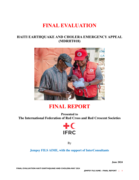
The Haiti Earthquake and Cholera Emergency appeal (MDRHT018) was implemented by the International Federation of Red Cross and Red Crescent Societies (IFRC) in collaboration with the Haitian Red Cross Society (HRCS) following the devastating earthquake on 14 August 2021, and the cholera outbreak on 2
...
October 2022.
more
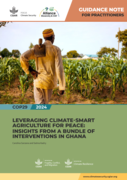
Climate change is one of the biggest crises of our time. Climate threats range from higher temperatures, heavy rainfalls and floods, erratic precipitation, droughts, desertification, and land degradation. This has negative implications on the quality and quantity of natural resources, such as land a
...
nd water, agricultural productivity, rural livelihood options, food prices, and nutrition security, particularly when there is a lack of adaptation capacities and preparedness measures (Pacillo, 2024). Farmers are at the forefront of the climate crisis where their livelihoods are being jeopardized, and they are faced with many challenges to secure water, energy, and agriculture inputs, and maintain agriculture productivity. This heightens the risk of competition over natural resources and aggravates grievances and structural inequalities related to land rights and ownership as well as land access, management, and governance. In Africa, land-related issues are among the triggers of many violent disputes (Medina et al, 2024). For instance, communal violence in Nigeria and Sudan is tied to competition over scarce fertile land and poor resource governance (Bruce and Bourdeaux, 2013).
more

The guide aims to provide health and DRM practitioners, planners and policymakers across sectors with targeted information to help them strengthen national health systems and integrate the risks of disease outbreaks in national DRR strategies
The following are some of the principles and approache
...
s that have been based on lessons learned to date and may be considered to ensure effective all-hazards health EDRM, including prevention and preparedness for disease outbreaks, are addressed as part of the multihazard, multisectoral approach to developing or updating DRR strategies
more

Safe sanitation is essential for health, from preventing infections to improving and maintaining mental and social
well-being. Lack of adequate sanitation contributes to diarrhoeal diseases, parasitic infections, and undernutrition, as
well as posing significant risks and causing anxiety, especial
...
ly for women and girls. Achieving universal access to safe
sanitation, which protects health, privacy, and dignity, is a global development goal and a recognized basic human right.
more

Challenges and Opportunities. This report presents a comprehensive assessment of the education and labor markets for nurses in the ECSA region. It documents the main challenges to train and deploy nurses and discusses opportunities for government and private sector employers to overcome these chall
...
enges. The report provides empirical evidence to support the expansion of nursing education within the region with a focus on private sector engagement, effective labor market regulation, and regional collaboration. A regional focus for investment may be necessary to create enough potential deals, reduce individual country and regulatory risks, encourage good private institutions to move across borders within the region, and seek to create regional standards for regulation.
more

BMC Infectious Diseases volume 23, Article number: 342 (2023).
Tuberculosis (TB) is among the leading causes of death globally. The disease has a huge burden in Namibia, with a case notification rate of at least 442 per 100,000. To date, Namibia is among the countries with the highest global TB bur
...
den, despite all efforts to reduce it. This study aimed to determine the factors associated with the unsuccessful treatment outcomes of the Directly Observed Therapy Short course (DOTS) programme in the Kunene and Oshana regions.
more
