
Filter
1275
Text search:
soil
Featured
125
341
Language
Document type
520
315
172
104
59
37
25
13
10
10
6
2
1
1
Countries
78
39
35
34
30
28
26
26
25
24
20
16
16
15
15
14
12
12
10
10
10
9
9
9
9
8
8
7
7
6
6
6
6
6
5
5
5
4
4
4
4
4
4
4
3
3
3
3
3
3
2
2
2
2
2
2
2
2
2
2
2
2
2
2
2
2
1
1
1
1
1
1
1
1
1
1
1
1
1
1
1
1
1
1
1
1
1
1
1
1
1
1
1
1
1
1
1
1
Authors & Publishers
Publication Years
Category
415
185
66
65
39
16
13
Toolboxes
222
139
65
52
48
45
38
34
28
27
24
22
20
17
16
11
11
10
10
7
7
3
3
3
3
1
1

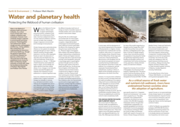
Water is the lifeblood of planetary health and human civilisation. As a critical source of fresh water, rivers underpin civilisations, past and present. However, rivers constantly change in response to environmental and human pressures. Protecting global river systems from climate change and other a
...
Science of The Total Environment Volume 764, 10 April 2021, 142919

Peru celebrates 200 years of independence in 2021. Over this period of independent life, and despite the turbulent socio-political scenarios, from internal armed conflict to economic crisis to political instability over the last 40 years, Peru has experienced major changes on its epidemiological and
...

This document sets out, therefore, to explain the socioeconomic value of investing in the fight against NTDs and highlights priorities for global investment attention. Our work was guided by the need not only for
additional funding and funders but also for the need to understand the current funding
...
Briefing Note 8.
Ecosystem-based adaptation (EbA) is a strategy for adapting to the adverse impacts of climate change by harnessing nature and the services it can provide. This strategy is crucial for cities and peri-urban areas, threatened by a multitude of climate hazards and home to more than ha
...

Sector Environmental Guidelines, Full technical Update
In 1997, the Fiftieth World Health Assembly adopted resolution WHA50.29 on the elimination of
lymphatic filariasis as a public health problem. Preliminary guidance from WHO printed in 2011 referred to “verification” as the official process by which the achievements of the Global Programme to El
...
This manual provides a framework for morbidity management and disability prevention of patients affected by NIDs and gives specific guidance for the proper care of patients suffering from chronic conditions caused by lymphatic filariasis, leprosy, trachoma, and Chagas disease. It is intended to be u
...
The Arab region in the Middle East and North Africa (MENA) represents a substantial area of the terrestrial landmass encompassing several countries and ecosystems. This area is generally drier and warmer compared to the rest of the world and has extreme resource limitations that are highly vulnerabl
...
In January 2021, the World Health Organization (WHO) published a new road map to address the burden of disease and death imposed by neglected tropical diseases (NTDs). The end of the first year of the 2021-2030 NTD road map is an opportunity to take stock of where we stand and how we plan to move fo
...

Climate change presents the single biggest threat to human development, and its widespread impacts disproportionately burden the poorest and most vulnerable households in fragile and rural developing contexts – particularly women and children.
According to the Intergovernmental Panel on Climate C
...
The Food and Agriculture Organization of the United Nations (FAO) launched a new Framework for Environmental and Social Management (FESM) to ensure that both people and the environment are protected from any potential impacts of FAO programmes and projects.
“This Framework ensures that our proj
...
The Onchocerciasis Control Programme in West Africa (OCP) undertook regional and large scale frght against onchocerciasis in West Africa in 1974 using a vector control strategy. By 2002 OCP had succeeded in eliminating the disease as a public health, socio-economic and development problem in 10 out
...
Leptospirosis is a bacterial zoonotic disease of worldwide importance, though relatively neglected in many African countries including sub Saharan Africa that is among areas with high burden of this disease. The disease is often mistaken for other febrile illnesses such as dengue, malaria, rickettsi
...
PLoS Negl Trop Dis 14(1): e0007999. January 30, 2020 is the first-ever World Neglected Tropical Diseases Day (World NTD Day), a day when we celebrate the achievements made towards control of the world’s NTDs, yet recognize the daunting challenges we face in the control and elimination of these con
...
