Filter
727
Text search:
rapid
antigen
test
Featured
123
176
Language
Document type
275
212
104
58
29
23
13
3
3
2
2
1
1
Countries
52
42
23
17
16
16
16
15
13
13
13
12
11
11
10
10
9
8
8
7
7
7
6
6
6
6
6
5
5
5
4
4
4
4
3
3
3
3
3
2
2
2
2
2
2
2
2
2
2
1
1
1
1
1
1
1
1
1
1
1
1
1
1
1
1
1
1
1
1
1
1
1
1
1
1
1
Authors & Publishers
Publication Years
Category
295
111
38
24
16
10
7
Toolboxes
141
78
56
46
30
22
21
20
13
12
9
8
7
7
7
7
6
4
4
2
2
1

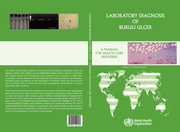
Laboratory diagnosis of Buruli ulcer
recommended
A manual for health care providers.
This manual provides expert guidance on the laboratory techniques and procedures used in the diagnosis of Buruli ulcer, a disease caused by Mycobacterium ulcerans. Aimed at laboratory technicians and scientists working on this disease, the manual details the exac
...
The curriculum, which complements the national pediatric ART training, was finalized in 2011 and was subsequently implemented nationally. The training curriculum includes a 15-module Trainer Manual, a Participant Manual, and accompanying PowerPoint slides.
Interim emergency guidelines

A printable copy of the article published in Morbidity and Mortality Weekly Report (MMWR) can be found on the CDC Homepage. Follow the Download Link for redirection to CDC.
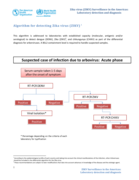
This algorithm is addressed to laboratories
with established capacity(molecular, antigenic and/orserological) to detect dengue (DENV), Zika (ZIKV), and chikungunya(CHIKV) as part of the differential diagnosis for arborviruses. A BSL2 containment level is required to handle suspected samples.
This Training module on malaria elimination has been developed by WHO to support health professionals in planning, managing, monitoring and evaluating malaria elimination programmes
Bulletin of the World Health Organization; http://dx.doi.org/10.2471/BLT.16.176677
The objective of this document is to guide the preparation and implementation of national preparedness plans for the safety of substances of human origin during outbreaks of Zika virus infection, both in affected and non-affected areas.

BMC Medicine201614:112 DOI: 10.1186/s12916-016-0660-0
Treatment Recommendations for Adult Inpatients
PLoS Negl Trop Dis 11(2): e0005356 -Published: February 23, 2017 21 pp