
Filter
358
Text search:
WHO
Regional
Office
for
Europe
United
Nations
City
Featured
Recommendations
29
New Publications
58
Language
Document type
No document type
153
Studies & Reports
100
Guidelines
52
Manuals
22
Strategic & Response Plan
18
Fact sheets
5
Training Material
3
Situation Updates
3
Brochures
1
Resource Platforms
1
Countries / Regions
Western and Central Europe
35
Global
22
Ukraine
16
Eastern Europe
13
Syria
10
Eastern Europe and Central Asia
6
Russia
5
Kazakhstan
4
USA
3
Ethiopia
3
Latin America and the Carribbean
3
Asia
3
Africa
3
Sierra Leone
2
Liberia
2
India
2
North Macedonia
2
Myanmar / Burma
2
South–East Asia Region
2
Tajikistan
2
Estonia
2
Moldova
2
Kyrgyzstan
2
Guinea
1
Zimbabwe
1
Philippines
1
Iraq
1
Afghanistan
1
Turkey
1
Kenya
1
Tanzania
1
Thailand
1
South Africa
1
Bangladesh
1
Malawi
1
Croatia
1
Sri Lanka
1
Middle East and North Africa
1
Venezuela
1
Albania
1
Iran
1
Uzbekistan
1
Georgia
1
Turkmenistan
1
Mauritius
1
Azerbaijan
1
Authors & Publishers
Publication Years
Category
Countries
57
Key Resources
35
Clinical Guidelines
31
Public Health
20
Women & Child Health
20
Capacity Building
4
Pharmacy & Technologies
3
Toolboxes
HIV
59
Mental Health
35
Planetary Health
32
TB
26
COVID-19
26
Conflict
24
Refugee
17
Caregiver
15
Global Health Education
14
AMR
14
Rapid Response
10
Disability
7
2.0 Rapid Response
6
Ebola & Marburg
5
Specific Hazards
5
NCDs
5
Pharmacy
4
NTDs
3
Polio
2
Typhoon
2
Natural Hazards
2
Zika
2
Cholera
1
Social Ethics
1
Health Financing Toolbox
1
Health care-associated infections (HAIs) affect patients and health systems every day, causing immense suffering, driving higher health-care costs and hampering efforts to achieve high-quality care for all. HAIs are often difficult to treat, are the
...
Policy brief, 24 July 2020
The COVID-19 pandemic has affected older people disproportionately, especially those living in long-term care facilities. In many countries, evidence shows that more than 40% of COVID-19 related deaths have been linked to long-term care facilities, with figures being as h
...
Guidelines on the management of chronic pain in children, developing and implementing national and local policies for pain management and protocols in children, implementing national and local regulations
...
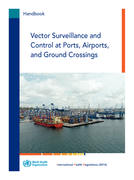
The purpose of this handbook is to provide guidance to Member States on the practical aspects of maintaining sanitary standards at international borders at ports, airports, and ground crossings (points of entry) as set out in the International Health Regulations (2005). It provides technical advice
...
Mental Health Atlas 2024
recommended
The Mental Health Atlas 2024 is the seventh in a series that began in 2001, and draws on data from 144 countries to assess mental health policies, laws, information systems, financing, workforce and services. It shows little change in investment: mental health accounts
...
The United Nations (UN) adopted a new international legal instrument in November 2000, the UN Protocol to Prevent, Suppress and Punish Trafficking in Persons, especially Women and Children, suppleme
...
A survey was conducted in countries in all six WHO regions and focused on the building blocks that are considered prerequisites to combat antimicrobial resistance: a comprehensive national plan, laboratory capacity to undertake surveillance
...

To support the achievement of health equity in the Region, the regional inter-agency movement Every Woman Every Child Latin America and the Caribbean (EWEC-LAC) advocates for and supports the use of
...
The guidance in this publication consists of generic definitions and methodologies for the characterization of extreme weather and climate events. This publication contribute to ensuring consistent exchange of information that underpins the WMO Stat
...
This report presents, for the first time, a global assessment of the extent to which health care facilities provide essential water, sanitation and hygiene (WASH) services. Drawing on data from 54 low- and middle-income countries, the report conclud
...
In 2005, the World Health Organization (WHO) Member States adopted the revised International
Health Regulations (IHR) (2005). The Regulations provide a unique public health framework in the
form of obligations and reco
...
During the first year of the Covid-19 pandemic, the world’s economy slowed. Yet, the global annual average particulate pollution (PM2.5) was largely unchanged from 2019 levels. At the same time, growing evidence shows air pollution—even when experienced at very low levels—hurts human health. T
...

This document provides guidance to Member States in the WHO European Region that wish to conduct behavioural insights studies related to COVID-19. Studies can be used to monitor public knowledge, risk perceptions, behaviours and trust with the overa
...
10–21 March 2014
Table of contents:
- Preface
- Introductory note and acknowledgements
- Commentary
- Chapter 1: Drug supply and the market
- Chapter 2: Drug use prevalence and trends
- Chapter 3: Drug-related harms and responses
- Annex: National data tables
Available in 24 languages on:
http://www.emcdd
...
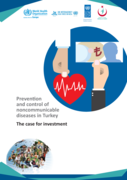
Noncommunicable diseases (NCDs) such as cancer, cardiovascular diseases, diabetes and chronic respiratory diseases and their risk factors are an increasing public health and development challenge in Turkey. This report provides evidence through three analyses that NCDs reduce economic output, and di
...


The military offensive by the Russian Federation in Ukraine which began February 2022 has triggered one of the world’s fastest-growing displacement and humanitarian crisis, with geopolitical and economic ripples felt across the globe. The ongoing war has caused large-scale disruptions to the deliv
...

Since 24 February 2022, the war in Ukraine has caused widespread suffering to its people and serious damage
to the country’s infrastructure. Attacks on the country’s health system and its power network threaten people, compromise the provision of health care, and complicate the distribution of
...
