
Filter
3502
Text search:
pandemic
Featured
424
249
Language
3061
230
221
138
128
123
60
55
10
9
8
5
4
4
4
4
4
3
3
3
3
3
3
3
2
2
2
2
2
2
2
2
2
2
2
2
1
1
1
1
1
1
1
1
1
1
1
1
1
1
1
1
1
1
Document type
1165
774
470
268
260
231
85
82
59
35
27
21
20
3
1
Countries
326
117
95
77
69
68
68
68
65
64
64
58
53
49
48
47
43
43
43
39
37
35
33
28
28
26
26
25
25
25
23
21
21
20
19
19
18
17
17
16
16
16
16
15
15
15
15
15
14
14
13
13
13
13
13
12
11
11
11
11
11
10
10
10
9
9
9
9
8
8
8
8
7
7
6
6
6
5
5
5
5
5
5
5
5
4
4
4
4
4
4
4
4
4
4
4
4
4
4
3
3
3
3
3
3
3
3
3
3
2
2
2
2
2
2
2
2
2
2
2
2
2
1
1
1
1
1
1
1
1
1
1
1
1
1
1
1
1
1
1
1
1
1
Authors & Publishers
735
151
140
71
69
67
66
63
60
53
43
34
30
30
29
24
23
22
20
19
19
18
18
17
16
15
15
14
14
14
14
14
14
13
13
13
12
12
12
12
11
11
11
11
10
10
10
10
9
9
9
9
9
9
9
9
8
8
8
8
8
8
7
7
7
7
7
7
7
7
7
7
7
7
7
7
6
6
6
6
6
6
6
6
6
6
6
6
6
6
6
6
5
5
5
5
5
5
5
5
5
4
4
4
4
4
4
4
4
4
4
4
4
4
4
4
4
4
4
4
4
4
4
4
4
4
4
4
4
4
4
4
3
3
3
3
3
3
3
3
3
3
3
3
3
3
3
3
3
3
3
3
3
3
3
3
3
3
3
3
3
3
3
3
3
3
3
3
3
3
3
3
3
3
3
3
3
3
3
3
3
3
3
3
3
3
3
3
3
3
3
3
3
3
2
2
2
2
2
2
2
2
2
2
2
2
2
2
2
2
2
2
2
2
2
2
2
2
2
2
2
2
2
2
2
2
2
2
2
2
2
2
2
2
2
2
2
2
2
2
2
2
2
2
2
2
2
2
2
2
2
2
2
2
2
2
2
2
2
2
2
2
2
2
2
2
2
2
2
2
2
2
2
2
2
2
2
2
2
2
2
2
2
2
2
2
2
2
2
2
2
2
2
2
2
2
2
2
2
2
2
2
2
2
2
2
2
2
2
2
2
2
2
2
2
2
2
2
2
2
2
2
2
2
2
2
2
2
2
2
2
2
2
2
2
2
2
2
2
2
2
2
2
2
2
2
2
2
2
2
2
2
2
2
2
2
2
2
2
2
2
2
2
2
2
2
2
2
2
2
1
1
1
1
1
1
1
1
1
1
1
1
1
1
1
1
1
1
1
1
1
1
1
1
1
1
1
1
1
1
1
1
1
1
1
1
1
1
1
1
1
1
1
1
1
1
1
1
1
1
1
1
1
1
1
1
1
1
1
1
1
1
1
1
1
1
1
1
1
1
1
1
1
1
1
1
1
1
1
1
1
1
1
1
1
1
1
1
1
1
1
1
1
1
1
1
1
1
1
1
1
1
1
1
1
1
1
1
1
1
1
1
1
1
1
1
1
1
1
1
1
1
1
1
1
1
1
1
1
1
1
1
1
1
1
1
1
1
1
1
1
1
1
1
1
1
1
1
1
1
1
1
1
1
1
1
1
1
1
1
1
1
1
1
1
1
1
1
1
1
1
1
1
1
1
1
1
1
1
1
1
1
1
1
1
1
1
1
1
1
1
1
1
1
1
1
1
1
1
1
1
1
1
1
1
1
1
1
1
1
1
1
1
1
1
1
1
1
1
1
1
1
1
1
1
1
1
1
1
1
1
1
1
1
1
1
1
1
1
1
1
1
1
1
1
1
1
1
1
1
1
1
1
1
1
1
1
1
1
1
1
1
1
1
1
1
1
1
1
1
1
1
1
1
1
1
1
1
1
1
1
1
1
1
1
1
1
1
1
1
1
1
1
1
1
1
1
1
1
1
1
1
1
1
1
1
1
1
1
1
1
1
1
1
1
1
1
1
1
1
1
1
1
1
1
1
1
1
1
1
1
1
1
1
1
1
1
1
1
1
1
1
1
1
1
1
1
1
1
1
1
1
1
1
1
1
1
1
1
1
1
1
1
1
1
1
1
1
1
1
1
1
1
1
1
1
1
1
1
1
1
1
1
1
1
1
1
1
1
1
1
1
1
1
1
1
1
1
1
1
1
1
1
1
1
1
1
1
1
1
1
1
1
1
1
1
1
1
1
1
1
1
1
1
1
1
1
1
1
1
1
1
1
1
1
1
1
1
1
1
1
1
1
1
1
1
1
1
1
1
1
1
1
1
1
1
1
1
1
1
1
1
1
1
1
1
1
1
1
1
1
1
1
1
1
1
1
1
1
1
1
1
1
1
1
1
1
1
1
1
1
1
1
1
1
1
1
1
1
1
1
1
1
1
1
1
1
1
1
1
1
1
1
1
1
1
1
1
1
1
1
1
1
1
1
1
1
1
1
1
1
1
1
1
1
1
1
1
1
1
1
1
1
1
1
1
1
1
1
1
1
1
1
1
1
1
1
1
1
1
1
1
1
1
1
1
1
1
1
1
1
1
1
1
1
1
1
1
1
1
1
1
1
1
1
1
1
1
1
1
1
1
1
1
1
1
1
1
1
1
1
1
1
1
1
1
1
1
1
1
1
1
1
1
1
1
1
1
1
1
1
1
1
1
1
1
1
1
1
1
1
1
1
1
1
1
1
1
1
1
1
1
1
1
1
1
1
1
1
1
1
1
1
1
1
1
1
1
1
1
1
1
1
1
1
1
1
1
1
1
1
1
1
1
1
1
1
1
1
1
1
1
1
1
1
1
1
1
1
1
1
1
1
1
1
1
1
1
1
1
1
1
1
1
1
1
1
1
1
1
1
1
1
1
1
1
1
1
1
1
1
1
1
1
1
1
1
1
1
1
1
1
1
1
1
1
1
1
1
1
1
1
1
1
1
1
1
1
1
1
1
1
1
1
1
1
1
1
1
1
1
1
1
1
1
1
1
1
1
1
1
1
1
1
1
1
1
1
1
1
1
1
1
1
1
1
1
1
1
1
1
1
1
1
1
1
1
1
1
1
1
1
1
1
1
1
1
1
1
1
1
1
1
1
1
1
1
1
1
1
1
1
1
1
1
1
1
1
1
1
1
1
1
1
1
1
1
1
1
1
1
1
1
1
1
1
1
1
1
1
1
1
1
1
1
1
1
1
1
1
1
1
1
1
1
1
1
1
1
1
1
1
1
1
1
1
1
1
1
1
1
1
1
1
1
1
1
1
1
1
1
1
1
1
1
1
1
1
1
1
1
1
1
1
1
1
1
1
1
1
1
1
1
1
1
1
1
1
1
1
1
1
1
1
1
1
1
1
1
1
1
1
1
1
1
1
1
1
1
1
1
1
1
1
1
1
1
1
1
1
1
1
1
1
1
1
1
1
1
1
1
1
1
1
1
1
1
1
1
1
1
1
1
1
1
1
1
1
1
1
1
1
1
1
1
1
1
1
1
1
1
1
1
1
1
1
1
1
1
1
1
1
1
1
1
1
1
1
1
1
1
1
1
1
1
1
1
1
1
1
1
1
1
1
1
1
1
1
1
1
1
1
1
1
1
1
1
1
1
1
1
1
1
1
1
1
1
1
1
1
1
1
1
1
1
1
1
1
1
1
1
1
1
1
1
1
1
1
1
1
1
1
1
1
1
1
1
1
1
1
1
1
1
1
1
1
1
1
1
1
1
1
1
1
1
1
1
1
1
1
1
1
1
1
1
1
1
1
1
1
1
1
1
1
1
1
1
1
1
1
1
1
1
1
1
1
1
1
1
1
1
1
1
1
1
1
1
1
1
1
1
1
1
1
1
1
1
1
1
1
1
1
1
1
1
1
1
1
1
1
1
1
1
1
1
1
1
1
1
1
1
1
1
1
1
1
1
1
1
1
1
1
1
1
1
1
1
1
1
1
1
1
1
1
1
1
1
1
1
1
1
1
1
1
1
1
1
1
1
1
1
1
1
1
1
1
1
1
1
1
1
1
1
1
1
1
1
1
1
1
1
1
1
1
1
1
1
1
1
1
1
1
1
1
1
1
1
1
1
1
1
1
1
1
1
1
1
1
1
1
1
1
1
1
1
1
1
1
1
1
1
1
1
1
1
1
1
1
1
1
1
1
1
1
1
1
1
1
1
1
1
1
1
1
1
1
1
1
1
1
1
1
1
1
1
1
1
1
1
1
1
1
1
1
1
1
1
1
1
1
1
1
1
1
1
1
1
1
1
1
1
1
1
1
1
1
1
1
1
1
1
1
1
1
1
1
1
1
1
1
1
1
1
1
1
1
1
1
1
1
1
1
1
1
1
1
1
1
1
1
1
1
1
1
1
1
1
1
1
1
1
1
1
1
1
1
1
1
1
1
1
1
1
1
1
1
1
1
1
1
1
1
1
1
1
1
1
1
1
1
1
1
1
1
1
1
1
1
1
1
1
1
1
1
1
1
1
1
1
1
1
1
1
1
1
1
1
1
1
1
1
1
1
1
1
1
1
1
1
1
1
1
1
1
1
1
1
1
1
1
1
1
1
1
1
1
1
1
1
1
1
1
1
1
1
1
1
1
1
1
1
1
1
1
1
1
1
1
1
1
1
1
1
1
1
1
1
1
1
1
1
1
1
1
1
1
1
1
1
1
1
1
1
1
1
1
1
1
1
1
1
1
1
1
1
1
1
1
1
1
1
1
1
1
1
1
1
1
1
1
1
1
1
1
1
1
1
1
1
1
1
1
1
1
1
1
1
1
1
1
1
1
1
1
1
1
1
1
1
1
1
1
1
1
1
1
1
1
1
1
1
1
1
1
1
1
1
1
1
1
1
1
1
1
1
1
1
1
1
1
1
1
1
1
1
1
1
1
1
1
1
1
1
1
1
1
1
1
1
1
1
1
1
1
1
1
1
1
1
1
1
1
1
1
1
1
1
1
1
1
1
1
1
1
1
1
1
1
1
1
1
1
1
1
1
1
1
1
1
1
1
1
1
1
1
1
1
1
1
1
1
1
1
1
1
1
1
1
1
1
1
1
1
1
1
1
1
1
1
1
1
1
1
1
1
1
1
1
1
1
1
1
1
1
1
1
1
1
1
1
1
1
1
1
1
1
1
1
1
1
1
1
1
1
1
1
1
1
1
1
1
1
1
1
1
1
1
1
1
1
1
1
1
1
1
1
1
1
1
1
1
1
1
1
1
1
1
1
1
1
1
1
1
1
1
1
1
1
1
1
1
1
1
1
1
1
1
1
1
1
1
1
1
1
1
1
1
1
1
1
1
1
1
1
1
1
1
1
1
1
1
1
1
1
1
1
1
1
1
1
1
1
1
1
1
1
1
1
1
1
1
1
1
1
1
1
1
1
1
1
1
1
1
1
1
1
1
1
1
1
1
1
1
1
1
1
1
1
1
1
1
1
1
1
1
1
1
1
1
1
1
1
1
1
1
1
1
1
1
1
1
1
1
1
1
1
1
1
1
1
1
1
1
1
1
Publication Years
2869
532
98
2
1
Category
1263
200
196
131
114
61
33
2
Toolboxes
1454
198
174
129
121
106
96
93
90
88
85
84
78
77
65
51
47
32
32
31
26
25
15
11
5

There has never been a more critical moment to invest in WHO, and strengthen the unique role it plays in global health. Now is the time to sustainably finance WHO and invest in a healthy return for all.

The Plan subscribes to the goals and pillars of the WHO Global Technical Strategy against Malaria 2016-2030 (GTS), while presenting key elements to address the specific challenges of the Region.

The guidelines are primarily intended for health-care professionals working in first- or second-level health-care facilities, including emergency, inpatient and outpatient services. They are also directed at policy-makers, health-care planners and programme managers, academic institutions, non-gover
...
nmental and civil society organizations to inform capacity-building, teaching and research agendas.
Web annex A provides the quantitative evidence reports, Web annex B summarizes the qualitative and economic evidence and Web annex C presents the Evidence-to-Decision frameworks.
more

La thèse de Yobouet Inès Kouakou, soutenue à l’Université Claude Bernard Lyon 1, porte sur le traitement d’urgence du paludisme sévère chez l’enfant à l’aide d’une administration intranasale d’artésunate. L’objectif principal de ce travail est d’explorer, in vitro, la voie na
...
sale comme alternative à la voie intra-rectale recommandée actuellement en pré-hospitalier. L’étude démontre la non-toxicité de formulations d’artésunate sur un modèle de muqueuse nasale humaine, bien que la perméation observée reste faible. Des pistes sont proposées pour améliorer cette perméation, notamment par l’optimisation galénique. La thèse inclut également une revue de la pharmacocinétique de l’artésunate et le développement de méthodes de dosage simples et peu coûteuses, adaptées aux laboratoires à ressources limitées. Ce travail s’inscrit dans une démarche de lutte contre le paludisme, notamment en zones rurales où l’accès aux soins reste difficile.
more
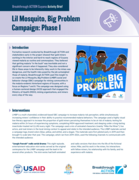
Activity Brief.Formative research revealed that gold miners in remote regions of Guyana viewed malaria as an unavoidable and minor risk compared to other dangers. Building on these insights, Breakthrough ACTION co-created the 'Lil Mosquito, Big Problem' (LMBP) social and behavioural change campaign,
...
which targeted miners in malaria-endemic areas (Regions 7 and 8). Adopting a human-centred design approach, the campaign collaborated with the Ministry of Health, mining organisations, and miners throughout its development. LMBP used visual, low-literacy materials featuring animated and live-action characters to raise awareness of the risks of malaria and encourage key behaviours such as timely testing, adhering to treatment and consistently using insecticide-treated nets. Launched in 2019 and scaled up until 2024, this multi-channel campaign aimed to change attitudes and improve malaria prevention in these hard-to-reach communities.
Accessed on 20/06/2025.
more

Mozambique was the first country outside of the Sahel to successfully implement seasonal malaria chemoprevention (SMC) on a large scale. This learning paper captures some of the lessons drawn from the implementation process.
Tuberculosis (TB) remains a significant global health challenge, with an estimated annual death rate of approximately one per 100,000 people in countries with low TB prevalence. Rapid reductions in TB cases and deaths worldwide depend on research breakthroughs, including the development of new vac
...
cines. There has recently been an increase in political commitment, as evidenced by two UN high-level meetings on TB in 2018 and 2023. The 2023 political declaration reaffirmed the goals set out in the UN Sustainable Development Goals and the WHO's End TB Strategy, and established new targets for the period 2023–2027
more

Community led-monitoring is based on the principle that «Nothing that is done for us should
be done without us”. The combination of this principle with evidence shows that community-led
monitoring is an important driver of improved service delivery and health outcomes that needs to
be re-empha
...
sized. Thus, the community must participate at all stages of the fight against malaria.
This guide will be useful to CSOs working in the field of malaria in the conduct of community-led
monitoring of activities efficiently and allow these CSOs to know their role and responsibilities in this
exercise at each key stage. This guide will also provide CSOs and communities affected by malaria
with templates of monitoring tools adapted to key malaria programs.
more

National Strategic Plan for Malaria Elimination in Bangladesh: 2021-2025
National Malaria Elimination Programme - Directorate General of Health Services
Ministry of Health & Family Welfare - Government of Bangladesh
(2021)
C2
The National Strategic Plan for Malaria Elimination 2021–2025 outlines Bangladesh’s roadmap to achieve zero indigenous malaria cases by 2030, with an interim goal to reduce transmission to near-zero levels by 2025. The strategy builds upon earlier successes in malaria control and shifts focus to
...
ward elimination in both high- and low-endemic areas.
The plan emphasizes five core objectives: ensuring universal access to quality malaria prevention and treatment services, strengthening surveillance and case detection systems, improving vector control through long-lasting insecticidal nets (LLINs) and indoor residual spraying (IRS), building community engagement, and enhancing program governance and accountability.
High-priority districts, especially in the Chittagong Hill Tracts, are targeted for intensified interventions, including active case detection and tailored outreach to mobile and vulnerable populations. The strategy also calls for robust health systems support, cross-border collaboration, and integration of malaria services into broader primary health care.
This document serves as Bangladesh’s strategic foundation to transition from malaria control to phased elimination, in line with national and global targets.
more
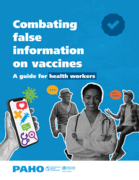
The document "Combating False Information on Vaccines: A Guide for Health Workers" is designed to help health workers address vaccine misinformation. It begins by defining misinformation and explaining why it spreads rapidly, often due to its emotional appeal and simplistic explanations. The guide i
...
dentifies common sources of vaccine misinformation, including influential individuals who profit from spreading false information. The document outlines strategies for combating misinformation, emphasizing the importance of health workers as trusted sources. It provides tips for identifying misinformation online, such as checking URLs, dates, and author credentials, and recognizing tactics like evoking strong emotions or pushing conspiracy theories. Two main approaches to fighting misinformation are discussed: prebunking and debunking. Prebunking involves warning individuals about potential misinformation before they encounter it, while debunking aims to correct false information after it has been consumed. The guide offers practical examples for both methods. Additionally, the document highlights the role of health workers in supporting peers and patients to trust immunization. It suggests being kind, nonjudgmental, and transparent when addressing concerns, and using motivational interviewing techniques to understand and respond to patients' doubts. Overall, the guide emphasizes the critical role of health workers in maintaining trust in vaccines and provides comprehensive strategies to identify, address, and prevent the spread of vaccine misinformation in clinical and community settings. The guide is a valuable resource for health workers to enhance their ability to combat vaccine misinformation, support informed decision-making, and promote trust in vaccines within their communities, and it addresses a pressing issue with practical solutions, supports trusted health workers, and ultimately aims to protect public health by promoting accurate information and trust in vaccines.
more
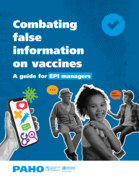
The document "Combating False Information on Vaccines: A Guide for EPI Managers" is designed to help Expanded Program on Immunization (EPI) managers address vaccine misinformation. It begins by defining misinformation and explaining why it spreads rapidly, often due to its emotional appeal and simpl
...
istic explanations. The guide identifies common sources of vaccine misinformation, including influential individuals who profit from spreading false information. The document outlines strategies for combating misinformation, emphasizing the importance of EPI managers as trusted sources. It provides tips for identifying misinformation online, such as checking URLs, dates, and author credentials, and recognizing tactics like evoking strong emotions or pushing conspiracy theories. Two main approaches to fighting misinformation are discussed: prebunking and debunking. Prebunking involves warning individuals about potential misinformation before they encounter it, while debunking aims to correct false information after it has been consumed. The guide offers practical examples for both methods. Additionally, the document highlights the role of EPI managers in supporting health workers to trust immunization. It suggests being kind, nonjudgmental, and transparent when addressing concerns, and using motivational interviewing techniques to understand and respond to health workers' doubts. The guide also emphasizes the importance of creating a supportive environment for health workers, promoting pro-vaccine norms, and providing continuing education on vaccines. Overall, the guide aims to help EPI managers maintain trust in vaccines and provides comprehensive strategies to identify, address, and prevent the spread of vaccine misinformation in clinical and community settings. This document is necessary to equip EPI managers with the knowledge and tools to combat vaccine misinformation, support their teams, and promote trust in vaccines, ultimately protecting public health.
more

Noncommunicable diseases (NCDs) (e.g., cardiovascular diseases, cancers, diabetes, and chronic respiratory diseases) and mental health conditions (e.g., Alzheimer’s disease and related dementias, depression, anxiety, autism spectrum disorders) are the world’s leading cause of preventable illness
...
, disability, and death. This report examines the dangers posed by current and rising rates of noncommunicable diseases and mental health conditions (NMHs) in South America, beyond their health risks, by demonstrating their considerable negative impact on economic growth. An analytical model was developed that projects the macroeconomic effects of NMHs over the period 2020–2050 in ten South American countries: Argentina, Bolivia (Plurinational State of), Brazil, Chile, Colombia, Ecuador, Paraguay, Peru, Uruguay, and Venezuela. The results showed that the macroeconomic impact of NMHs in South America indicates significant economic shortfalls resulting from NMHs. Overall, the total GDP loss due to NMHs in South America amounts to USD 7.3 trillion (2022 international USD) over the period 2020–2050
more

In line with the Defeating meningitis by 2030: a global road map, the WHO guidelines on meningitis diagnosis, treatment and care Executive Summary provides a summary of the evidence-based recommendations for the clinical management of children and adults with community-acquired meningitis, including
...
acute and long-term care. Meningitis poses a significant public health threat, despite successful efforts to control the disease globally. The burden of morbidity and mortality from meningitis remains high, particularly in low- and middle-income countries and in settings experiencing large-scale, disruptive epidemics.
more

This document outlines the plan for a continental cholera prevention and control with the implementation framework for the Cholera IMST, detailing its governance structure, strategic priorities, and operational modalities

On Global Handwashing Day, WHO and UNICEF have released the first-ever global Guidelines on Hand Hygiene in Community Settings to support governments and practitioners in promoting effective hand hygiene outside health care – across households, public spaces and institutions. Framing hand hygiene
...
as a public good and a government responsibility, the Guidelines translate evidence into ready-to-adopt actions that enable sustainable access to effective hygiene services. This will reduce diarrhoeal disease, acute respiratory infections and other preventable illnesses, strengthening routine public health where people live, work, visit and study, and emergency preparedness, including outbreaks like cholera.
Despite clear benefits, 1.7 billion people still lacked basic hand hygiene services at home in 2024, including 611 million with no facility at all. Meeting the 2030 target will require accelerated progress – about a doubling in the global rate, and much faster in specific settings (up to 11-fold in least-developed countries and 8-fold in fragile contexts). Hand hygiene remains one of the most cost-effective health investments, reducing diarrhoea by 30% and acute respiratory infections by 17%, with large, measurable gains for population health.
“Clean hands save lives, but results at scale require policy, financing and accountability,” said Dr Ruediger Krech, Director a.i, Department of Environment, Climate Change, One Health & Migration at the World Health Organization. “These Guidelines help countries move beyond fragmented projects to government-led systems that make soap, water, and conditions conducive to everyday hand hygiene the norm.”
“Children and young people pay the highest price when basic hygiene is out of reach,” said Cecilia Scharp, Director, Water Sanitation and Hygiene (WASH) Team, Programme Group, UNICEF. “These Guidelines provide practical steps to ensure facilities are accessible when they need to be – in homes, schools, markets, and transport hubs – so every child can learn, play and thrive with dignity.”
more

PHSM are vital in reducing the risk and scale of infectious disease transmission and lowering hospitalization and deaths. Examples include contact tracing, quarantine and isolation, mask use, ventilation, school or workplace measures, mobility restrictions and travel requirements.
While these mea
...
sures are essential, decision-making on PHSM becomes particularly complex during rapidly evolving health emergencies, with incomplete information and under significant public and political pressure, especially when the pathogen is novel or poorly understood. In such contexts, guidance needs to be agile and responsive, developed and adapted based on emerging evidence and shifting epidemiological patterns. Decision-makers are frequently confronted with difficult trade-offs, having to balance measures that are:
─ effective but socially disruptive;
─ cost-effective but logistically burdensome;
─ beneficial for public health but economically disruptive; or
─ practical but inequitable or unethical
more
Current HIV/AIDS Reports (2022) 19:358–374. https://doi.org/10.1007/s11904-022-00615-z.
MINDSPACE is an acronym developed by the UK's behavioural insights team to summarise nine key influences on human behaviour: Messenger, Incentives, Norms, Default, Salience, Priming, Affect, Commitment, and E
...
go. These effects have been used in various settings to design interventions that encourage positive behaviours. Currently, over 200 institutionalised behavioural insight teams exist internationally, which may draw upon the MINDSPACE framework to inform policy and improve public services.
more

Epidemics and pandemics are some of the biggest threats to a safe and healthy world. But with effective preparedness and response measures, we can reduce their impacts and even stop them in their tracks.
Through the Programmatic Partnership with the European Union, 24 local Red Cross and Red Cres
...
cent Societies have been working to keep communities healthy and safe from epidemics and pandemics with technical assistance, advocacy support and coordination from IFRC and European National Societies. They do so by equipping communities with knowledge and tools to stop the spread of diseases and by setting up systems so they can report outbreaks quickly, enabling a rapid response from authorities. National Societies have also significantly developed their own epidemic preparedness and response capacity.
more
The document provides a standardized protocol for evaluating the Early Warning Alert and Response Network (EWARN), a surveillance system used during humanitarian emergencies when regular national health surveillance may be disrupted. The purpose of EWARN is to detect outbreaks of communicable diseas
...
es early and enable rapid public health response. The guidance explains how the system should be assessed in terms of its structure, implementation, effectiveness, and usefulness. It outlines the key steps of evaluation: preparation, system description, data collection, and post-evaluation reporting. The protocol highlights common challenges observed in previous EWARN implementations, such as delays in establishing the system, limited data quality, weak outbreak response, and lack of clear transition plans back to routine surveillance systems. It emphasizes the need to evaluate both weekly disease reporting and alert verification processes, and to review attributes such as simplicity, data quality, timeliness, sensitivity, and stability. The document also provides templates for interviews, data review forms, and laboratory assessment, as well as guidance on conducting remote evaluations when access is limited. The overall goal of the protocol is to ensure that EWARN functions effectively to detect and respond to outbreaks and that practical recommendations are developed to improve the system’s performance and sustainability in emergency settings.
more

In an era of constrained resources and tightening budgets, strategic prioritization in tuberculosis (TB) programming is more critical than ever. Countries must make informed decisions to allocate limited resources effectively - maximizing impact, preventing avoidable deaths, and sustaining progress
...
towards ending TB.
more
