
Filter
370
Text search:
pandemie
Featured
47
6
Language
Document type
112
95
35
29
24
17
14
12
9
7
7
4
4
1
Countries
114
35
11
10
9
7
6
5
5
4
4
4
4
4
3
3
3
3
3
3
3
3
3
2
2
2
2
2
2
2
2
2
2
2
2
2
2
2
2
1
1
1
1
1
1
1
1
1
1
1
1
1
1
1
1
1
1
Authors & Publishers
Publication Years
Category
133
18
16
8
7
3
1
Toolboxes
158
69
54
12
12
10
9
9
6
6
5
4
3
3
2
1
1
1
1
The NIAID Pandemic Preparedness Plan describes the strategy of the National Institute of Allergy and Infectious Diseases (NIAID) to strengthen research and development for future pandemic threats. The plan focuses on identifying and studying viruses with the potential to cause epidemics or pandemics
...

The webpage “Health emergency preparedness, response and resilience” on the OpenWHO platform presents an online learning channel developed by the World Health Organization (WHO). It provides educational resources and training materials aimed at strengthening knowledge and skills related to prepa
...
The document provides guidance from the CDC on conducting an Operational Readiness Review (ORR) within the Public Health Emergency Preparedness (PHEP) cooperative agreement. It outlines the purpose, structure, and evaluation criteria used to assess whether public health systems are prepared to respo
...

The document is a report by an expert group that presents a framework for improving future pandemic preparedness and emergency response, particularly in the context of India but with relevance to global health systems. It analyzes lessons learned from COVID-19 and past epidemics, identifies key weak
...

The Gulf CDC Technical Guide for Rapid Risk Assessments of Acute Public Health Events provides a structured, multi-sectoral approach to evaluate and manage public health threats in Gulf Cooperation Council (GCC) countries. It focuses on rapid, evidence-based assessments (within 2-5 days) to determin
...
Risk Assessment Reports
Health security, vol. 18, Suppl.1. Finally, the lack of defined RRT standard operating procedures covering both nonemergency maintenance measures and the multistage emergency response processes required for RRT function can delay the RRT’s response time and effectiveness. These findings highlight
...
Frontiers in Public Health, Vol.12 Nov 13;12:1455738. This review highlights RRML deployment procedures and addresses some critical challenges concerning their deployment. It suggests the provision of a pre-deployment logistics checklist, the use of a pre-determined standardized dataset for inputs t
...
This edition provides detailed guidance on essential components such as infrastructure, human resources, equipment, logistics, governance, and monitoring and evaluation (M&E). These elements are crucial for the successful establishment and sustainable operation of NPHIs, which are envisioned as Cent
...
Cette édition fournit des orientations détaillées sur des éléments essentiels tels que les infrastructures, les ressources humaines, les équipements, la logistique, la gouvernance, ainsi que le suivi et l'évaluation (S&E). Ces éléments sont essentiels à la mise en place réussie et au fonc
...
WHO Essential Regulatory Laboratories (ERLs), inside the Global Influenza Surveillance and Response System (GISRS), are a crucial element of influenza prevention and control, especially vaccine response.

The Marburg Virus Disease (MVD) Response Plan outlines Tanzania’s national strategy for responding to a Marburg virus outbreak declared in the Kagera Region in January 2025. The document describes the current epidemiological situation, assesses the risks posed by the outbreak, and sets strategic o
...
During health emergencies, medical expert teams and equipment need to be deployed in the shortest time possible to support response efforts. Being prepared to intervene immediately in health emergencies is crucial in saving lives. The EU coordinates medical missions to respond to infectious disease
...
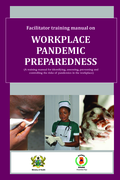
The Facilitator Training Manual on Workplace Pandemic Preparedness is a guide developed by GIZ and the Ministry of Health to help organizations prepare for and respond to pandemics while ensuring business continuity. It provides structured guidance on training, risk assessment, prevention, and respo
...
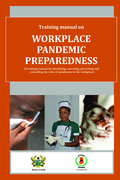
Workplace Pandemic Preparedness. Training Manual
recommended
A training manual for identifying, assessing, preventing and controlling the risks of pandemics in the workplace. This training manual has been developed for both medical and non-medical personnel who may be called upon to lead emergency response, (eg epidemic outbreak, etc), ensure effective conta
...
Reliefweb
recommended
This website provide reliable disaster and crisis updates and analysis to humanitarians, so they can make informed decisions and plan effective assistance. ReliefWeb has been the leading source for reliable and timely humanitarian information on global crises and disasters since 1996
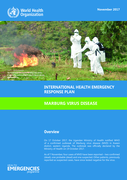
On 17 October 2017, the Ugandan Ministry of Health notified WHO of a confirmed Marburg outbreak of Marburg Virus disease (MVD) in Kween district, Eastern Uganda. The outbreak was officially declared by the Ministry of health on 19 October 2017.
As of 7 November, four cases of MVD have been reported
...
Open WHO Channels
recommended
Search for relevant channels for outbreak management, pandemic prevention, infectious diseases managment

To support countries in adapting their response to different COVID-19 scenarios, the World Health Organization (WHO) Department of Maternal, Newborn, Child and Adolescent Health and Ageing commissioned this scoping review of published and grey literature. The objective was to identify interventions
...
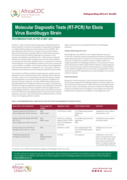
On May 17, 2026, the World Health Organization (WHO) declared the Ebola outbreak in the Democratic Republic of Congo (DRC) and Uganda as a Public Health Emergency of International Concern (PHEIC). This was followed by Africa Centres for Disease Control and Prevention (Africa CDC) declaration on 18 M
...
