
Filter
263
Text search:
fistula
Featured
24
79
Language
Document type
184
37
15
14
5
3
2
1
1
1
Countries
19
13
12
11
9
8
8
7
7
6
6
6
5
4
4
4
4
4
2
2
2
2
2
1
1
1
1
1
1
1
1
1
1
1
1
1
1
1
1
1
1
Authors & Publishers
Publication Years
Category
139
50
46
28
9
4
Toolboxes
12
11
7
7
6
5
4
4
3
3
3
2
1
1
1

The Road Map outlines various strategies which will guide policy makers, development partners, training institutions and service providers in supporting Government efforts towards the attainment of MDGs related to maternal and neonatal health.
In 2014, the Ministry of Health (MOH) in Malawi conducted a nationwide assessment of emergency obstetric and newborn care (EmONC) services. This cross-sectional facility-based survey used 10 data collection modules. Data collection began on 23rd September 2014 and concluded on 17th October 2014, in
...
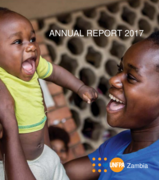
The UNFPA Zambia 2017 Annual Report highlights key milestones and achievements recorded with UNFPA support towards improving the health and well-being of women and young people in Zambia.
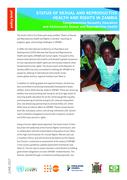
Comprehensive Sexuality Education and Adolescents Sexual and Reproductive Health
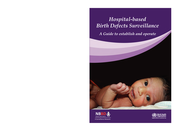
Birth defect has been an emerging major cause of child mortality in the region. Scarcity of the birth defects information hampers policy decisions and control measures at national level. In order to create evidence for action for birth defects prevention in the region, WHO-SEARO in collaboration wit
...
Birth defect has been an emerging major cause of child mortality in the region. Scarcity of the birth defects information hampers policy decisions and control measures at national level. In order to create evidence for action for birth defects prevention in the region, WHO-SEARO in collaboration wit
...
Version 1.1 July 2016
The purpose of this document is to describe standard operating procedures for viral load monitoring, including the schedule for viral load testing when used for routine monitoring of children, adolescents and adults on ART; interpretation of results; patient management; an ...
The purpose of this document is to describe standard operating procedures for viral load monitoring, including the schedule for viral load testing when used for routine monitoring of children, adolescents and adults on ART; interpretation of results; patient management; an ...
A comprehensive compilation is provided of the medicinal plants of the Southeast Asian country of Myanmar (formerly Burma). This contribution, containing 123 families, 367 genera, and 472 species, was compiled from earlier treatments, monographs, books, and pamphlets, with some medicinal uses and pr
...

A two-week mission was conducted by WASH and quality UHC technical experts from WHO headquarters and supported by the WHO Ethiopia Country Office (WASH and health systems teams) in July 2016, to understand how change in WASH services and quality improvements have been implemented in Ethiopia at nati
...
Ensuring reproductive rights for all
National Tuberculosis Programme and Senior Paediatricians
This guideline was first developed in 2007 but further updated in 2012 and 2016 to ensure the use of the latest evidence-based international recommendations on childhood TB. The guidelines will fill the gaps in a systematic approach to T ...
This guideline was first developed in 2007 but further updated in 2012 and 2016 to ensure the use of the latest evidence-based international recommendations on childhood TB. The guidelines will fill the gaps in a systematic approach to T ...

Draft for consultation

Journal of The Association of Physicians of India, Vol. 63 November 2015,, pp.77-96
Prepared as an outcome of ICMR Subcommittee on Cancer Cervix | This consensus document on management of cervix cancer summarizes the modalities of treatment including the site-specific anti-cancer therapies, supportive and palliative care and molecular markers and research questions. It also interwe
...
Prepared as an outcome of ICMR Subcommittee on Esophageal Cancer | This consensus document on management of esophageal cancers
summarizes the modalities of treatment including the site-specific anti-cancer therapies, supportive and palliative care and molecular markers and research questions. It a
...
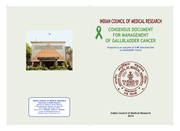
Prepared as an outcome of ICMR Subcommittee on Gastric Cancer | This consensus document on Management of Gallbladder cancers summarizes the modalities of treatment including the site-specific anti-cancer therapies, supportive and palliative care and molecular markers and research questions. It also
...
Prepared as an outcome of ICMR Subcommittee on Larynx & Hypopharynx Cancers | This consensus document on management of larynx and hypopharynx cancers summarizes the modalities of treatment including the site-specific anti-cancer therapies, supportive and palliative care and molecular markers and re
...
Prepared as an outcome of ICMR Subcommittee on Tongue Cancer | This Consensus Document on Management of Tongue Cancers summarizes the modalities of treatment including the site-specific anti-cancer therapies, supportive and palliative care and molecular markers and research questions. It also interw
...

African Journal of Laboratory Medicine | Vol 7, No 2 | a796 | 06 December 2018
