Filter
299
Text search:
World
Meteorological
Organization,
Featured
Recommendations
26
New Publications
84
Language
Document type
No document type
113
Studies & Reports
95
Guidelines
28
Manuals
27
Strategic & Response Plan
18
Training Material
11
Resource Platforms
3
Situation Updates
2
Fact sheets
2
Countries / Regions
Global
29
Myanmar / Burma
10
Kenya
8
Ethiopia
6
Bangladesh
6
Asia
6
India
5
Syria
5
Uganda
4
Latin America and the Carribbean
4
Nigeria
3
Mozambique
3
Ukraine
3
Western and Central Europe
3
Zimbabwe
2
Philippines
2
Somalia
2
Nepal
2
South Sudan
2
Afghanistan
2
Zambia
2
Tanzania
2
Thailand
2
Indonesia
2
Papua New Guinea
2
Sudan
2
Namibia
2
Botswana
2
Madagascar
2
Yemen
2
South–East Asia Region
2
Western Pacific Region
2
Africa
2
Burkina Faso
1
Sierra Leone
1
Liberia
1
Congo, Democratic Republic of
1
USA
1
Ghana
1
Haiti
1
Pakistan
1
Iraq
1
Cambodia
1
Rwanda
1
Malawi
1
Central African Republic
1
Vanuatu
1
Brazil
1
North Macedonia
1
Lesotho
1
Sri Lanka
1
East and Southern Africa
1
Paraguay
1
Solomon Islands
1
Eastern Europe
1
North Korea
1
Laos
1
Timor Leste/ East Timor
1
Iran
1
Vietnam
1
Authors & Publishers
Publication Years
Category
Countries
78
Key Resources
41
Public Health
22
Clinical Guidelines
8
Women & Child Health
4
Capacity Building
3
Pharmacy & Technologies
1
Toolboxes
Planetary Health
104
Global Health Education
33
Natural Hazards
27
Conflict
17
2.0 Rapid Response
15
Rapid Response
13
Specific Hazards
13
COVID-19
7
Cholera
6
Malaria
6
NCDs
5
NTDs
3
Disability
2
Zika
2
HIV
2
Mental Health
2
Health Financing Toolbox
2
Typhoon
1
Pharmacy
1
Management of a cholera epidemic
recommended
Practical guide for doctors, nurses,laboratory technicians, medical auxiliaries,water and sanitation specialists and logisticians.
The document is a comprehensive guide for managing cholera epidemics, providing detailed protocols for prevention, outbreak investigation, treatment, and control mea
...
The aim of this publication is to provide practical guidance for public information officers on the preparation for and response to a nuclear or radiological emergency, and to fulfil in part functions assigned to the IAEA in the Convention on Assistance in the Case of a
...

The 2012 NDRMP lays out the Disaster Risk Management (DRM) architecture of the country and provides guidance for DRM intervention at all levels. However, implementation has been slow and resource challenges exist throughout the government.
The PNG government’s policy and institutional framework ...
The PNG government’s policy and institutional framework ...
Int. J. Environ. Res. Public Health 2021, 18(24), 13339; https://doi.org/10.3390/ijerph182413339
The climate crisis threatens to exacerbate numerous climate-sensitive health risks, including heatwave mortality, malnutrition from reduced crop yields, water- and vector-borne infectious diseases, and
...
Climate Smart Agriculture provides an excellent opportunity for the transformation by uniting agriculture, development and climate change under a common agenda through integrating the three dimensions of sustainable development (economic, social and environmental) by jointly addressing food security
...
Climate information is critical towards strengthening the decision making among different users interested in mitigating impacts of climate related disasters. However, there is need for the climate users to have basic knowledge on weather and climate concepts and to a larger extend, early warning ea
...

The 2022 Financing for Sustainable Development Report identifies a “great finance divide” as a main driver of the divergent recovery. Developed countries were able to borrow record sums at ultra-low interest rates to support their people and economies, but the pandemic response and investment in
...

This study aims to analyze national and international stakeholders and their initiatives in Early Warning Systems in Myanmar, to identify priority gaps that need to be addressed by all stakeholders. It is presented as a first step towards supporting GoUM in information-gathering under the Myanmar Ac
...
Int. J. Environ. Res. Public Health 2018, 15(12), 2626; https://doi.org/10.3390/ijerph15122626
Climate change is increasing risks to human health and to the health systems that seek to protect the safety and well-being of populations. Health authorities require information about current associatio
...

“We must not forget that no matter where we are or how old we are, we can all work for life and take action.” Francisco Vera, 15, UNICEF Child Advocate
The Young Climate Activists toolkit was created by advocates of all ages who, like you, are deeply concerned about our planet's future. Havin
...

From the start of the COVID-19 pandemic until August 2021, extreme weather events have affected at least 139.2 million people and killed at least 17,242 people in at least 433 unique events. These figures are certainly an underestimate, as they do not include estimates of numbers of people affected
...
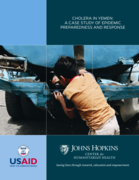
The report offers 20 top recommendations for getting ahead of future outbreaks in Yemen and similarly complex humanitarian settings.
In 2015, Yemen was declared a Level 3 emergency by the UN, kicking into gear the highest level of humanitarian support. A massive cholera outbreak followed, leading t
...

The report provides an overview of the disaster risk reduction and management in Nepal, a country under threat of multiple natural hazards: earthquakes, floods, landslides, fires, storms, the epidemics, and others. It presents background information on the country, its disaster profile, its legal an
...
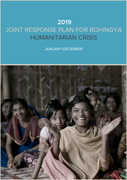
The Joint Response Plan sets out a comprehensive programme shaped around three strategic objectives – deliver protection, provide life-saving assistance and foster social cohesion. The Plan covers all humanitarian sectors and addresses key cross-cutting issues, including protection and gender main
...

The climate crisis has many consequences – among them widespread health impacts that will lead to immense societal, ecological, and economic harm.
Over the past two decades multiple large-scale reviews on climate change and health have made clear the need for a multi-sectoral approach to target t
...
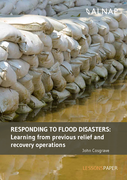
This paper presents lessons learned from previous flood responses in developing countries, based on a structured review of the literature. It is intended for people working in relief and recovery operations who have to decide if, when and how to intervene after a flood.
A new brief published by the IFRC and Climate Centre today details the adverse impacts of climate change on human health and provides more detail on the second of four pillars of action in the Red Cross Red Crescent Movement ambitions on climate.