
Filter
1078
Text search:
anaemia
Featured
133
397
Language
Document type
646
146
136
70
33
26
12
3
2
2
Countries
126
42
39
38
34
34
33
33
31
30
26
24
19
18
13
11
10
10
10
9
8
8
7
7
6
5
5
5
5
5
5
4
4
4
4
4
4
4
4
3
3
3
3
3
3
3
3
3
3
2
2
2
2
2
2
1
1
1
1
1
1
1
1
1
1
1
1
1
1
1
1
1
1
1
1
1
1
1
1
1
1
1
1
1
1
Authors & Publishers
Publication Years
Category
583
140
139
52
48
38
12
Toolboxes
45
39
39
29
27
27
26
25
22
21
19
13
12
9
8
7
7
3
2
2
2

Anaemia is a global public health concern, especially afflicting adolescent girls, women 15–49 years of age, pregnant women, and children in low- and middle-income countries. WHO estimates that in 2019 30% (571 million) of women aged 15–49 years
...
Anaemia is a serious global public health problem that particularly affects young children, menstruating adolescent girls and women, and pregnant and postpartum women. It is a condition in which the number of red blood cells or the haemoglobin conce
...

This document is an output of a WHO cross-programme initiative aiming to improve the prevention, diagnosis and management of anaemia and thereby accelerate reduction in its prevalence. It comes at an important time, midway through the era of the Sus
...
The paper provides the rationale for these recommendations, which are based on analyses of data from the TRACT trial.
The brief on key findings from the 2025 edition of the WHO anaemia estimates provides a snapshot of the current status of anaemia among women aged 15–49 years at the country, regional, and global
...
This guideline provides global, evidence-informed recommendations on daily iron supplementation in infants and children, as a public-health intervention for the prevention of anaemia and iron deficiency. It includes recommendations for iron suppleme
...
This National Food and Nutrition Policy developed in 2013 builds on several achievements that have improved the status of nutrition and household food security in Rwanda during the past six years. The outlines ambitious but necessary strategies needed to solve serious and
persistent problems includ
...
Guideline
Iron deficiency is one of the most common forms of nutritional deficiencies, particularly among vulnerable groups such as women, children and low-income populations. Iron deficiency often precedes anaemia, and ...
Iron deficiency is one of the most common forms of nutritional deficiencies, particularly among vulnerable groups such as women, children and low-income populations. Iron deficiency often precedes anaemia, and ...

There has been important progress for the rights of adolescent girls and women in recent decades, yet millions still struggle to
access the nutritious diets, essential nutrition services and nutrition and care practices they need to prevent malnutrition.
Undernutrition, micronutrient deficiencies
...
India may be the world’s second largest producer of food, but it has its second largest undernourished population. Further, more than half of women in India suffer from anaemia, which is one of the reasons for the high rate of low-birth weight bab
...
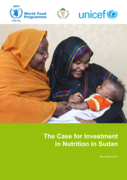
Over the period 2015 to 2019, scaling up a package of selected nutrition-specific and nutrition sensitive interventions to cover 90 per cent of Sudan would:
- Reduce the under-five mortality rate to 49/1,000 live births
- Reduce the prevalence of stunting to 25 per cent
- Reduce the ...
- Reduce the under-five mortality rate to 49/1,000 live births
- Reduce the prevalence of stunting to 25 per cent
- Reduce the ...
The 2018 NDHS is a national sample survey that provides up-to-date information on demographic and health indicators. The sample was selected using a stratified, two-stage cluster design, with enumeration areas (EAs) as the sampling units for the first stage. The second stage was a complete listing o
...
The World Health Organization’s (WHO) global report for the year 2019 indicates that sub-Saharan Africa (SSA) has a very high maternal mortality rate (MMR) with a 2017 point estimate of 542 (UI 498 to 649) maternal deaths per 100 000 live births, accounting for approximately 66% of estimated globa
...

Schistosomiasis and soil-transmitted helminths (STH) infections are major public health problems. We aimed to study the 6-mo impact of mass drug administration with praziquantel and albendazole on urinary schistosomiasis and STH.We examined children (aged 2–15 y) from one hamlet, who provided urin
...

WHO today released its first roadmap to tackle postpartum haemorrhage (PPH) – defined as excessive bleeding after childbirth - which affects millions of women annually and is the world’s leading cause of maternal deaths.
Despite being preventable and treatable, PPH results in around 70 000 de
...

Relapsing malaria caused by Plasmodium vivax parasites poses a significant challenge to global malaria elimination efforts. About one third of the population remains at risk of contracting P. vivax malaria, and 85% of P. vivax infections stem from reactivated latent parasites, leading to chronic
...
