
Filter
107
Topics:
Water, Sanitation & Hygiene (WASH)
Featured
22
21
Language
Document type
28
20
14
12
12
5
4
4
3
3
2
Countries / Regions
13
8
4
4
3
3
3
3
2
2
2
1
1
1
1
1
Authors & Publishers
Publication Years
Category
11
9
8
7
6
6
5
5
5
4
3
3
3
3
3
2
2
2
2
2
1
1
1
1
1
1
1
1
1
Toolboxes
21
17
13
12
12
9
7
7
5
4
4
3
3
3
3
3
3
3
2
2
2
2
2
1
1
1
1
1
1
1
1
1
1
1
1
1
1
1
1
1
1
1
1
1
1
1
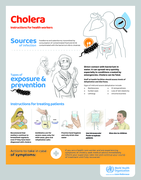
The poster provides information for medical personnel. It includes recommendations for the treatment of cholera patients and guidelines for hygiene measures.
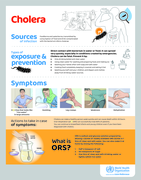
The cholera poster provides essential information about the disease, including its symptoms, sources of infection, prevention measures, and treatment options. It describes cholera as a potentially fatal disease that spreads through contaminated food and water, particularly in emergency conditions. K
...
The document focuses on providing access to clean water and educating people about cholera, including its causes, symptoms, and prevention. It discusses the impact of cholera outbreaks, particularly in the Middle East, and highlights the importance of sanitation, hygiene, and proper water treatment
...
The UNICEF Syria webpage titled "Cholera Resource Material" offers a collection of educational resources aimed at preventing cholera and safeguarding families. These materials, available in Arabic, include posters and flyers on topics such as handwashing, water purification, recognizing cholera symp
...
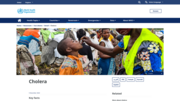
The World Health Organization's cholera fact sheet provides essential information about cholera, an acute diarrheal infection caused by ingesting food or water contaminated with Vibrio cholerae bacteria. The disease remains a global public health threat, particularly in areas lacking safe water and
...

Desde la notificación de los dos primeros casos confirmados de Vibrio cholerae O1 en el área del gran Puerto Príncipe el 2 de octubre de 2022, al 23 de octubre de 2022, el Ministerio de Salud de Haití (Ministère de la Santé Publique et de la Population, MSPP por sus siglas en francés), inform
...
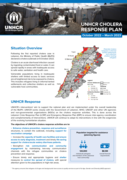
The UNHCR Cholera Response Plan (October 2022 – March 2023) outlines efforts to combat the cholera outbreak in Lebanon, which was declared in October 2022. The plan, led by the Ministry of Public Health with support from UNHCR, WHO, UNICEF, and NGOs, focuses on prevention, response, and surveillan
...

Only 10 per cent of households have electricity. Less than one half (46 per cent) of the households use basic sanitation facilities. Three in every four of the household population had basic drinking water services. More than one third of under-5 Malawian children (boys 39 per cent than girls 32 per
...

The "National Guideline for Cholera Surveillance and Outbreak Response" by the Ethiopian Public Health Institute (EPHI) provides a comprehensive approach to combating cholera outbreaks in Ethiopia. It emphasizes the importance of a multisectoral approach, including case management, WASH measures, an
...
Tanzania WASH sector stakeholders collaborated between March and May 2022 to develop this Country WASH M&E Roadmap. The initial vision, outcomes and activities outlined in the Roadmap were established during a workshop, held on 2–3 March 2022, and further refined during a second workshop, held on
...
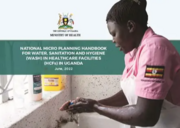
The Ministry of Health recognizes that access to safe water, sanitation and hygiene (WASH) in health facilities is critical in the reduction of diseases, improved occupational health, more efficient health care services, improved staff morale and performance. The micro planning data generated will g
...
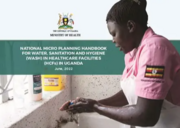
The Sustainable Development Goals (SDG) 3 and SDG 6 reinforce the need to ensure adequate WASH services, which will result in a reduction in maternal mortality, ending preventable newborn deaths, and providing quality universal health coverage. The rationale of the WASH guidelines is to document pro
...

In Control. A Practical Handbook for Professionals Working in Health Emergencies Internationally
recommended
In Control imparts knowledge, provokes reflection and triggers curiosity. The first half of the book provides an overview of the organisations, principles, frameworks and themes that every professional deploying to health emergencies should be aware of. The second half of the book provides practical
...
Imagine a child- friendly and resilient community in Malawi. A happy child, healthy parents, a latrine behind the house, livestock somewhere in the backyard, no-one panics when clouds come because people are prepared for the rain.
At UNICEF, we are working with the Government and civil society of M
...
UNICEF, as the lead agency of a multi-partner approach across 21 member states in Eastern and Southern Africa, identified that this point represents a moment for the WASH sector to take stock of progress towards SDG6,
understand the gaps in our current knowledge on levels of access, and take cours
...
The tippy tap! Resource Platform
recommended
The tippy tap is a hands free way to wash your hands that is especially appropriate for rural areas where there is no running water. It is operated by a foot lever and thus reduces the chance for bacteria transmission as the user touches only the soap. It uses only 40 millilitres of water to wash yo
...
Le Groupe spécial mondial de lutte contre le choléra (GTFCC) a lancé Mettre fin au choléra : Une feuille de route mondiale pour 2030 (la Feuille de route mondiale. Cette stratégie vise à réduire de 90 % le nombre de décès dus au choléra dans le monde et à mettre fin à la maladie dans a
...

The Zimbabwe Multi-Sectoral Cholera Elimination Plan (2018–2028) aims to eradicate cholera by improving water, sanitation, and healthcare infrastructure, strengthening disease surveillance, and expanding oral cholera vaccination (OCV). The strategy focuses on five pillars, including public health
...
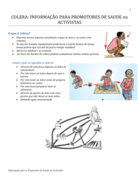
The PDF "COLERA: Informação para Promotores de Saúde" provides essential guidance for health promoters and activists on cholera. It explains that cholera is characterized by severe watery diarrhea, often resembling rice water, and sometimes vomiting. If not treated promptly, it can lead to death
...
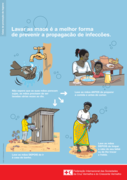
The poster highlights the critical role of handwashing in preventing the spread of infections. It emphasizes the importance of washing hands multiple times a day, even if they do not appear dirty, as handwashing is the most effective way to reduce the risk of illness. Specific recommendations includ
...
