
Filter
234
Featured
56
56
Language
Document type
88
62
19
16
15
11
9
4
3
3
2
1
1
Countries
27
11
10
8
8
7
7
7
6
6
6
5
4
4
3
3
3
3
3
3
3
3
3
3
2
2
2
2
2
2
2
2
2
2
2
1
1
1
1
1
1
1
1
1
1
1
1
1
1
1
1
1
1
1
1
1
1
1
1
1
1
1
1
Authors & Publishers
Publication Years
Toolboxes
107
32
11
9
4
4
2
2
2
1
1
1
1
Vue d’ensemble:
Le cycle de transmission
Téniase. Les ténias vivent dans l’intestin des êtres humains. Les œufs du ténia sont libérés avec les matières fécales. En cas de défécation à l’air libre, l'environnement (en particulier les légumes et l'eau) peut être contaminé. Cysti
...
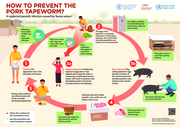
How to prevent the pork tapeworm? A neglected parasitic infection caused by Taenia solium - A neglected parasitic infection caused by Taenia solium. Available in different languages
Infographic: Preventing and controlling neglected parasitic zoonoses: a key role for the animal health sector
Learn about dengue clinical presentation and classification.

This manual provides a framework for morbidity management and disability prevention of patients affected by NIDs and gives specific guidance for the proper care of patients suffering from chronic conditions caused by lymphatic filariasis, leprosy, trachoma, and Chagas disease. It is intended to be u
...
Despite a historical association with poor tolerability, a comprehensive review on safety of antileishmanial chemotherapies is lacking. We carried out an update of a previous systematic review of all published clinical trials in visceral leishmaniasis (VL) from 1980 to 2019 to document any reported
...

Blue Book. The Medical Guide for our Projects
recommended
9th edition; 4th English edition 2020
Technical Update
Areas of Africa endemic for Buruli ulcer (BU), caused by Mycobacterium ulcerans, also have a high prevalence of human immunodeficiency virus (HIV), with adult prevalence rates between 1% and 5% (Maps). However, there is limited information on the prevalence of BU–HIV coinfection.
...
Guidelines for the management of pregnant and breastfeeding women in the context of Ebola virus disease
recommended
To save the lives of mothers and their babies, mitigate complications, and limit the spread of disease, it is critical that recommendations are made on the prevention, treatment, and surveillance of women who are exposed to EVD, acquire EVD during pregnancy or breastfeeding, or survive EVD with ongo
...

This document provides guidance on how to implement contact screening and chemoprophylaxis with single-dose rifampicin. The contents are logically ordered: counselling and obtaining consent, identification and listing of index case, listing of contacts, tracing of contacts, screening of contacts, ad
...
This update of the Guidelines for poison control, entitled Guidelines for establishing a poison centre, reflects the development of the role of poison centres in public health and the sound management of chemicals, described in section 1, and the opportunities provided by new technology. Assessments
...
Learn how patients can prevent dengue.
Leishmaniasis is a parasitic disease that is found in parts of the tropics, subtropics, and southern Europe. Leishmaniasis is caused by infection with Leishmania parasites, which are spread by the bite of infected sand flies. There are several different forms of leishmaniasis in people. The most com
...
The core of the strategy is the goal for all patients to have better overall care, so that the numbers of deaths and cases of disability are reduced by 50% before 2030. For this to be achieved, four strategic aims will be pursued.
Empower and engage communities,
Ensure safe, effective trea
...
En el presente documento se comunica el progreso logrado en la Región hacia la eliminación de la transmisión maternoinfantil del VIH y la sífilis entre los años 2010 y 2017. Se trata también del primer informe regional sobre la eliminación de la transmisión maternoinfantil y durante la prime
...
El manual tiene por objetivo ampliar los conocimientos sobre la enfermedad y aspira a ser una herramienta de trabajo para que el personal de salud y los equipos de gestión presten apoyo a los ministerios de salud en sus respectivos procesos de estructuración de los servicios de salud, así como en
...
Esta guía está enfocada en emitir recomendaciones para el diagnóstico y el tratamiento de la enfermedad de Chagas, como infección por Trypanosoma cruzi, agente protozoario de una parasitosis sistémica. Metodología: La presente guía de práctica clínica fue confeccionada siguiendo los método
...
This document focuses on making recommendations for the diagnosis and treatment of Chagas disease, an infection caused by Trypanosoma cruzi, the protozoan agent of a systemic parasitic disease. Methodology: These clinical practice guidelines were prepared following the WHO handbook for guideline dev
...
