
Filter
42
Featured
6
Language
Document type
25
8
4
3
1
1
Countries
5
4
2
2
2
1
1
1
1
1
Authors & Publishers
Publication Years
Category
11
2
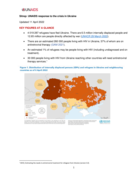
As the war in Ukraine enters its fifth year, the humanitarian crisis continues to deepen, with profound consequences for access to essential services, including health care. Modern warfare tactics, including the widespread use of drones and repeated attacks on critical infrastructure, are increasing
...
39th African Union (AU) Summit, Addis Ababa, Ethiopia, February 2026
This report presents the results of a study on the impact of the full-scale war in Ukraine on women living with HIV. The report describes how the war has affected the employment, economic, and property status of women living with HIV, how it has impacted their health, and the challenges women have f
...
Ukraine. Sitrep 2026: Fifth year of war: deepening humanitarian needs and impact on the HIV Response
As the war in Ukraine enters its fifth year, the humanitarian crisis continues to deepen, with profound consequences for access to essential services, including health care.
Modern warfare tactics, including the widespread use of drones and repeated attacks on critical infrastructure, are increasin
...

Indicators and questions to monitor progress towards the Global AIDS Strategy 2026-2031 targets
In order to ramp up our efforts in the fight against AIDS, there is a need for more concentrated focus on adolescents and young people
2025 Core epidemiology slides
recommended
UNAIDS Global AIDS Update 2025 Slide Sets

The objectives of the research presented in this report were to identify case studies of community-led HIV-related health and social inclusion service delivery organizations in eastern and southern Africa; describe the typologies of the services provided; and identify evidence of their service deliv
...

A historic funding crisis is threatening to unravel decades of progress unless countries can make radical shifts to HIV programming and funding. The report highlights the impact that the sudden, large-scale funding cuts from international donors are having on countries most affected by HIV. Yet it a
...

Abrupt reductions in international HIV assistance in 2025 have deepened existing funding shortfalls. The OECD estimates that external health assistance is projected to drop by 30–40% in 2025 compared with 2023, causing immediate and even more severe disruption to health services in low- and middle
...

Strategic information and analytics report No 1, published 17 April 2025. 75 out of 106
surveyed countries reported disruptions in at least one essential health service area.

Information Sheet
By 2030, without accelerated scale-up of prevention and treatment coverage there may be an estimated 320 000 new HIV infections and 7.6 million people living with HIV
Although strides have been made in the HIV response, children are still affected by the epidemic
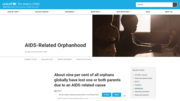
About nine per cent of all orphans globally have lost one or both parents due to an AIDS-related cause
About six in ten adolescents 10-19 years of age living with HIV are on antiretroviral medications
Slightly more than half of children under 15 years of age living with HIV are on antiretroviral medications
For the global community to be able to achieve ambitious targets relating to the prevention and treatment of HIV, viral hepatitis and sexually transmitted infections (STIs), multiple types of medicines must be widely accessible to all affected populations in all countries.
The purpose of this rep
...

This UNAIDS 2024 report brings together new data and case studies which demonstrate that the decisions and policy choices taken by world leaders this year will decide the fate of millions of lives and whether the world’s deadliest pandemic is overcome.

UNAIDS leads the world's most extensive data collection on HIV epidemiology, programme coverage and finance and publishes the most authoritative and up-to-date information on the HIV epidemic.
