
Filter
505
Featured
54
69
Language
Document type
207
139
32
27
24
21
16
16
7
6
6
2
1
Countries
49
25
16
8
7
6
5
3
3
2
2
2
2
2
2
1
1
1
1
1
1
1
1
1
1
1
1
1
1
1
1
1
Authors & Publishers
Publication Years
Category
60
47
27
19
17
7
4
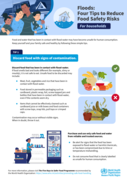
After a flood, food that has been in contact with flood-water may have become unsafe for human consumption. These flyers include tips to reduce food safety risks in the event of a flood for households,
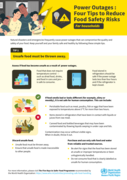
Natural disasters and emergencies frequently cause power outages that can compromise the quality and safety of food. These flyers include tips to reduce food safety risks during a power outage for households, food suppliers, vendors, food industry inspectors and workers.
La segunda década de la vida es un periodo de rápido desarrollo y cambio biológico, cognitivo, emocional y social. Durante la adolescencia, los individuos adquieren muchos de los recursos para mantener su salud y bienestar a lo largo de su vida. Invertir en la salud y el bienestar de los y las ad
...
Health inequities are unjust and avoidable systematic differences in the health status and access to health resources of
different population groups. Health inequity manifests itself at all levels as differences across countries, within countries, between communities, and within population groups.
...
Food inspection is crucial for ensuring food safety, using risk-based approaches to target high-risk products and businesses. This guidance aids national authorities in designing and implementing risk-based systems, offering step-by-step instructions, examples, and tools for prioritization and inspe
...
The 2019-2023 Strategy for UNU-IIGH, developed in
2018, built on UNU-IIGH’s strategic advantage and
position vis-à-vis the UN and global health ecosystem.
The Strategy set a goal to advance evidencebased policy on key issues related to sustainable
development and health and shifted the Instit
...
This strategy was developed to further support countries in their efforts to strengthen their capacity to implement key interventions to optimize their RHIS, enabling the monitoring and delivery of Health Care Services, especially Primary Health Care (PHC). The strategy proposes principles for integ
...
The evaluation covers the period January 2020 to August 2023. The geographical scope of the evaluation has involved the three levels of WHO (global, regional and country levels) and external key partners. The programmatic evaluation scope was concerned with assessing the SP-PHC in the following area
...
Les présentes orientations de l’OMS portent sur la restriction du marketing (notamment le marketing numérique) dans les contextes des produits du tabac et des produits à base de nicotine, de l’alcool, des aliments et des boissons nocifs pour la santé, ainsi que des substituts du lait materne
...
Past the crucial midpoint to the SDGs, the 2024 SDG3 GAP progress report, ‘Aligning for country impact’, focuses on alignment as the overarching principle linking efforts to deliver greater impact in countries on the health-related SDGs. It contributes to the basis for further discussions among
...
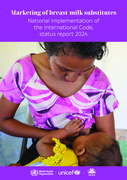
Marketing of breast-milk substitutes: national implementation of the International Code, status report 2024
recommended
This report provides updated information on the status of implementation of the International Code of Marketing of Breast-milk Substitutes (BMS) and subsequent relevant World Health Assembly (WHA) resolutions (collectively referred to as “the Code”) in countries. It presents the legal status of
...
The World health statistics report is the annual compilation of health and health-related indicators, which has been published by the World Health Organization since 2005. The 2024 edition reviews more than 50 health-related indicators from the Sustainable Development Goals and WHO’s Thirteenth Ge
...
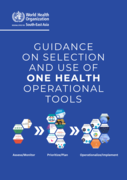
The One Health (OH) High-Level Expert Panel (OHHLEP) of the Quadripartite Organizations defined OH as an integrated, unifying approach that aims to sustainably balance and optimize the health of people, animals and ecosystems.”
It recognizes the health of humans, domestic and wild animals, plan
...

The world faces global health risks that need to be effectively addressed in integrated, participatory effort
The monograph contained in this volume was prepared following the ninety-third meeting of the Joint Food and Agriculture Organization of the United Nations (FAO)/World Health Organization (WHO) Expert Committee on Food Additives (JECFA), which met virtually online from 24 March–1 April 2022. This
...
Identifying and addressing immunization inequities is core to the success of immunization programmes and will require a collective effort from all parts of the immunization programme, working in partnership with governments and other areas of health. This document provides practical guidance for tho
...
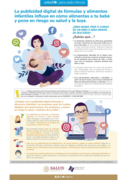
This dataset contains data from WHO's data portal covering the following categories:
Air pollution, Antimicrobial resistance (AMR), Assistive technology, Child mortality, Dementia diagnosis, treatment and care, Dementia policy and legislation, Environment and health, Foodborne Diseases Estimates,
...
Trends in under-five mortality rate in Malawi: Child health; Child protection ; Child survival ;Early childhood ;Education ;HIV/AIDS
Maternal and newborn health ;Nutrition ;Sanitation ;Drinking water;MICS

An estimated 1.3 billion people globally experience significant disability. This figure has grown over the last decade and will continue to rise due to demographic and epidemiological changes. In 2022, the World Health Organization launched the Global report on health equity for persons with disabil
...
