
Filter
488
Featured
31
17
Language
Document type
90
70
55
50
50
45
31
26
18
15
10
9
7
6
6
Countries
107
27
20
12
7
7
7
7
6
6
6
6
6
5
5
5
4
4
4
4
3
3
3
3
3
3
3
3
3
2
2
2
2
2
2
2
2
2
1
1
1
1
1
1
1
1
1
1
1
1
1
1
1
1
1
1
1
1
1
1
1
1
1
1
1
1
1
1
Authors & Publishers
Publication Years
Category
111
62
45
32
27
19
6

La République démocratique du Congo (RDC) occupe la 2ème place en termes de nombre de cas de paludisme et de décès associés dans le monde (12% des cas et 13% des décès), et représente à elle seule 54,6% des cas en Afrique centrale (OMS, Rapport Mondial sur la situation du paludisme 2022).
...
Malaria Journal (2024) 23:255. Seasonal malaria chemoprevention (SMC) is a World Health Organization-recommended intervention for the prevention of malaria among children at high risk in areas with seasonal transmission. During the coronavirus disease 2019 (COVID-19) pandemic, SMC drug distribution
...

According to the WHO, there were an estimated 251 million malaria cases (95% of global cases) and 579,414 malaria deaths (97% of global deaths) in African Union Member States in 2023. 76% of these deaths were children under the age of five.
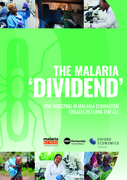
Getting back on track to cutting malaria by 90% could boost African economies by $127bn by 2030. This important new report shows we can save lives, boost economies and trade, creating a healthier world
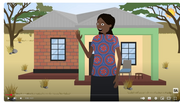
This video highlights the significant risks that malaria poses to pregnant and breastfeeding women in malaria-endemic regions. It follows the stories of Angavu from Kenya, Moyinoluwa from Nigeria and Lamai from Thailand. It emphasises the severe consequences that malaria can have during pregnancy, i
...
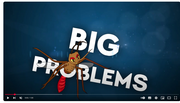
This brief, rhythmic video uses a simple, memorable narrative to raise awareness of the dangers of malaria, emphasising how a mosquito bite can lead to serious health problems. The story follows someone who experiences malaria symptoms and seeks free testing and treatment, emphasising the importance
...
Issued by the Ministers of Health of High Burden High Impact (HBHI) countries in Africa. Yaounde Declaration.
Ministers committed to strengthening their health systems, stepping up domestic resources, enhancing multisectoral action and ensuring a robust accountability mechanism,” notes Dr Daniel
...
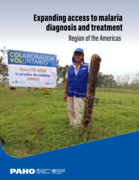
The overall objective of this approach is to accelerate efforts toward malaria elimination by increasing
access to early diagnosis and treatment. The specific objectives are to: Minimize the barriers that the population faces in accessing timely, quality diagnosis and treatment. Reduce the time bet
...
2023 was another year of significant progress in the fight against HIV, tuberculosis (TB) and malaria. In countries where the Global
Fund invests, there has been a full recovery from the disruptive impact of the COVID-19 pandemic. The results we have achieved in the last year build on our extraord
...
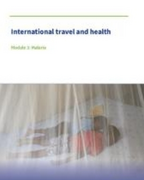
Depending on the health profile of the traveller, the type of travel to be undertaken, and the place of transit and destination, travellers may face various health risks during travel. The International travel and health collection is an update of International travel and health (2012) and serves as
...
Malaria remains a significant global health concern, with 249 million cases and 408,000 deaths reported in 2022, primarily in sub-Saharan Africa. The most vulnerable populations are children under five and pregnant women. Rapid and accurate diagnosis using microscopy or malaria rapid diagnostic test
...
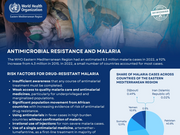
Antimicrobial resistance (AMR) and malaria remain significant public health challenges in the WHO Eastern Mediterranean Region (EMR). In 2021, the region reported 1.7 million sepsis-related deaths, with 373,000 associated with bacterial AMR. High antibiotic consumption, particularly in high-income c
...
The 2024 World Malaria Report shows that the malaria burden remains overwhelmingly concentrated in Africa. The continent accounted for 94% of global cases and 95% of malaria-related deaths in 2023. Although the number of malaria cases increased globally from 204 million in 2000 to 246 million in 202
...
This set of malaria guidelines is a revision to the Version 1.0 released in June 2022, and is intended for medical personnel working in limited-resourced setting of conflicts and emergencies
for health care providers
Ecosystem Variability and Malaria Transmission: The Role of Environmental Factors in Vector Dynamics
EURASIAN EXPERIMENT JOURNAL OF PUBLIC HEALTH (EEJP) Vol.6
This practical document is available to support programmes and partners to design and implement risk communication strategies to achieve high uptake of malaria vaccination.
Information note. In 2021, preliminary results of observational studies from the Community Access to Rectal Artesunate for Malaria (CARAMAL) project did not confirm the mortality impact observed in the controlled trial in 2009. Consequently, in January 2022, WHO released an information note on recta
...
Update, 2023. En 2021, les résultats préliminaires des études d’observation du projet CARAMAL (Community Access to Rectal Artesunate for Malaria) n’ont pas confirmé l’impact sur la mortalité observé dans l’essai contrôlé de 2009. Par conséquent, en janvier 2022, l’OMS a publié un
...
Guidance on the prioritization of insecticide-treated nets in situations where resources are limited
In the context of limited resources, national malaria programmes may need to decide on how to prioritize all WHO-recommended interventions . This guidance document has been developed to support national malaria programmes in prioritization decisions, specifically on the deployment scope and product
...
