
Filter
71
Featured
8
22
Language
Document type
33
16
8
3
3
3
2
2
1
Countries
6
2
2
2
2
1
1
1
1
1
1
1
Authors & Publishers
Publication Years
Category
13
8
5
4
3
2
2
Many vaccines and drugs hold the promise of reducing mortality and morbidity among pregnant women and infants living in low- and middle-income countries (LMICs). However, sufficient information on the safety of drugs and vaccines in pregnant women is rarely available at the time of product licensure
...
Medication errors are a leading cause of patient harm globally. WHO launched the Global Patient Safety Challenge: Medication Without Harm, with the objective of preventing severe medication related patient harm globally. This publication is one of the documents in the WHO Technical Series on “Medi
...
Guide pratique d’utilisation à l'usage des médecins, pharmaciens, infirmiers et auxiliaires de santé.
MSF Essential Drugs - Practical Guidelines 2022
recommended
Practical guide intended for physicians, pharmacists, nurses and medical auxiliaries. This guide is not a dictionary of pharmacological agents. It is a practical manual intended for health professionals, physicians, pharmacists, nurses and health auxiliaries invoved in curative care and drug managem
...
A toolkit for pharmacists.
Emerging data show that medication errors and adverse events cause significant harm to patients’ health and
well-being. It is estimated that the burden of adverse events due to medicines is now comparable to that of
widespread diseases, such as malaria or tuberculosis
...
This course introduces participants to the foundations of vaccine pharmacovigilance. The aim of this course is to provide healthcare professionals whose work involve vaccine safety issues, with essential knowledge about vaccines and their safety aspects. These professionals can include nurses, midwi
...
This course is based on the Manual on Safety in Administering Medicines for Neglected Tropical Diseases which provides practical tools, training modules and jobs aids to further improve the planning, preparation, and monitoring of safe administration of NTD medicines.

Accessed on 15.08.2022
La farmacovigilancia es una herramienta que permite la detección, evaluación, conocimiento y prevención de efectos adversos y/o inesperados de los medicamentos que se prescriben. También facilita la detección de fallas de respuesta terapéutica por deficiencias de calid
...
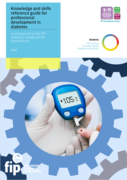
This Knowledge and Skills reference guide to support professional desvelopment in diabetes is intendet to help pharmacists with the increasingly necessary competencies they may have to acquire in managing patients with diabetes. There roles range from prevention and acreening to clinical management.
...
Antimicrobial resistance (AMR) surveillance plays an important role in the early detection of resistant strains of public health importance and prompt response to outbreaks in hospitals and the community. Surveillance findings are needed to inform medical practice, antibiotic stewardship, and policy
...
La vigilancia de la resistencia a los antimicrobianos (RAM) desempeña un papel importante en la detección temprana de cepas resistentes que revisten gran importancia para la salud pública, así como en la respuesta rápida a los brotes en los hospitales y en la comunidad. Los resultados de la vig
...

This manual summarizes key issues related to the safety of NTD medicines and their administration, with a focus on essential medicines used in mass drug administration (MDA), also called preventive chemotherapy. It can be used as a standalone reference manual, but is intended to be used in conjuncti
...

Please find all relevant guidelines and information on antimicrobial resistance AMR in our new AMR TOOLBOX
www.amrbox.org

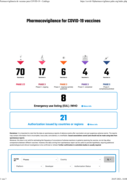
The Pharmacovigilance team in WHO aims to assure the safety of medicines and vaccines by ensuring reliable and timely exchange of information on safety issues, promoting pharmacovigilance activities throughout the Organization and encouraging participation in the WHO Programme for International Drug
...
22 December 2020
The COVID-19 vaccine safety guidance manual has been developed upon recommendation and guidance of GACVS members, as well as by experts incorporating current and available information critical to all stakeholders when COVID-19 vaccines will be introduced.
For ease of use, the man
...

13 July 2021
The module provides an overview of factors to consider when monitoring the safety of COVID-19 vaccines administered to pregnant and breastfeeding women. It describes how national routine AEFI surveillance should be adapted to cater for this specific group of population using both pass
...
The purpose of this document is to provide relevant information and guidelines on
coronavirus outbreaks – and in particular the novel coronavirus SARS-CoV-2 and the
diseases it produces, COVID-19 – for pharmacists and the pharmacy workforce, both in a
primary care context (i.e. community phar
...
