
Filter
951
Featured
48
21
Language
Document type
508
85
80
51
44
37
36
36
29
21
10
6
4
3
Countries
88
15
13
10
9
9
8
8
8
6
6
6
5
5
5
4
4
4
4
3
3
3
3
3
3
3
2
2
2
2
2
2
2
2
2
2
1
1
1
1
1
1
1
1
1
1
1
1
1
1
1
1
1
1
1
1
1
1
1
1
1
1
Authors & Publishers
Publication Years
Category
106
59
27
15
14
7
4
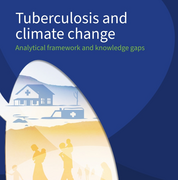
This report explores the intersection of tuberculosis (TB) and climate change, highlighting how climate-related challenges such as food and water insecurity, displacement, and disrupted healthcare access amplify TB risk. Intended as a resource for policymakers, researchers, development partners, fin
...
Atmosphere 2025, 16, 71. https://doi.org/10.3390/atmos16010071

This guidance covers different options for banning or phasing out a pesticide and suggests related risk reduction measures to be taken during the phase-out period. A key focus of this guidance is how to take action to manage, prevent, minimize, and communicate about identified risks during the imple
...
Through the Emergency Prevention System (EMPRES), FAO assists countries to prevent and control the world’s most serious livestock and zoonotic diseases, while also surveying for newly emerging pathogens. Member countries are supported with early warning, and technical guidance for risk management
...
More than a quarter of the global population still cook meals over open fires and/or on simple stoves fuelled by firewood, agricultural waste, dried dung, charcoal, and coal. This practice results in the emission of harmful and dangerously high levels of household air pollution.
Exposure to this h
...
Exposure to air pollution has significant adverse health effects, leading to nearly 1 in every 8 deaths globally. Air pollution affects all age groups, from unborn children to older people, in both high- and low-income nations.

This publication provides an overview of evidence and guidance on the growing challenge of workplace heat stress in the context of climate change. It highlights the health and productivity risks faced by billions of workers, especially in manual labor sectors. The report details the physiological, s
...

IDMC's Global Report on Internal Displacement (GRID) is the authoritative source for data and analysis on the state of internal displacement for the previous year.
This report synthesizes the state of knowledge on the interlinkages between environmental degradation climate change conflict and mobility in the East and Horn of Africa, focusing on Burundi, Djibouti, Ethiopia, Kenya, Somalia, South Sudan, Tanzania, and Uganda.
Internal displacements due to conflict and disasters are a major driver of global human mobility. While the total numbers of internal displacements by cause and geographical location are increasingly well tracked, a significant gap remains in the availability of disaggregated data on key variables â
...
The health of refugees and migrants is directly related to their access to quality, effective and appropriate health care along all their routes of travel. Refugees and migrants face challenges in accessing health care, including financial, legal and cultural barriers, that are well documented.

Public health challenges over the past decade have highlighted the importance of approaching health through a holistic lens of human, animal, and environmental sectors, recognizing the need for a collaborative response against shared threats. Zoonotic diseases, transmitted between humans and animals
...

WHO, as the coordinating authority on international health, supports countries in protecting public health through evidence-based policies and actions. Considering the significant health burden and the multiple potential benefits of interventions, the WHO Air Quality, Energy and Health Unit aims to
...

The health impacts of climate change are no longer a distant threat. They are being felt here and now and becoming more extreme.
To address these threats, the WHO Asia-Pacific Centre for Environment and Health in the Western Pacific Region (ACE) was established in 2019 through a partnership with
...

This Climate terminology bank provides key definitions and facts related to climate and resilience for Uganda’s refugee response. Its goal is to build a common understanding among stakeholders and support the integration of climate-smart practices in humanitarian efforts.
Why this document? The Waste Value Chain Analysis (WVCA) has been designed to help organizations understand local waste value chains, with the aim: To identify gaps and opportunities for improvement of local waste value chains (e.g. where shredding, baling can make recovery profitable) and much more
...
This guide outlines a practical approach to estimating greenhouse gas emissions avoided by diverting waste from landfills through reverse logistics and reuse/recycling. It provides step-by-step guidance, emission factors, and a scenario tailored to humanitarian operations, along with suggestions on
...
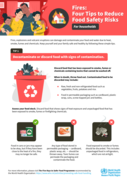
Fires, explosions and volcanic eruptions can damage and contaminate food and water due to heat, smoke, fumes and chemicals. These flyers include tips to reduce food safety risks during a fire incident for households, food suppliers, vendors, food industry inspectors and workers.
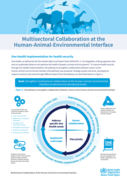
The pathway to strengthen multisectoral collaboration at the human-animal-environmental interface (HAI) aims to improve health security through One Health implementation. It outlines strategic guides and tools developed to support Member States through different steps of the HAI pathway.
Sodium Benchmarks for Packaged Foods
