
Filter
1114
Text search:
ppe
use
Featured
241
199
Language
Document type
345
327
159
82
80
47
27
20
16
5
3
2
1
Countries
87
82
49
46
40
31
31
27
25
22
22
21
20
19
18
18
17
17
17
15
14
14
12
12
11
9
9
8
8
7
7
7
6
6
6
6
5
5
5
5
4
4
4
4
4
4
4
4
4
3
3
3
3
3
3
3
3
3
3
3
3
2
2
2
2
2
2
2
2
2
2
2
2
2
1
1
1
1
1
1
1
1
1
1
1
1
1
1
1
1
1
1
1
1
1
1
Authors & Publishers
Publication Years
Category
388
87
63
31
25
17
12
Toolboxes
466
223
54
52
44
23
20
20
17
16
15
14
12
11
10
9
9
7
6
6
5
4
3
3
CDC has developed this slide set for use by staff development, infection control, and occupational health personnel for training healthcare personnel on how to select and use personal protective equ
...
23 December 2020 This document summarizes WHO recommendations for the rational use of personal protective equipment (PPE) in health care settings and temporary strategies during acute supply shortag
...
COVID-19 Guidance on use of personal protective equipment for different clinical settings and activities
recommended
This document provides guidance to African Union Member States based on a specific request from Member States for a checklist/guidance of the required personal protective equipment (PPE) needed by healthcare workers and care givers for the Coronavir
...
Arabic Version of COVID-19 Guidance on use of personal protective equipment for different clinical settings and activities
A tutorial for trainers in healthcare settings
Version 2: 2 Dec 2014
"The document focuses on an extended set of PPE components, which includes goggles, respirators, gloves,
coveralls and footwear. Used properly, these
...
Presentation on PPE and standard precautions
24 Nov. 2021; This guidance provides considerations and a series of options that can be used to inform country strategies to minimise risk associated with shortages of personal protective equipment (PPE).
Re-
...

N95 or equivalent respirators are single-use personal protective equipment (PPE) designed for use by health workers that provide direct care to pat
...
A training tutorial for healthcare professionals
This ECDC tutorial presents the fundamental concepts of personal protective equipment (PPE) and barrier nursing to support preparedness in hospitals across Europe. It provides practical information o
...
This is a guide for healthcare workers involved in patient care activities in a healthcare setting. It aims to show the type of personal protective equipment or PPE needed to correctly protect oneself. Based on the current available evidence, the WH
...

In December 2019 a novel coronavirus (2019-nCoV) was identified as the causative agent of a severe acute respiratory illness among people exposed in a seafood market in Wuhan, China; • Human-to-human transmission has been documented, including in healthcare workers, and aerosol-generating procedur
...
Strategies for managing acute shortages of personal protective equipment during COVID-19 pandemic
recommended
This guidance provides considerations and a series of options that can be used to inform country strategies in managing any shortages of personal protective equipment.Re-use and reprocessing of single-use
...
This guidance provides considerations and a series of options that can be used to inform country strategies in managing any shortages of personal protective equipment.Re-use and reprocessing of single-use
...
الاستراتيجيات لإدارة النقص الحاد في معدات الحماية الشخصية خلال جائحة فيروس COVID-19
This guidance provides considerations and a series of options that can be used to inform country strategies in managing any shortages of personal prote
...

medPPE Medical Personal Protection Equipment App
recommended
MedPPE emphasizes the role and timing of health workers jobs and offers specific information to prevent the spread of COVID-19. The guidelines are aimed at all personnel working in health facilities, including security guards, administrative and cleaning personnel, transfer assistants, nurses, biome
...
The scope of this PPC document is to serve as a guide to address the unmet public health need for a PPE system that protects the HW-F in tropical climate
s while caring for patients and providing heavy duty essential health services.
The charact
...
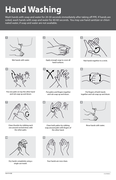
Hand Washing
recommended
Wash hands with soap and water for 20-30 seconds immediately after taking off PPE. If hands are soiled, wash hands with soap and water for 40-60 seconds. You may use hand sanitizer or chlorinated wa
...
The COVID-19 pandemic has led to large increases in healthcare waste, straining under resourced healthcare facilities and exacerbating environmental impacts from solid waste. This report quantifies the additional COVID-19 healthcare waste generated, describes current healthcare waste management syst
...
UNICEF provides a detailed update and list of Ebola virus disease personal protective equipment technical specifications for use in high- and low-risk settings. It includes barriers for full body protection, as well as the head, nose, mouth, eyes, h
...
