
Filter
334
Text search:
female
genital
mutilation
Featured
20
107
Language
Document type
178
73
21
16
14
9
8
7
4
2
2
Countries
18
18
18
16
13
12
11
10
9
6
6
6
6
5
5
5
4
4
3
3
3
3
3
3
2
2
2
2
2
2
2
2
2
2
1
1
1
1
1
1
1
1
1
1
1
1
1
1
1
1
1
1
1
1
1
1
1
1
Authors & Publishers
Publication Years
Category
130
124
14
12
9
9
Toolboxes
47
25
17
14
13
8
7
6
3
3
2
2
1
1
English and French version available
Understanding and addressing violence against women
Lessons from a decade of Progress
This handbook is for health care providers involved in the care of girls and women who have been subjected to any form of female genital mutilation
...
This report is a comprehensive statistical overview of female genital mutilation/cutting (FGM/C) in the 29 countries where the practice is concentr
...
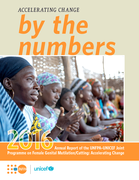
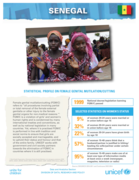
Female genital mutilation/cutting (FGM/C) refers to “all procedures involving partial or total removal of the
...
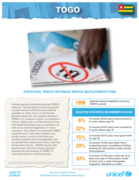
Female genital mutilation/cutting (FGM/C) refers to “all procedures involving partial
or total removal of the
...
Accessed on 20.10.2020
These statistical profiles present the latest available data on female genital mutilation/cutting (FGM/C) for 30 countrie
...
The coronavirus disease 2019 (COVID-19) pandemic has created a global and gendered crisis that is compounding existing inequalities and disproportionately affecting girls and women. Emerging evidence from the COVID-19 crisis in 2020 shows school closures, disruptions in essential services and rising
...
The coronavirus disease 2019 (COVID-19) pandemic has created a global and gendered crisis that is compounding existing inequalities and disproportionately affecting girls and women. Emerging evidence from the COVID-19 crisis in 2020 shows school closures, disruptions in essential services and rising
...
This guide is intended to promote a global health sector response to FGM for the provision of high-quality prevention and care services to women and girls at risk of FGM or living with the consequences of FGM. It also aims to support the systematic development of pre-service and in-service FGM conte
...
Evidence shows that FGM can cause several physical, mental and sexual health complications in girls and women, and in newborns. Health-care providers play an important role in supporting girls and women living with FGM, and improving their health and well-being. They are in a unique position to infl
...
This resource kit is a collection of tools and guidance for countries to develop and implement health sector programmes on FGM according to their needs – so that every girl or woman at risk of FGM, or who has already undergone this harmful practice, gets the care and services she needs.
Intended for use primarily by those responsible for developing policies and directing the working practices of nurses, midwives and other frontline health-care providers, these guidelines aim to promote and strengthen the case against the medicalization of
...
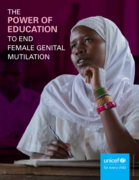
The practice of female genital mutilation (FGM) has proved remarkably tenacious, despite attempts spanning nearly a century to eliminate it. Nevert
...
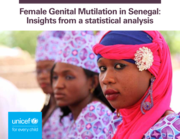
Senegal is home to nearly 2 million girls and women who have experienced FGM. Overall, 25 per cent of girls and women have undergone the practice, varying from over 90 per cent in Kédougou to just under 1 per cent in Diourbel
