
Filter
1301
Text search:
Marginalized
communities
Featured
124
299
Language
Document type
626
278
168
87
83
26
19
7
3
1
1
1
Countries
96
54
53
43
32
23
21
18
18
18
17
16
15
15
15
15
14
14
13
13
12
12
12
12
11
11
10
9
9
8
7
7
7
7
6
6
6
6
5
4
4
4
4
4
4
4
4
3
3
3
3
3
3
3
3
3
3
3
3
2
2
2
2
2
1
1
1
1
1
1
1
1
1
1
1
1
1
1
1
Authors & Publishers
Publication Years
Category
428
91
88
83
50
20
2
Toolboxes
172
109
99
78
78
59
48
45
41
35
28
22
17
15
13
12
12
11
9
8
7
6
5
2
1
In Israel, as in other countries, the COVID-19 outbreak highlights existing structural inequities,which compromise the health of some migrant groups. The Israeli case also demonstrate show strong NGOs successfully advocate for the protection of migrants‘health amidst the crisis, madepossible bya c
...
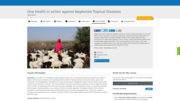
Neglected Tropical Diseases (NTDs) continue to cause hardship and harm to over one billion people worldwide, burdening individuals, families and communities who are already marginalized and disadvan
...
2nd revised edition. Accessed Apri. 17, 2019
Prevention strategies based on scientific evidence working with families, schools, and communities can ensure that children and youth, especially the most marg
...
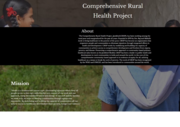
The Comprehensive Rural Health Project, Jamkhed (CRHP), has been working among the rural poor and marginalized for the past 45 years. Founded in 1970 by Drs. Raj and Mabelle Arole to bring healthcare to the poorest of the poor, CRHP has become an or
...
Climate change is affecting every region on Earth and already causing irreversible impacts. While it is a global phenomenon, its negative impacts are felt more intensely by poorer countries and poor communities heavily reliant on natural resources a
...
Leishmaniasis is a climate-sensitive disease. Changes in temperature, rainfall, and humidity can have strong impacts on
the sandfly vector, altering their distribution and influencing their survival and population sizes. Increased temperatures shorten vector development time, reduce Leishmania para
...

The Best Buys for Disease Elimination is a practical, evidence-based guide to the most effective actions for countries to implement in order to eliminate communicable diseases. The guide highlights the efficient use of resources and prioritizing populations in vulnerable situations.
“The Region
...
Background paper 10
The Independent Panel for Pandemic Preparedness and Response
May 2021
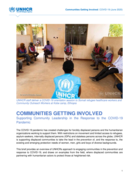
The COVID-19 pandemic has created challenges for forcibly displaced persons and the humanitarian organizations working to support them. With restrictions on movement and limited access to refugees, asylum-seekers, internally displaced persons (IDPs) and stateless persons across the globe, UNHCR is s
...
Bull World Health Organ 2020;98:773–780
Universal health coverage (UHC) depends on a strong primary health-care
system. To be successful, primary health care must be expanded at community and household levels as much of the world’s population still lacks access to health facilities for basic
...
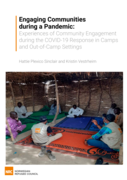
This report presents examples from different agencies on how they approached community engagement in their Covid-19 responses, the tools and methodologies used, as well as the challenges they encountered and how they attempted to overcome these. It discusses what community engagement means to the va
...
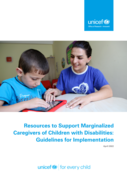
These guidelines have been compiled for education ministries or other educational leaders (including development partners, non-governmental or private organizations working with schools or directly with caregivers) who want to adapt and adopt resources to support the
...
Tips for Engaging Communities during COVID-19 in Low-Resource Settings, Remotely and In-Person
recommended
This brief provides key considerations for engaging communities on COVID-19 and tips for how to engage where there are movement restrictions and physical distancing measures in place, particularly in low-resource settings.
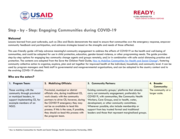
Between 1992 and 2012, disasters caused more than 1.3 million deaths, affected more than 4.4 billion people and led to US$ 2 trillion in economic damages and losses around the world. This Disaster Risk Management Strategy explains how the Agency for Technical Cooperation and Development (ACTED) anti
...
A Toolkit for Implementation. Module 1: An Overview of Implementation at National, Province and District Levels
A Toolkit for Implementation. Module 2: Facilitator’s guide to the orientation workshop on the IFC framework;
A toolkit for Implementation. Module 3: Participatory community assessment in maternal and newborn health
A Toolkit for Implementation. Module 5: Finalizing, monitoring and evaluating the IFC action plan
