
Filter
315
Text search:
Kinshasa
Featured
32
141
Language
Document type
182
63
27
21
12
5
3
1
1
Countries
176
12
10
7
7
6
5
4
4
4
3
3
3
3
3
2
2
2
2
2
2
2
2
1
1
1
1
1
1
1
1
1
1
1
1
1
1
1
1
1
1
1
1
1
1
Authors & Publishers
Publication Years
Category
184
29
12
11
11
3
2
Toolboxes
47
30
18
14
12
8
7
7
5
4
4
4
4
3
3
3
2
2
2
2
1
1
1
1
Défis et progrès. ce rapport présente l’information la plus à jour sur l’incidence de la grossesse non planifiée et de l’avortement à Kinshasa (République démocratique du Congo). La publication du Protocole de Maputo au Journal offici
...
Introduction Un Plan humanitaire multisectoriel spécifique à la réponse COVID-19 a été développé en avril 2020 et constitue un Addendum au Plan de réponse humanitaire 2020 (PRH) afin d’intégrer l’impact de la pandémie de COVID-19 sur les besoins humanitaires existants et sur les activi
...
INTRODUCTION: Health service use among the public can decline during outbreaks and had been predicted among low and middle-income countries during the COVID-19 pandemic. In March 2020, the government of the Democratic Republic of the Congo (DRC) started implementing public health measures across
...
en collaboration avec des experts en santé mentale du Centre Neuro-Psychopathologique de l’Université de Kinshasa (CNPP/UNIKIN)
The Ministry of Public Health in the Democratic Republic of the Congo (DRC) has reported the country’s first case of COVID-19. Health authorities said tests found that a Congolese national, who had recently returned to Kinshasa from his residence
...
The Ministry of Health is working with WHO, Gavi, MSF, UNICEF and other partners to ring vaccinate high-risk populations in Ebola-affected health zones in the Democratic Republic of the Congo. As vaccine supplies arrive in Geneva ahead of deployment to Kin
...
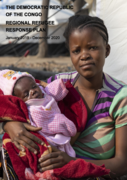
Looking forward, the 2019-2020 Regional Refugee Response Plan (RRRP) for the DRC situation aims at addressing the needs of new arrivals of Congolese refugees in the region, and those in protracted situations. By supporting livelihoods opportunities and through a resilience-based approach, refugees w
...

mBio, Vol. 6 Issue 2, March/April 2015
Available evidence demonstrates that direct patient contact and contact with infectious body fluids are the primary modes for Ebola virus transmission, but this is based on a limited number of studies. In this review, the authors address what we know and what
...
