
Filter
244
Text search:
Global
Task
Force
for
Cholera
Control
Featured
33
73
Language
Document type
105
41
33
32
14
8
6
4
1
Countries / Regions
18
16
12
10
7
7
7
6
6
5
4
4
3
3
3
3
3
3
3
3
3
3
3
2
2
2
2
2
2
1
1
1
1
1
1
1
1
1
1
Authors & Publishers
Publication Years
Category
89
35
15
13
11
5
Toolboxes
55
17
15
12
11
6
5
5
5
4
4
3
2
2
2
2
2
1
1
Cholera is an acute diarrhoeal disease caused by the ingestion of food or water contaminated with the bacterium V.
cholerae. It has a short incubation period of a few hours to 5 days. It is endemic in some countries, frequently
showing seasonal va
...
Identification of Priority Areas for Multisectoral Interventions (PAMIs) for cholera control
recommended
The identification of Priority Areas for Multisectoral Interventions (PAMIs, sometimes referred to as ‘hotspots’) for cholera
...

Regional and global cholera surveillance is the continuous compilation of data from affected countries, analysis and interpretation at the regional and gl
...
The WHO Cholera Rapid Diagnostic Test (RDT) Target Product Profile outlines the key requirements for developing improved cholera RDTs. It highlight
...
The GTFCC Laboratory Support for Public Health Surveillance document provides guidelines on using DNA-based molecular techniques for identifying and monitoring Vibrio cholerae strains in
...
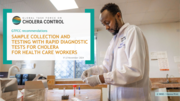
A GTFCC course on sample collection and testing with rapid diagnostic tests (or RDTs) for cholera, for healthcare workers.

The technical note by the Global Task Force on Cholera
...
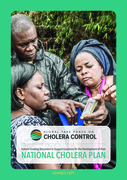
The Global Task Force on Cholera Control (GTF
...
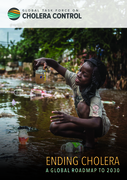
Ending Cholera. A global roadmap to 2030
recommended
Ending Cholera—A Global Roadmap to 2030 operationalises the new global strategy for
...
Technical Note: Cholera treatment facilities provide inpatient care for cholera patients during outbreaks. Proper case management and isolation of
...
The Interim Guidance on Cholera Rapid Diagnostic Tests (RDTs) by the Global Task Force on
...
The objective of this guidance document is to support the public health professionals
in implementing effective surveillance of cholera in at-risk, endemic and epidemic
areas. This document has been developed by the Surveillance Working Group of t
...

The technical note from the Global Task Force on Cholera
...
This document aims to provide guidance to countries in the identification of priority areas
for intervention as part of the Situational Analysis of their National Cholera
...
From February 22-23, 2023, the Wellcome Trust and the Global Task Force on Cholera
...
The WHO Guide on Cholera Control in Complex Emergencies provides key steps for preparedness, prevention, and response to
...
The document provides comprehensive guidelines on cholera outbreak management, including prevention, diagnosis, and treatment. It emphasizes rapid response measures, the importance of rehydration therapy (oral and intravenous), and public health int
...
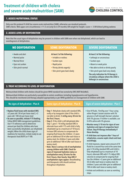
The document is a comprehensive practical guide for managing cholera epidemics. It includes detailed instructions on outbreak investigation, control
...
Many of the countries that faced cholera outbreaks in 2022 were badly affected by extreme weather events.
As the climate emergency worsens, human displacement will intensify, along with droughts and flooding – all
conditions that give rise to
...
The WHO Eastern Mediterranean Regional Office's webpage on cholera information resources provides a comprehensive collection of materials to support understanding and management of cholera outbreaks
...
