Filter
210
Text search:
Contraception
and
Fertility
Featured
Recommendations
8
New Publications
77
Language
Document type
No document type
166
Studies & Reports
21
Guidelines
10
Fact sheets
9
Manuals
1
App
1
Infographics
1
Strategic & Response Plan
1
Countries / Regions
Rwanda
16
India
15
Nigeria
12
Malawi
12
Nepal
11
Kenya
11
Senegal
9
Ethiopia
9
Sierra Leone
6
Zambia
6
Cambodia
6
South Africa
6
Liberia
5
Lesotho
5
Zimbabwe
4
Bangladesh
4
Myanmar / Burma
4
Congo, Democratic Republic of
3
Ghana
3
Philippines
3
Tanzania
3
Indonesia
3
Uganda
2
Botswana
2
Africa
2
Burkina Faso
1
Cameroon
1
Togo
1
Haiti
1
Pakistan
1
Afghanistan
1
Germany
1
Papua New Guinea
1
Namibia
1
Eswatini/ Swaziland
1
Ukraine
1
Madagascar
1
West and Central Africa
1
South–East Asia Region
1
Latin America and the Carribbean
1
Western and Central Europe
1
Other region
1
Asia
1
Albania
1
Tajikistan
1
Moldova
1
Authors & Publishers
Publication Years
Category
Countries
154
Women & Child Health
24
Key Resources
7
Public Health
4
Capacity Building
3
Clinical Guidelines
3
Toolboxes
HIV
10
Refugee
4
COVID-19
4
Zika
2
Global Health Education
2
Disability
1
Natural Hazards
1
Mental Health
1
AMR
1
Planetary Health
1
Pharmacy
1
Health Financing Toolbox
1
2.0 Rapid Response
1
DHS ANALYTICAL STUDIES 56
Bangladesh, Cambodia, India, Indonesia, Nepal, Pakistan, Philippines
Country profile: Ethiopia
Country profile: Indonesia
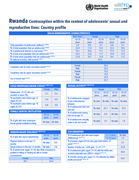
Country profile: Rwanda
Country profile: Zimbabwe
Country profile: Cambodia
Country profile: Bangladesh
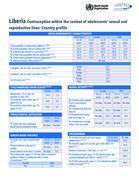
Country profile: Liberia
The Demographic Dividend study on Rwanda assessed the socio-economic and human development potential of our country in the short, medium and long-term period using a comprehensive approach. It gener
...
Contraception and Family Planning, Preventing Unsafe Abortion and Accessing Postabortion Care, and
...
The DHS report itself explains the purpose was, “to obtain and provide information on basic indicators of social progress including fertility, childhood mortality, reproductive
...
It is often observed that educated women have lower birth rates than do the less educated, inviting a causal interpretation. However, educated women also differ from those who have never attended school in a
variety of other ways: the two factors are multiply related. This article analyzes the rela
...
DHS Further Analysis Reports No. 107 - This report, based largely on the 2014-15 national survey in Rwanda, focuses on changes and trends in reproductive behavior since 2010. In the 4-5 years after the 2010 survey,
...
Section 1, Introduction to Men's Reproductive Health Services, Revised Edition, is designed to help sites and health care workers address organizational and attitudinal barriers that may exist when
...
Further Analysis of the 2014 Cambodia Demographic and Health Survey | DHS Further Analysis Reports No. 105