Filter
206
Text search:
Alam,
S.
Featured
Recommendations
13
New Publications
54
Language
Document type
No document type
135
Studies & Reports
43
Guidelines
18
Resource Platforms
4
Manuals
2
Strategic & Response Plan
2
Training Material
1
Situation Updates
1
Countries / Regions
Indonesia
54
Bangladesh
30
Global
11
India
6
Nepal
3
Syria
3
Asia
3
Philippines
2
Namibia
2
Brazil
2
Myanmar / Burma
2
Middle East and North Africa
2
South–East Asia Region
2
Guinea
1
Sierra Leone
1
Liberia
1
Ethiopia
1
Cameroon
1
Uganda
1
Zimbabwe
1
Pakistan
1
South Sudan
1
Germany
1
Kenya
1
Tanzania
1
South Africa
1
Mexico
1
East and Southern Africa
1
West and Central Africa
1
Africa
1
Authors & Publishers
Publication Years
Category
Countries
108
Public Health
25
Clinical Guidelines
11
Women & Child Health
9
Key Resources
9
Capacity Building
2
Pharmacy & Technologies
1
Toolboxes
Disability
14
Caregiver
12
TB
11
NCDs
9
Mental Health
8
COVID-19
8
Planetary Health
8
NTDs
8
Cholera
6
Ebola & Marburg
3
Natural Hazards
3
Refugee
3
Global Health Education
3
AMR
3
HIV
2
Malaria
2
2.0 Rapid Response
2
Polio
1
Rapid Response
1
Diabetes mellitus has become a serious and chronic metabolic disorder that results from a complex interaction of genetic and environmental factors, principally characterized by hyperglycemia, polyuria, and polyphagia. Uncontrolled high blood sugar can result in a host of diabetic complications. Prol
...

This report includes analysis from informal regional consultations in the African Region, the Caribbean and North America, Latin America, South-East Asia Region, European Region, Eastern Mediterranean Region, alongside three forums in the Western Pacific Region. It analyses the overarching similarit
...

The State of the world’s nursing 2020 report provides the latest, most up-to-date evidence on and policy options for the global nursing workforce. It also presents a compelling case for considerable – yet feasible – investment in nursing educa
...

The State of the world’s nursing 2020 report provides the latest, most up-to-date evidence on and policy options for the global nursing workforce.
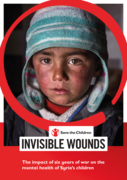
“The children are psychologically crushed and tired.
When we do activities like singing with them, they
don’t respond at all. They don’t laugh like they
would normally. They draw images of children
being butchered in the war, or tanks, or the siege
and the lack of food.”
Teacher in the
...

Southern Med Review (2009)2;1:2-6
Disease Control Division, Standard Management Guideline;Directorate General of Health Services, Ministry of Health & Family Welfare: First Published: 15th May 2017

Brucellosis is widespread in both humans and livestock in many developing countries. The authors have performed a series of epidemiological studies on brucellosis in agro-pastoral areas in Tanzania since 2015, with the aim of the disease control. Previously, the potential of a community-based brucel
...
Level of stunting among Bangladeshi children <5years declined from 51% in 2004 to 36% and underweight from 41% in 2007 to 33% (BDHS 2014). But the decrease in wasting rate is not as expected, which is only from 17% to 14.3 % over last decade. Approximately 3.1 % (BDHS 2014) of under-5 children suffering from SAM only b
...

BMC Health Services Research (2017) 17:623 DOI 10.1186/s12913-017-2567-7
A resource for improving menstraul hygiene around the world.
Comprehensive guidance with examples of good practice, information for colleagues and pupils in class and tips on how to break the taboo

Cholera remains a significant public health threat in many countries worldwide. In resource-constrained settings, it disproportionately affects thousands of poor and vulnerable population

Lancet Global Health Volume 7, Issue 1, January 2019, Pages e81-e95
The WHO/UNICEF JMP report, WASH in Health Care Facilities, is the first comprehensive global assessment of water, sanitation and hygiene (WASH) in health care facilities. It also finds that 1 in 5 health care facilities has no sanitation service*, impacting 1.5 billion people. The report further rev
...
The document provides a detailed overview of cholera, including its clinical features, diagnosis, treatment, and prevention. It explains the causes of cholera, its symptoms such as severe diarrhea and dehydration, and the importance of rehydration therapy (oral or intravenous) to reduce mortality. T
...