
Filter
164
Text search:
Acute
Watery
Diarrhea
Featured
19
79
Language
Document type
101
16
11
8
8
8
7
2
1
1
1
Countries
17
11
8
8
7
7
6
5
5
5
5
4
4
4
3
3
2
2
2
2
1
1
1
1
1
1
1
1
1
Authors & Publishers
Publication Years
Category
89
14
10
8
4
2
1
Toolboxes
32
7
6
6
5
5
4
4
3
2
2
2
2
1
1

As of 30 June 2023, globally, a total of 24 countries reported AWD/cholera outbreaks. In the Eastern Mediterranean Region of WHO, 8 countries namely, Afghanistan, Iraq, Islamic Republic of Iran, Lebanon, Pakistan, Somalia, Syria, and Yemen have reported Ac
...
The risk of communicable diseases remains a humanitarian concern with major health risks including cholera, acute watery diarrhea, bloody
...

The video "Cholera - Questions & Answers" by the World Health Organization (WHO) explains the essential aspects of cholera, an acute diarrheal disease caused by ingesting water or food contaminated with the Vibrio cholerae bacterium. It highlights t
...
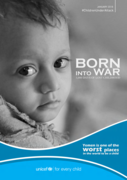
In Yemen, the poorest country in the Middle East, 3 million children have been born into horrific violence that has escalated since March 2015.
Calling for the needs of Yemen’s children to be prioritized, UNICEF’s “Born into War” report reminds involved parties of their legal obligations t
...
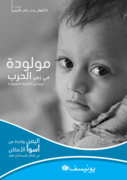
According to the report:
More than 5,000 children have been killed or injured in the violence – an average of five children every day since March 2015.
More than 11 million children now need humanitarian assistance – nearly every child in Yemen.
More than half of the country’s
...
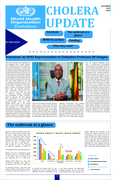
After years of relative calm, Zimbabwe has been grappling with a cholera outbreak since 12 February 2023. This resurgence is not an isolated incident, as 10 more countries (Malawi, Mozambique, Somalia, Kenya, Ethiopia, Zambia, South Sudan, Burundi, Tanzania and South Africa) in Eastern and Southern
...
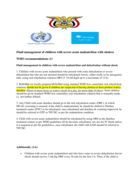
The document provides WHO guidelines on fluid management for children with severe acute malnutrition (SAM) and cholera. It outlines protocols for rehydration therapy, including oral rehydration solutions (ORS) and intravenous fluids for cases of sev
...

The Cholera Q&A Fact Sheet provides essential information about cholera, including its causes, symptoms, treatment, and prevention. Cholera is an acute diarrheal disease caused by Vibrio cholerae, which spreads through contaminated water and food. I
...
Poor sanitary conditions in disaster-stricken areas result in higher risk for diarrheal illness in vulnerable populations, especially children. This disease negatively impacts the nutritional status of affected children and causes significant morbidity and mortality. Early di
...
Acute Radiation Syndrome (ARS) (sometimes known as radiation toxicity or radiation sickness) is an acute illness caused by irradiation of the entire body (or most of the body) by a high dose of pene
...

Acute Radiation Syndrome (ARS) (sometimes known as radiation
toxicity or radiation sickness) is an acute illness caused by
irradiation of the entire body (or most of
...
The current guidelines on Integrated Management of Acute Malnutrition (IMAM), addresses the issue of improved management of severe acute malnutrition (SAM), particularly in children under 5 years of
...
Level of stunting among Bangladeshi children <5years declined from 51% in 2004 to 36% and underweight from 41% in 2007 to 33% (BDHS 2014). But the decrease in wasting rate is not as expected, which is only from 17% to 14.3 % over last decade. Approximately 3.1 % (BDHS 2014) of under-5 children suffering from SAM only b
...
Diarrhea is one of the world’s leading causes of child illness and death, and rotavirus is the most common cause of severe diarrhea. Yet it can be prevented and treated. There is a vaccine. And wh
...
The document provides a detailed overview of cholera, including its clinical features, diagnosis, treatment, and prevention. It explains the causes of cholera, its symptoms such as severe diarrhea and dehydration, and the importance of rehydration t
...

South Sudan continues to struggle with a severe health crisis affecting 8.9 million people, primarily in flood- and conflict-affected regions with population movements (displacement and returns), and disease outbreaks. The nation's health system, heavily reliant on international aid, faces staffing
...
