
Filter
80
Text search:
Bhatt,
S.
Featured
Recommendations
5
New Publications
18
Language
Document type
No document type
31
Studies & Reports
25
Guidelines
12
Manuals
5
Strategic & Response Plan
4
Situation Updates
1
Resource Platforms
1
Fact sheets
1
Countries / Regions
Global
10
India
5
Africa
3
Brazil
2
Chile
2
Middle East and North Africa
2
Russia
2
Burkina Faso
1
Sierra Leone
1
Uganda
1
Nepal
1
Germany
1
Syria
1
Thailand
1
Indonesia
1
South Africa
1
Mozambique
1
Sudan
1
Angola
1
Yemen
1
West and Central Africa
1
Western and Central Europe
1
Paraguay
1
Venezuela
1
Italy
1
Mongolia
1
Portugal
1
Authors & Publishers
Publication Years
Category
Countries
23
Public Health
13
Clinical Guidelines
5
Key Resources
4
Women & Child Health
1
Toolboxes
NTDs
10
NCDs
9
COVID-19
8
Planetary Health
6
Malaria
6
Mental Health
4
Global Health Education
4
Natural Hazards
3
Ebola & Marburg
2
HIV
2
Zika
1
TB
1
AMR
1
Caregiver
1
Pharmacy
1
Health Financing Toolbox
1
Each year 1–2 million people are diagnosed with a tropical disease called leishmaniasis, which is caused by single-celled parasites. People are infected when they are bitten by sandflies carrying the parasite, and often develop skin lesions around the bite site. Though mild cases may recover on th
...
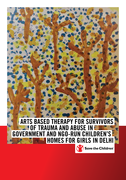
This article identifies the three core defining characteristics of healing environments for children and young people who have been exposed to chronic adversity and trauma. A large body of evidence highlights the pervasive and devastating developmental impacts of such exposure but there is also emer
...
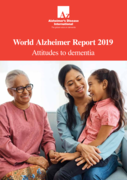
Some of the key findings of the report include:
Almost 80% of the general public are concerned about developing dementia at some point and 1 in 4 people think that there is nothing we can do to prevent dementia
35% of carers across the world said that they have hidden the diagnosis of de
...
Resumen ejecutivo
Canadian Journal of Microbiology 25 June 2021 https://doi.org/10.1139/cjm-2020-0572
4ª edição
Nos próximos meses, a COVID Reference apresentará atualizações regulares e narrará os dados científicos o mais coerente possível.

This paper reviews the effects of vertical responses to COVID-19 on health systems, services, and people’s access to and use of them in LMICs, where historic and ongoing under-investments heighten vulnerability to a multiplicity of health threats.
...

There is no secret to our procedure: the daily scanning of the literature helps us to stay afloat in the never-ending waves of new publications about SARS-CoV-2 and COVID-19. Many papers discussed in the Top 10 will eventually make it into subsequent editions of COVID Reference.

Socioeconomic status is associated with differences in risk factors for cardiovascular disease incidence and outcomes, including mortality. However, it is unclear whether the associations between cardiovascular disease and common measures of socioeconomic status—wealth and education—differ among
...

The WHO guidelines for malaria bring together the Organization’s most up-to-date recommendations for malaria in one user-friendly and easy-to-navigate online platform.
The WHO guidelines for malaria bring together the Organization’
...
Environmental Research Volume 151, November 2016, Pages 115-123
Dengue is the world’s most important arboviral disease in terms of number of people affected. Over the past 50 years, incidence increased 30-fold: there were approximately 390 millio
...

This paper has been commissioned by RedR to identify gaps in skills, technology, and knowledge in urban humanitarian response in order to inform RedR’s project Ready to Respond which is looking to address these gaps in two specific areas:
Wat
...

J Glob Health Sci. 2020 Jun;2(1):e3. A group of enzootic and zoonotic protozoan infections, the leishmaniases constitute among the most severely neglected tropical diseases (NTDs) and are found in all continents except Oceania. Representing the most common infectious diseases, NTDs comprise an open-
...
Dengue is a mosquito-borne viral disease that occurs mainly in the tropics and subtropics but has a high potential to spread to new areas. Dengue infections are climate sensitive, so it is important to better understand how changing climate factors affect the potential for geographic spread and futu
...

This purpose of this guide is to inform robust evaluations of the WHO training package – a package aimed at personnel whose primary role in health-care facilities is environmental cleaning, hereafter referred to as cleaners.
The WHO training package – Environmental cleaning and infection prev
...
