
Filter
6171
Text search:
World
Health
Organization
et
al.
Featured
Recommendations
558
New Publications
1199
Language
Document type
No document type
2975
Studies & Reports
1376
Guidelines
920
Manuals
339
Fact sheets
181
Strategic & Response Plan
176
Training Material
119
Situation Updates
29
Resource Platforms
19
Infographics
18
Brochures
10
Online Courses
2
App
1
Videos
1
Countries / Regions
Global
302
Latin America and the Carribbean
148
India
140
Kenya
134
Western and Central Europe
118
Africa
109
South Africa
105
Ethiopia
101
Russia
101
Sierra Leone
87
Nigeria
79
Ukraine
79
Malawi
78
Uganda
75
Liberia
74
Tanzania
72
Zambia
70
Syria
69
Bangladesh
67
Brazil
65
Nepal
64
Eastern Europe
63
Myanmar / Burma
55
Ghana
50
Rwanda
48
Mozambique
48
Middle East and North Africa
47
Namibia
43
Asia
43
South–East Asia Region
42
Senegal
39
Congo, Democratic Republic of
39
Philippines
35
Colombia
34
Yemen
34
Guinea
32
Haiti
31
Eastern Europe and Central Asia
31
Indonesia
30
Zimbabwe
29
West and Central Africa
29
Burkina Faso
27
Germany
27
Cambodia
26
Venezuela
26
South Sudan
25
East and Southern Africa
24
Cameroon
23
Paraguay
22
Lesotho
21
Pakistan
19
Angola
18
Sudan
17
Benin
17
Argentina
17
Botswana
17
China
14
Western Pacific Region
13
Mali
12
Guinea-Bissau
12
Somalia
12
Lebanon
12
Thailand
12
Peru
12
Chile
12
Afghanistan
10
Vietnam
10
Tajikistan
9
Côte d’Ivoire / Ivory Coast
8
Jordan
8
Chad
8
Ecuador
8
Sri Lanka
8
Albania
8
North America
8
Spain
8
Iraq
7
Eswatini/ Swaziland
7
Madagascar
7
Mexico
7
Georgia
7
USA
6
Saudi Arabia
6
Kyrgyzstan
6
Niger
5
Egypt
5
Central African Republic
5
Bolivia
5
Libya
5
Palestine
5
Laos
5
Iran
5
Turkey
4
Honduras
4
Armenia
4
Southern Africa
4
Timor Leste/ East Timor
4
Moldova
4
Kazakhstan
4
Portugal
4
Belarus
4
Morocco
3
Togo
3
Burundi
3
El Salvador
3
Guatemala
3
Canada
3
Uruguay
3
Tunisia
3
Malaysia
2
Papua New Guinea
2
North Macedonia
2
Nicaragua
2
Fiji
2
Italy
2
Djibouti
2
Qatar
2
Estonia
2
Romania
2
Gabon
2
Turkmenistan
2
Jamaica
2
Japan
2
Denmark
2
France
2
United Kingdom
2
Bosnia and Herzegovina
2
Singapore
1
Dominican Republic
1
Switzerland
1
Hungary
1
Croatia
1
Greece
1
Bhutan
1
Poland
1
North Korea
1
Mongolia
1
Congo-Brazzaville
1
Bulgaria
1
Lithuania
1
Slovakia
1
Belgium
1
Mauritius
1
Morocco
1
Israel
1
Latvia
1
Belize
1
Costa Rica
1
Panama
1
Authors & Publishers
Publication Years
Category
Countries
1814
Clinical Guidelines
535
Public Health
371
Women & Child Health
355
Key Resources
318
Capacity Building
100
Pharmacy & Technologies
58
Toolboxes
COVID-19
642
HIV
616
Mental Health
588
TB
448
Planetary Health
312
NTDs
255
Disability
187
Caregiver
180
AMR
175
NCDs
143
Ebola & Marburg
133
Conflict
119
Global Health Education
119
Health Financing Toolbox
99
Rapid Response
93
Pharmacy
82
Refugee
80
Malaria
79
Zika
67
Natural Hazards
53
2.0 Rapid Response
45
Cholera
32
Specific Hazards
29
Polio
28
Social Ethics
20
South Sudan
1
Typhoon
1
• provide scientific information on the safety, efficacy, and quality control/ quality assurance of widely used medicinal plants, in order to facilitate their appropriate use in Member States;
• provide models to assist Member States in developing their own mono- graphs or formularies for these
...
HIV-1 drug resistance (HIVDR) genotyping is an essential component of the WHO global HIVDR surveillance strategy. Plasma “gold standard” specimen type for HIVDR genotyping, but its use may not be feasible in rural, remote areas in low- and middle-income countries, since preparing and storing it
...

People affected by impairments and disabilities associated with TB are even more likely to belong to marginalized segments of society and are more likely to have their human rights unprotected. The challenges faced by people affected by TB include the consequences of impairment and disability associ
...
Evaluation report
January 2014

Safe sanitation is essential for health, from preventing infections to improving and maintaining mental and social
well-being. Lack of adequate sanitation contributes to diarrhoeal diseases, parasitic infections, and undernutrition, as
well as pos
...
Managing possible serious bacterial infection in young infants 0–59 days old when referral is not feasible
recommended
WHO/UNICEF joint statement
Results of rapid assessment
The COVID-19 pandemic has disrupted or halted critical mental health services in 93% of countries worldwide while the demand for mental health is increasing, according t
...

This publication aims to provide updated guidance on the specific use of yellow fever laboratory assays in the context of surveillance to be used across the Global Yellow Fever Laboratory Network for disease surveillance. In the recent years, new commercial assays became available and are now recomm
...
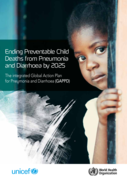
The integrated Global Action Plan for Pneumonia and Diarrhoea (GAPPD)

A companion to the Child Friendly Schools Manual
WASH in Schools aims to improve the health and learning performance of school-aged children – and, by extension, that of their families – by reducing the incidence of water and sanitat ...
WASH in Schools aims to improve the health and learning performance of school-aged children – and, by extension, that of their families – by reducing the incidence of water and sanitat ...
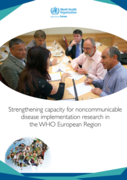
Calls for greater implementation research (IR) capacity came in the wake of compelling evidence that implementation strategies are critically important for the dissemination and facilitation of evidence-informed policies and interventions to tackle noncommunicable diseases (NCDs), thereby improving
...

COVID-19 Vaccines: 1 Safety Surveillance 2 Manual
While there is no indication that pregnant women have an increased susceptibility to infection with SARS-CoV-2, there is evidence that pregnancy may increase the risk of severe illness and mortality from COVID-19 disease in comparison with non-pregn
...
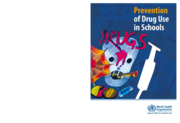
Schools are generally the most popular setting for drug-use-
prevention programmes, and are used both by governmental and
non-governmental agencies. This may be for many reasons: ease of
obtaining funding for school drug-use-prevention programmes, the
captive audience, and the popular perception
...
Trachoma is the leading infectious cause of blindness (2). It is characterized by repeated
conjunctival infection with particular strains of Chlamydia trachomatis. This scars the conjunctivae and,
in some cases, leads to trichiasis with or without entropion. The abrasive action of eyelashes can
d
...
