Filter
1823
Text search:
treatment
seeking
behaviour
Featured
Recommendations
156
New Publications
539
Language
Document type
No document type
1148
Studies & Reports
235
Guidelines
188
Manuals
106
Strategic & Response Plan
77
Training Material
40
Fact sheets
13
Situation Updates
10
Brochures
4
Resource Platforms
2
Countries / Regions
India
106
Global
72
Kenya
62
Sierra Leone
61
Uganda
46
Nepal
46
Ethiopia
42
Nigeria
41
Ghana
38
Zambia
37
Western and Central Europe
35
Malawi
34
Liberia
33
Bangladesh
31
Tanzania
30
Africa
30
South Africa
28
Myanmar / Burma
25
Syria
16
Lesotho
16
Zimbabwe
15
Rwanda
15
South Sudan
14
Ukraine
14
Namibia
13
Botswana
13
Congo, Democratic Republic of
12
South–East Asia Region
12
Guinea
10
Cambodia
10
East and Southern Africa
10
Asia
10
Germany
7
Pakistan
6
Eastern Europe and Central Asia
6
Eastern Europe
6
Sudan
5
Albania
5
Somalia
4
Lebanon
4
Indonesia
4
West and Central Africa
4
Moldova
4
Burkina Faso
3
Cameroon
3
Philippines
3
Iraq
3
Jordan
3
Afghanistan
3
Central African Republic
3
Eswatini/ Swaziland
3
Western Pacific Region
3
Latin America and the Carribbean
3
Russia
3
Senegal
2
Haiti
2
Mozambique
2
Papua New Guinea
2
Sri Lanka
2
Middle East and North Africa
2
Laos
2
Canada
2
Vietnam
2
Thailand
1
Ireland
1
Singapore
1
Benin
1
Argentina
1
North Macedonia
1
Burundi
1
Colombia
1
Greece
1
Angola
1
Madagascar
1
Mexico
1
Yemen
1
Other region
1
Paraguay
1
Fiji
1
Bhutan
1
Venezuela
1
Poland
1
Palestine
1
Armenia
1
Mongolia
1
Southern Africa
1
Timor Leste/ East Timor
1
Romania
1
Lithuania
1
Iran
1
Uzbekistan
1
Georgia
1
Mauritius
1
United Kingdom
1
Belarus
1
Authors & Publishers
Publication Years
Category
Countries
703
Public Health
116
Clinical Guidelines
101
Women & Child Health
98
Key Resources
96
Capacity Building
33
Pharmacy & Technologies
5
Toolboxes
Mental Health
258
HIV
173
TB
81
COVID-19
80
Ebola & Marburg
61
Caregiver
59
NTDs
53
Disability
51
Conflict
45
Malaria
40
Refugee
37
Global Health Education
30
Planetary Health
26
Rapid Response
22
NCDs
22
AMR
21
2.0 Rapid Response
16
Cholera
10
Natural Hazards
9
Zika
9
Pharmacy
9
Social Ethics
8
Polio
4
Specific Hazards
4
Health Financing Toolbox
3
District Level M & E Training and Reference Material for Primary Health Care Programmes

Around the world, approximately 1 in 45 children are on the move – nearly 50 million boys and girls that have migrated across borders or been forcibly displaced within their own countries.1 Climate-related events
and their impacts are already contributing significantly to these staggering numbers
...
The figures and findings reflected in the 2019 Humanitarian Needs Overview (HNO) represent the independent analysis
of the United Nations (UN) and its humanitarian partners based on information available to them. While the HNO aims
to provide consolidated humanitarian analysis and data to help inf
...

Sexual abuse perpetrated against children is one of the most significant crises of our time. Child sexual abuse is a significant risk factor for children, in common with other forms of child maltreatment. Sexual abuse can have severe short- and long-term consequences on the physical, mental, social,
...
District Level M & E Training and Reference Material for Primary Health Care Programmes
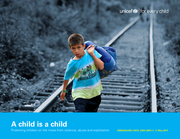
Protecting children on the move from violence, abuse and exploitation

Tsetse traps and targets (insecticide-impregnated screens) function by attracting the flies to a device that collects and/or kills them. Traps can be used for entomological surveillance, and also for control. Targets are simpler than traps, but are not used for surveillance. They are impregnated wit
...

This Guidance was developed in response to the increase in HIV-related human rights crises and the shrinking civic space for rights-related responses to HIV in recent years across the world. This document builds upon existing guidance documents, offering updated guidance for country-based United Nat
...

Trachoma is the world’s leading infectious cause of blindness. It is one of 18 neglected
tropical diseases (NTDs) that affect over one billion of the world’s poorest people.
This handbook was designed primarily as a tool for district clinical specialist teams (DCSTs), and for the provincial specialists who will guide and support their work. This handbook will also be useful to managers of health facilities, heads of clinical units and nurses, doctors and allied health w
...

Indoor residual spraying (IRS) involves applying residual insecticide to potential vector resting sites on the interior surfaces of human dwellings or other buildings. The main aim of IRS is to kill vectors before they are able to transmit pathogens to humans. When carried out correctly, IRS has his
...