
Filter
776
Text search:
UNICEF
Bangladesh
Featured
Recommendations
81
New Publications
232
Language
Document type
No document type
458
Studies & Reports
140
Guidelines
89
Manuals
37
Training Material
20
Strategic & Response Plan
17
Fact sheets
7
Situation Updates
6
Resource Platforms
2
Countries / Regions
Bangladesh
84
Global
61
Myanmar / Burma
41
Nepal
30
India
22
Asia
16
Ethiopia
15
Uganda
13
South–East Asia Region
12
Pakistan
9
Nigeria
8
Zimbabwe
7
Haiti
6
Philippines
6
Syria
6
Kenya
6
Tanzania
6
Cambodia
6
Thailand
6
Indonesia
6
Mozambique
6
Africa
5
Liberia
4
Somalia
4
Afghanistan
4
Zambia
4
Rwanda
4
Malawi
4
Sri Lanka
4
Latin America and the Carribbean
4
Vietnam
4
Sierra Leone
3
Senegal
3
Ghana
3
South Sudan
3
Namibia
3
Brazil
3
Yemen
3
Guinea
2
Congo, Democratic Republic of
2
Germany
2
Lebanon
2
China
2
South Africa
2
Central African Republic
2
Ukraine
2
Western Pacific Region
2
Eastern Europe
2
Laos
2
Guinea-Bissau
1
Cameroon
1
Niger
1
Jordan
1
Chad
1
Malaysia
1
Sudan
1
Benin
1
Peru
1
Eswatini/ Swaziland
1
Serbia
1
Colombia
1
Botswana
1
Libya
1
Angola
1
West and Central Africa
1
Middle East and North Africa
1
Eastern Europe and Central Asia
1
Western and Central Europe
1
Other region
1
Paraguay
1
Bhutan
1
Venezuela
1
Italy
1
Russia
1
Georgia
1
Japan
1
France
1
South Korea
1
Authors & Publishers
Publication Years
Category
Countries
207
Women & Child Health
125
Key Resources
100
Clinical Guidelines
57
Public Health
35
Capacity Building
22
Pharmacy & Technologies
3
Toolboxes
COVID-19
74
Disability
71
Mental Health
48
HIV
39
Planetary Health
37
Caregiver
31
Global Health Education
25
Conflict
22
Refugee
17
Health Financing Toolbox
17
TB
14
Natural Hazards
12
Cholera
9
Rapid Response
8
AMR
7
Pharmacy
6
Ebola & Marburg
5
Polio
5
2.0 Rapid Response
5
NTDs
4
Malaria
4
Zika
2
Specific Hazards
2
NCDs
1
This guidance note is intended primarily for health actors working in emergency and disaster risk management (hereafter 'emergency risk management') at the local, national or international level, and in governmental or nongovernmental agencies. People with disabilities, those
...
แนวปฏิบัติในการจัดการความเสี่ยง ดานภาวะฉุกเฉินและความพิการเพื่อสุขภาพ
Chapter 1 provides new data on the latest developments in the global treatment effort, highlighting positive trends as well as aspects that require improvement. Chapter 2 summarizes the impact of the scale-up in reducing AIDS-related mortality and new HIV infections. Chapter 3 examines the sequence
...
To complement the Global Strategy progress reporting, this report provides a detailed look at country leadership and action toward the Every Newborn National Milestones by 2020. Countries have taken the initiative to show the way forward and have demonstrated significant progress. As part of monitor
...
Water, sanitation, hygiene, and waste management for SARS-CoV-2, the virus that causes COVID-19
recommended
Updated Interim guidance 29 July 2020
The provision of safe water, sanitation and waste management and hygienic conditions is essential for preventing and for protecting human health during all infectious disease outbreaks, including of coronavirus disease 2019 (COVID-19). Ensuring evidenced-based
...
UNAIDS 2018 / Guidance
Guidance for policy-makers, and people living with, at risk of or affected by HIV
These guidelines are informed by evidence of ‘what works’ and lessons learned in the field. They are designed to accelerate UNICEF regional and country offices’ programming on social service workforce strengthening, and support work to better
...
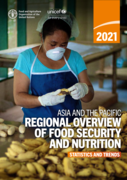
English Analysis on World about Agriculture, Climate Change and Environment, Epidemic and more; published on 15 Dec 2021 by FAO and UNICEF
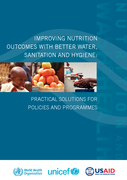
This document provides an overview of the evidence of nutrition gains that can be achieved with improved WASH, a description of key WASH practices, and practical knowledge and guidance on how to integrate WASH into nutrition programmes, including important monitoring and evaluation (M&E) aspects. Th
...
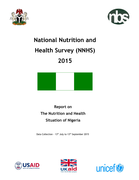
Report on the nutrition and health situation of Nigeria
Data collection – 13th July to 13th September 2015
Data collection – 13th July to 13th September 2015
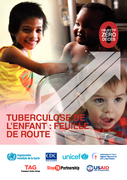
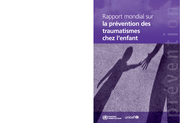
Plus de 2000 enfants meurent chaque jour des suites de traumatismes involontaires ou accidentels. Chaque année des dizaines de milliers d'autres sont hospitalisés pour des blessures qui les laissent souvent handicapés à vie.
Ce rapport conjoint de l'OMS et de l' ...
Ce rapport conjoint de l'OMS et de l' ...

Every year, around 830 000 children die from unintentional or "accidental" injuries. The vast majority of these injuries occur in low-income and middle-income countries. However, dozens of prevention strategies and programmes exist. If they were integrated into other child survival programmes and im
...
Background document to the 2018 joint statement by WHO, UNFPA, UNICEF, ICM, ICN, FIGO and IPA: definition of skilled health personnel providing care during childbirth
The Report describes the evaluation of WHO's contribution to the Maternal Health Program in South-East Asia Region. This was an independent evaluation conducted in 2015 by Amaltas, a Delhi based organization. The evaluation highlights the progress in five countries, namely
...
The Monitoring Report, which covers the first two months of the response from 25 August to 31 October, highlights the work of the Government of Bangladesh, in cooperation with humanitarian partners who are working to provide relief services for the
...
