Filter
332
Text search:
Nurturing
care
Featured
Recommendations
29
New Publications
78
Language
Document type
No document type
192
Studies & Reports
69
Guidelines
31
Manuals
11
Fact sheets
10
Strategic & Response Plan
8
Training Material
7
Brochures
2
Situation Updates
1
Infographics
1
Countries / Regions
Global
18
South Africa
11
Myanmar / Burma
10
Uganda
8
India
7
Rwanda
7
Nepal
6
Liberia
5
Ethiopia
5
Kenya
5
Syria
4
Malawi
4
Mozambique
4
Namibia
4
Lesotho
4
Sierra Leone
3
Nigeria
3
Congo, Democratic Republic of
3
Tanzania
3
Bangladesh
3
Senegal
2
Ghana
2
Zimbabwe
2
Haiti
2
South Sudan
2
Lebanon
2
Zambia
2
Indonesia
2
Ukraine
2
Botswana
2
Yemen
2
South–East Asia Region
2
Western and Central Europe
2
Africa
2
Burkina Faso
1
Philippines
1
Somalia
1
Pakistan
1
Iraq
1
Jordan
1
Germany
1
Cambodia
1
Ireland
1
Sudan
1
Central African Republic
1
Greece
1
West and Central Africa
1
Latin America and the Carribbean
1
Eastern Europe and Central Asia
1
Asia
1
Canada
1
United Kingdom
1
Authors & Publishers
Publication Years
Category
Countries
114
Women & Child Health
57
Key Resources
15
Public Health
11
Clinical Guidelines
11
Capacity Building
8
Pharmacy & Technologies
1
Toolboxes
Mental Health
66
Disability
22
Caregiver
19
COVID-19
16
Planetary Health
15
Social Ethics
13
HIV
11
Global Health Education
10
Conflict
8
Refugee
8
TB
7
Ebola & Marburg
3
Natural Hazards
2
AMR
2
NCDs
2
2.0 Rapid Response
2
Polio
1
Rapid Response
1
Pharmacy
1
NTDs
1
Health Financing Toolbox
1
Action on behalf of unaccompanied and separated children should be guided by principles enshrined in international standards. The validity of these principles has been confirmed by experience and lessons learnt from conflicts and natural disasters in recent years. The objective of the present public
...
Equity and Quality in Health: a People's Right
2018 monitoring report: current status and strategic priorities
The report sets out the status of women’s, children’s and adolescents’ health, and on health systems and social and environmental determinants. Regional dashboards on 16 key indicators highlight where progress is being made o ...
The report sets out the status of women’s, children’s and adolescents’ health, and on health systems and social and environmental determinants. Regional dashboards on 16 key indicators highlight where progress is being made o ...
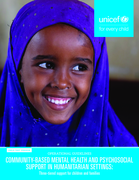
The CB MHPSS operational guidelines were developed in response to emerging evidence on the determinants of children’s resilience, lessons learned from the evaluation of existing approaches, and the unique challenges that today’s crises pose for children’s safety, wellbeing and optimal developm
...

World Vision’s Gender Equality and Social Inclusion (GESI) approach actively strives to examine, question, and change harmful social norms and power imbalances as a means of reaching gender equality and social inclusion objectives in a programme area.
This reference guide is designed to help WASH
...
Accessed on 31.03.2020
This Guidance Note aims to provide humanitarian child protection practitioners, particularly child protection advisors and program managers, with guidance on how to engage in responses to infectious disease outbreaks to ensure children’s protection needs are taken into ac
...

1-13 December 2018 | Geneva, Switzerland UNAIDS Programme Coordinating Board Issue date: 23 November 2018
UNAIDS/PCB (43)/18.32


This report presents data and outlines best practices and policies that can put governments on the path to providing every child with the best start in life. It outlines the neuroscience of early childhood development (ECD), including the importance of nutrition, protection and stimulation in the ea
...
The MHPSS MSP is an easy-to-follow intersectoral package, which spells out the activities and actions that all humanitarian actors should put in place in all emergencies for an effective MHPSS response. It speaks to different actors at the global, regional, national, and local levels to plan, coordi
...
IASC Guidelines on Mental Health and Psychosocial Support in Emergency Settings. Checklist
recommended
Armed conflicts and natural disasters cause significant psychological and social suffering to affected populations. The psychological and social impacts of emergencies may be acute in the short term, but they can also undermine the long-term mental health and psychosocial well-being of the affected
...

In 2022, Namibia had an estimated population of 2.6 million people, where 51 per cent per cent are females and 52.5 per cent of households in urban areas, with fast-growing urban informal settlements which lack access to basic services. Namibia has a young population; 42 per cent are children (0-17
...

An estimated 1.3 billion people – or 16% of global population worldwide – experience a significant disability today. Persons with disabilities have the right to the highest attainable standard of health as those without disabilities. However, the WHO Global report on health equity for persons w
...