
Filter
2769
Text search:
Ministry
of
Gender,
Children
and
Community
Development
Featured
206
952
Language
2723
42
26
22
16
11
8
4
3
3
2
2
2
2
2
2
2
2
1
1
1
1
1
1
1
1
1
1
1
1
1
1
1
1
1
1
Document type
1741
428
240
150
104
41
33
21
4
3
2
1
1
Countries / Regions
129
128
105
98
96
93
92
87
79
77
76
75
69
64
53
51
43
43
36
36
32
31
30
29
27
26
26
23
23
20
18
17
17
15
15
15
13
12
12
11
11
11
11
10
9
9
8
8
8
8
8
8
7
7
7
7
7
7
7
7
6
6
5
5
5
5
5
4
4
4
4
4
3
3
2
2
2
2
2
2
2
2
2
2
2
2
2
2
2
1
1
1
1
1
1
1
1
1
1
1
1
1
1
1
1
1
1
1
1
1
Authors & Publishers
243
91
87
67
62
56
54
52
46
28
24
21
21
20
19
19
18
17
17
17
16
16
16
15
14
14
13
12
12
12
11
11
11
10
10
10
10
10
9
9
9
9
8
8
8
8
8
8
8
8
8
7
7
7
7
7
7
7
7
7
7
6
6
6
6
6
6
6
6
6
5
5
5
5
5
5
5
5
5
5
5
5
5
5
5
5
5
5
5
5
4
4
4
4
4
4
4
4
4
4
4
4
4
4
4
4
4
4
4
4
4
4
4
4
4
4
4
4
4
4
4
4
4
4
4
4
4
4
4
4
4
4
3
3
3
3
3
3
3
3
3
3
3
3
3
3
3
3
3
3
3
3
3
3
3
3
3
3
3
3
3
3
3
3
3
3
3
3
3
3
3
3
3
3
3
3
3
3
3
3
3
3
3
3
3
3
3
3
3
3
3
3
3
3
3
3
3
3
3
2
2
2
2
2
2
2
2
2
2
2
2
2
2
2
2
2
2
2
2
2
2
2
2
2
2
2
2
2
2
2
2
2
2
2
2
2
2
2
2
2
2
2
2
2
2
2
2
2
2
2
2
2
2
2
2
2
2
2
2
2
2
2
2
2
2
2
2
2
2
2
2
2
2
2
2
2
2
2
2
2
2
2
2
2
2
2
2
2
2
2
2
2
2
2
2
2
2
2
2
2
2
2
2
2
2
2
2
2
2
2
2
2
2
2
2
2
2
2
2
2
2
2
2
2
2
2
2
2
2
2
2
2
2
2
2
2
2
2
2
2
2
2
2
2
2
2
2
2
2
2
2
2
2
2
2
2
2
2
2
2
2
2
2
2
2
2
2
2
2
2
2
2
2
2
2
2
2
2
2
2
2
2
2
2
2
1
1
1
1
1
1
1
1
1
1
1
1
1
1
1
1
1
1
1
1
1
1
1
1
1
1
1
1
1
1
1
1
1
1
1
1
1
1
1
1
1
1
1
1
1
1
1
1
1
1
1
1
1
1
1
1
1
1
1
1
1
1
1
1
1
1
1
1
1
1
1
1
1
1
1
1
1
1
1
1
1
1
1
1
1
1
1
1
1
1
1
1
1
1
1
1
1
1
1
1
1
1
1
1
1
1
1
1
1
1
1
1
1
1
1
1
1
1
1
1
1
1
1
1
1
1
1
1
1
1
1
1
1
1
1
1
1
1
1
1
1
1
1
1
1
1
1
1
1
1
1
1
1
1
1
1
1
1
1
1
1
1
1
1
1
1
1
1
1
1
1
1
1
1
1
1
1
1
1
1
1
1
1
1
1
1
1
1
1
1
1
1
1
1
1
1
1
1
1
1
1
1
1
1
1
1
1
1
1
1
1
1
1
1
1
1
1
1
1
1
1
1
1
1
1
1
1
1
1
1
1
1
1
1
1
1
1
1
1
1
1
1
1
1
1
1
1
1
1
1
1
1
1
1
1
1
1
1
1
1
1
1
1
1
1
1
1
1
1
1
1
1
1
1
1
1
1
1
1
1
1
1
1
1
1
1
1
1
1
1
1
1
1
1
1
1
1
1
1
1
1
1
1
1
1
1
1
1
1
1
1
1
1
1
1
1
1
1
1
1
1
1
1
1
1
1
1
1
1
1
1
1
1
1
1
1
1
1
1
1
1
1
1
1
1
1
1
1
1
1
1
1
1
1
1
1
1
1
1
1
1
1
1
1
1
1
1
1
1
1
1
1
1
1
1
1
1
1
1
1
1
1
1
1
1
1
1
1
1
1
1
1
1
1
1
1
1
1
1
1
1
1
1
1
1
1
1
1
1
1
1
1
1
1
1
1
1
1
1
1
1
1
1
1
1
1
1
1
1
1
1
1
1
1
1
1
1
1
1
1
1
1
1
1
1
1
1
1
1
1
1
1
1
1
1
1
1
1
1
1
1
1
1
1
1
1
1
1
1
1
1
1
1
1
1
1
1
1
1
1
1
1
1
1
1
1
1
1
1
1
1
1
1
1
1
1
1
1
1
1
1
1
1
1
1
1
1
1
1
1
1
1
1
1
1
1
1
1
1
1
1
1
1
1
1
1
1
1
1
1
1
1
1
1
1
1
1
1
1
1
1
1
1
1
1
1
1
1
1
1
1
1
1
1
1
1
1
1
1
1
1
1
1
1
1
1
1
1
1
1
1
1
1
1
1
1
1
1
1
1
1
1
1
1
1
1
1
1
1
1
1
1
1
1
1
1
1
1
1
1
1
1
1
1
1
1
1
1
1
1
1
1
1
1
1
1
1
1
1
1
1
1
1
1
1
1
1
1
1
1
1
1
1
1
1
1
1
1
1
1
1
1
1
1
1
1
1
1
1
1
1
1
1
1
1
1
1
1
1
1
1
1
1
1
1
1
1
1
1
1
1
1
1
1
1
1
1
1
1
1
1
1
1
1
1
1
1
1
1
1
1
1
1
1
1
1
1
1
1
1
1
1
1
1
1
1
1
1
1
1
1
1
1
1
1
1
1
1
1
1
1
1
1
1
1
1
1
1
1
1
1
1
1
1
1
1
1
1
1
1
1
1
1
1
1
1
1
1
1
1
1
1
1
1
1
1
1
1
1
1
1
1
1
1
1
1
1
1
1
1
1
1
1
1
1
1
1
1
1
1
1
1
1
1
1
1
1
1
1
1
1
1
1
1
1
1
1
1
1
1
1
1
1
1
1
1
1
1
1
1
1
1
1
1
1
1
1
1
1
1
1
1
1
1
1
1
1
1
1
1
1
1
1
1
1
1
1
1
1
1
1
1
1
1
1
1
1
1
1
1
1
1
1
1
1
1
1
1
1
1
1
1
1
1
1
1
1
1
1
1
1
1
1
1
1
1
1
1
1
1
1
1
1
1
1
1
1
1
1
1
1
1
1
1
1
1
1
1
1
1
1
1
1
1
1
1
1
1
1
1
1
1
1
1
1
1
1
1
1
1
1
1
1
1
1
1
1
1
1
1
1
1
1
1
1
1
1
1
1
1
1
1
1
1
1
1
1
1
1
1
1
1
1
1
1
1
1
1
1
1
1
1
1
1
1
1
1
1
1
1
1
1
1
1
1
1
1
1
1
1
1
1
1
1
1
1
1
1
1
1
1
1
1
1
1
1
1
1
1
1
1
1
1
1
1
1
1
1
1
1
1
1
1
1
1
1
1
1
1
1
1
1
1
1
1
1
1
1
1
1
1
1
1
1
1
1
1
1
1
1
1
1
1
1
1
1
1
1
1
1
1
1
1
1
1
1
1
1
1
1
1
1
1
1
1
1
1
1
1
1
1
1
1
1
1
1
1
1
1
1
1
1
1
1
1
1
1
1
1
1
1
1
1
1
1
1
1
1
1
1
1
1
1
1
1
1
1
1
1
1
1
1
1
1
1
1
1
1
1
1
1
1
1
1
1
1
1
1
1
1
1
1
1
1
1
1
1
1
1
1
1
1
1
1
1
1
1
1
1
1
1
1
1
1
1
1
1
1
1
1
1
1
1
1
1
1
1
1
1
1
1
1
1
1
1
1
1
1
1
1
1
1
1
1
1
1
1
1
1
1
1
1
1
1
1
1
1
1
1
1
1
1
1
1
1
1
1
1
1
1
1
1
1
1
1
1
1
1
1
1
1
1
1
1
1
1
1
1
1
1
1
1
1
1
1
1
1
1
1
1
1
1
1
1
1
1
1
1
1
1
1
1
1
1
1
1
1
1
1
1
1
1
1
1
1
1
1
1
1
1
1
1
1
1
1
1
1
1
1
1
1
1
1
1
1
1
1
1
1
1
1
1
1
1
1
1
1
1
1
1
1
1
1
1
1
1
1
1
1
1
1
1
1
1
1
1
1
1
1
1
1
1
1
1
1
1
1
1
1
1
1
1
1
1
1
1
1
1
1
1
1
1
1
1
1
1
1
1
1
1
1
1
1
1
1
1
1
1
1
1
1
1
1
1
1
1
1
1
1
1
1
1
1
1
1
1
1
1
1
1
1
1
1
1
1
1
1
1
1
1
1
1
1
1
1
1
1
1
1
1
1
1
1
1
1
1
1
1
1
1
1
1
1
1
1
1
1
1
1
1
1
1
1
1
1
1
1
1
1
1
1
1
1
1
1
1
1
1
1
1
1
1
1
1
1
1
1
1
1
1
1
1
1
1
1
1
1
1
1
1
1
1
1
1
1
1
1
1
1
1
1
1
1
1
1
1
1
1
1
1
1
1
1
1
1
1
1
1
1
1
1
1
1
1
1
1
1
1
1
1
1
1
1
1
1
1
1
1
1
1
1
1
1
1
1
1
1
1
1
1
1
1
1
1
1
1
1
1
1
1
1
1
1
1
1
1
1
1
1
1
1
1
1
1
1
1
1
1
1
1
1
1
1
1
1
1
1
1
1
1
1
1
1
1
1
1
1
1
1
1
1
1
1
1
1
1
1
1
1
1
1
1
1
1
1
1
1
1
1
1
1
1
1
1
1
1
1
1
1
1
1
1
1
1
1
1
1
1
1
1
1
1
1
1
1
1
1
1
1
1
1
1
1
1
1
1
1
1
1
1
1
1
1
1
1
1
1
1
1
1
1
1
1
1
1
1
1
1
1
1
1
1
1
1
1
1
1
1
1
1
1
1
1
1
1
1
1
1
1
1
1
1
1
1
1
1
1
1
1
1
1
1
1
1
1
1
1
1
1
1
1
1
1
1
1
1
1
1
1
1
1
1
1
1
1
1
1
1
1
1
1
1
1
1
1
1
1
1
1
1
1
1
1
1
1
1
1
1
1
1
1
1
1
1
1
1
1
1
1
1
1
1
1
1
1
1
1
1
1
1
1
1
1
1
1
1
1
1
1
1
1
1
1
1
1
1
1
1
1
1
1
1
1
1
1
1
1
1
1
1
1
1
1
1
1
1
1
1
1
1
1
1
1
1
1
1
1
1
1
1
1
1
1
1
1
1
1
1
1
1
1
1
1
1
1
1
1
1
1
1
1
1
1
1
1
1
1
1
1
1
1
1
1
1
1
1
1
1
1
1
1
1
1
1
1
1
1
1
1
1
1
1
1
1
1
1
1
1
1
1
1
1
1
1
1
1
1
1
1
1
1
1
1
1
1
1
Publication Years
712
1822
228
7
Category
1519
174
164
115
86
56
3
1
Toolboxes
200
177
144
142
127
73
70
63
60
57
53
47
39
31
25
23
21
19
15
12
10
8
8
6
5
3
2
Journal of the International AIDS Society 2017, 20(Suppl 4):21644
National AIDS Programme in Myanmar has made significant progress in scaling up antiretroviral treatment (ART) services and reco ... gnizes the importance of differentiated care for people living with HIV. Indeed, long centred around the hospital and reliant on physicians, the country's HIV response is undergoing a process of successful decentralization with HIV care increasingly being integrated into other health services as part of a systematic effort to expand access to HIV treatment. This study describes implementation of differentiated care in Médecins Sans Frontières (MSF)‐supported programmes and reports its outcomes.
https://doi.org/10.7448/IAS.20.5.21644 more
National AIDS Programme in Myanmar has made significant progress in scaling up antiretroviral treatment (ART) services and reco ... gnizes the importance of differentiated care for people living with HIV. Indeed, long centred around the hospital and reliant on physicians, the country's HIV response is undergoing a process of successful decentralization with HIV care increasingly being integrated into other health services as part of a systematic effort to expand access to HIV treatment. This study describes implementation of differentiated care in Médecins Sans Frontières (MSF)‐supported programmes and reports its outcomes.
https://doi.org/10.7448/IAS.20.5.21644 more
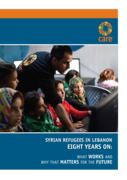
This publication includes quotes from various respondents interviewed in Tripoli, Akkar and Beirut. We focused on three main questions: How are the relations between refugees and Lebanese? How are r
...
efugees faring in the job market? Which concrete initiatives have already demonstrated positive impact in terms of increasing their financial and/or social well-being? The combination of those factors are key to understanding refugees’ livelihoods and coping strategies and reflect on what more can be done by local and international actors to increase social stability in Lebanon on a temporary basis, pending durable solutions.
more
WHO published the first COVID-19 Strategic Response and Preparedness Plan (SPRP) on 3 February, 2020. This report highlights the main points of progress that were made up to 30 June 2020 under the t
...
hree objectives outlined in the SPRP: scaling up international coordination and support; scaling up country preparedness and response by pillar; and accelerating research and innovation. The report also discusses some of the key challenges faced so far, and provides an update on the resource requirements for the next phase of WHO’s response as part of an unprecedented whole-of-UN approach to the pandemic.
more
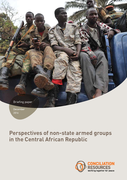
Since the current crisis erupted in 2013, the Central African Republic (CAR) has received a level of international attention unprecedented in its recent turbulent history. Huge efforts have been made by national government, the United Nations (UN)
...
and external donors, as well as communities and civil society actors to pull the country back from armed conflict.
more
Disability inclusive shelter programming enables persons with disabilities to contribute more to their communities, participate more in consultations and decision-making, and facilitate their own pr
...
otection. The key concepts include: Disability inclusive shelter programming is both a process and an outcome. By engaging persons with disabilities in the process, we will also improve the outcomes for persons with disabilities.
The disability community has the slogan “Nothing about us without us,” reminding that we should include and work with persons with disabilities and their representative groups rather than plan or make decisions on their behalf. Persons with disabilities should be engaged throughout shelter programme planning, implementation, monitoring and evaluation.
more
As the culminating volume in the DCP3 series, volume 9 will provide an overview of DCP3 findings and methods, a summary of messages
...
and substantive lessons to be taken from DCP3, and a further discussion of cross-cutting and synthesizing topics across the first eight volumes. The introductory chapters (1-3) in this volume take as their starting point the elements of the Essential Packages presented in the overview chapters of each volume. First, the chapter on intersectoral policy priorities for health includes fiscal and intersectoral policies and assembles a subset of the population policies and applies strict criteria for a low-income setting in order to propose a "highest-priority" essential package. Second, the chapter on packages of care and delivery platforms for universal health coverage (UHC) includes health sector interventions, primarily clinical and public health services, and uses the same approach to propose a highest priority package of interventions and policies that meet similar criteria, provides cost estimates, and describes a pathway to UHC.
more
Abridged version. In this abridged version of the Evidence-based Clinical Practice Guidelines for the Follow-Up of at-risk neonates, we provide recommendations for the care
...
of newborns up to 2 years of age, corresponding to the first phase of their follow-up. The recommendations are intended for all health sector staff responsible for the primary care of these neonates: general practitioners, family practitioners, pediatricians, neonatologists, pediatric ophthalmologists, pediatric otolaryngologists, nursing professionals, specialists in other fields, and multidisciplinary staff involved in the care process. The purpose of these guidelines is to facilitate policy implementation processes carried out by decision-makers and members of government bodies, and will also be useful for parents, mothers, and caregivers. The main topics covered by this document include the hospital discharge criteria, including screening tests; information and support for parents, mothers, and caregivers; screening at the follow-up visit, and the frequency of follow-ups until the infant is 2 years of age. These guidelines do not address matters related to nursing or comorbidities.
more
The policy brief focuses on four key areas for intervention - air pollution, energy, transport and food systems. Air pollution causes 7 million deaths annually, and is a leading cause
...
of both NCDs and climate change, thus all interventions to reduce air pollution have a positive impact on both human and planetary health. In the energy sector, transition from fossil fuels to renewable energy is if vital importance to improving health, with mortality rates due to coal-generated electricity 1,000 times higher than for wind-generated electricity.
Promoting active transport such as walking and cycling in place of motorised transport has the dual benefit of reducing both air pollution and physical activity. Livestock production alone accounts for 18% of greenhouse gas emissions, with added emissions from food which are highly process and transported over long distances, and thus locally sourced plant based diets both prevent NCDs and promote human and planetary health.
more
The Sphere Handbook. Humanitarian Charter and Minimum Standards in Humanitarian Response. New Edition
recommended
Humanitarian Charter and Minimum Standards in Humanitarian Response.
The 2018 Sphere Handbook builds on the latest developments and learning in the humanitarian sector. Among the improvements
...
of the new edition, readers will find a stronger focus on the role of local authorities and communities as actors of their own recovery. Guidance on context analysis to apply the standards has also been strengthened. New standards have also been developed, informed by recent practice and learning, such as WASH and healthcare settings in disease outbreaks, security of tenure in shelter and settlement, and palliative care in health. Different ways to deliver or enable assistance, including cash-based assistance, are also integrated into the Handbook.
more

Climate change and health vulnerability and adaptation assessment
In 2013 the World Health Organization (WHO) published the report Protecting health from climate change:
vulnerability
...
and adaptation assessment. The aim was to provide basic and flexible guidance on conducting national or subnational assessments of current and future vulnerability (the susceptibility of a population or region to harm) to the health risks of climate change, and of policies and programmes that could increase resilience, taking into account the multiple determinants of climate-sensitive health outcomes.
That guidance has been a very useful tool, applied to more than 50 countries and settings, and has helped countries to prepare their health contributions to United Nations Framework Convention on Climate Change national adaptation plans.
Since the launch of the guidance, WHO, technical partners such as Health Canada, and countries have learned much in terms of its applicability in different countries, at national and local levels.
At the same time, knowledge on climate change and health has increased.
WHO, the Pan American Health Organization and Health Canada have produced this updated version, which aims to better support countries in their assessments by proposing a simpler tool that incorporates all lessons learned.
more

In 2013 the World Health Organization (WHO) published the report Protecting health from climate change:vulnerability and adaptation assessment. The aim was to provide basic and flexible guidance on
...
conducting national or subnational assessments of current and future vulnerability (the susceptibility of a population or region to harm) to the health risks of climate change, and of policies and programmes that could increase resilience, taking into account the multiple determinants of climate-sensitive health outcomes.
That guidance has been a very useful tool, applied to more than 50 countries and settings, and has helped countries to prepare their health contributions to United Nations Framework Convention on Climate Change national adaptation plans.
Since the launch of the guidance, WHO, technical partners such as Health Canada, and countries have learned much in terms of its applicability in different countries, at national and local levels.
At the same time, knowledge on climate change and health has increased.
WHO, the Pan American Health Organization and Health Canada have produced this updated version, which aims to better support countries in their assessments by proposing a simpler tool that incorporates
all lessons learned.
more

Cholera is a major health risk in many parts of the world, affecting millions of people every year. Since mid-2021, the world has been facing an acute upsurge
...
of the 7th cholera pandemic, which is characterized by the number, size and concurrence of multiple outbreaks, the spread to areas that had been free of cholera for decades and alarmingly high mortality rates. The mortality associated with these outbreaks is of particular concern as many countries have reported higher case fatality ratios (CFR) than in previous years
more

This technical guidance outlines current evidence, knowledge and best practice relating to incidences of violence and injuries among refugees
...
and migrants in the WHO European Region. It highlights key principles, summarizes priority actions and challenges, maps existing international commitments and frameworks and provides practical policy considerations for preventing and responding to such challenges. Specific areas for intervention include ensuring safe passage for migration; addressing causes of violence and injuries in transit and destination countries, including changing norms and values; identifying victims and providing care and protection; investigating and prosecuting perpetrators; and strengthening the knowledge base. While the main intended audience of this technical guidance series are policy-makers across sectors at local, national and regional levels, the contents of this publication will also be of value for health-care practitioners and law enforcement and border protection officials.
more
It highlights the numerous challenges to quality service provision, along with the organisation’s response to mental health needs, and recommendations for international and regional decision-maker
...
s including:
- Advocating and working towards mental health policies that support adequate funding for mental health care and government suppor
- Legislation to protect the rights of people with mental disorders and vulnerable communities
- Advocating for multi-year funding to support the sustainability of MHPSS programs
- Creating capacity building opportunities consistent with the IASC guidelines and supported with continuous supervision
more

This document has been developed to provide training and guidance on how to integrate a human rights approach in mental health and related areas, based on international human rights instruments, in
...
particular the UN Convention on the Rights of Persons with Disabilities (CRPD).
more

Refugee protection in the country is provided within the framework of these international and national refugee laws as well as the core international human rights treaties that have been ratified by
...
the country. Continued insecurity within neighbouring states has resulted in sustained refugee movements, either directly as a result of internal conflict and human rights abuses or as a result of conflict related to competition for scare natural resources and drought related food insecurity.
more
his document, a first of its kind, clearly sets out the standards for rehabilitation and provides guidance on building or strengthening the capacity
...
of EMTs in this area.The importance of early rehabilitation for functional outcomes is well documented. Rehabilitation needs can persist far beyond the departure of EMTs; therefore, close, supportive collaboration must be established with local services. Emergency response presents an opportunity to rebuild devastated health systems and build local rehabilitation capacity. This document emphasizes the importance of aligning practices to the local context and maximizing opportunities for training and mentorship. The minimum standards and recommendations described will result in faster access of patients to rehabilitation services and equipment and a better transition between EMTs and local health facilities.
Available in English, German, Arabic, Chinese
more
The World Health Organization Regional Office for Africa (WHO AFRO), in accordance with recommendations from various WHO committees, has developed three flagship initiatives to support Member States in the African region to prepare for, detect and r
...
espond to public health emergencies. They are the result of extensive consultations with more than 30 African government ministers, technical actors, and partners across the continent as well as regional institutions such as the Africa Centres for Disease Control and Prevention (Africa CDC), whose contributions have shaped the priority activities. This report provides the fourth quarterly summary of progress in implementing the flagship initiatives.
more

This report presents findings from research conducted by Economist Impact to assess the health, demographic, social and economic impacts associated with different scenarios for financing the HIV epidemic across 13 selected countries in Sub-Saharan A
...
frica. The sponsorship of UNAIDS towards this report is gratefully acknowledged. However, the findings and ideas expressed herein represent those of Economist Impact. They do not necessarily reflect the views and opinions of UNAIDS, nor do they engage the responsibility of UNAIDS.
more
